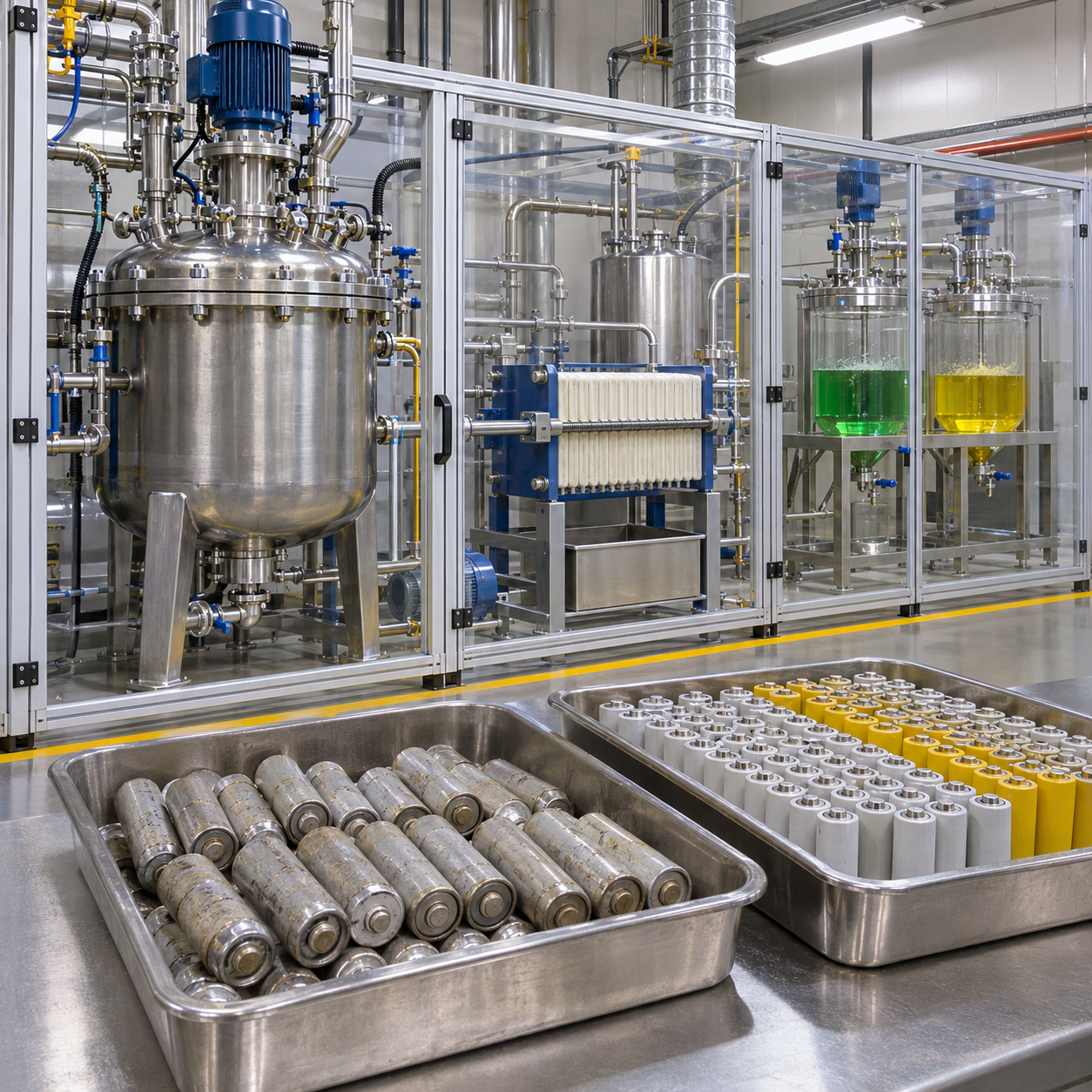
Nickel-cadmium batteries contain recoverable nickel and cadmium, plus cobalt and other constituents that depend on cell design and history. Cadmium toxicity makes collection, dismantling, emissions control and waste accountability central to any recycling route. Peer-reviewed work has investigated formic acid leaching and recovery of valuable metals from spent Ni-Cd electrode materials. That research can inform a development program, but commercial qualification requires representative cells, verified discharge and dismantling, closed handling of dust and electrolyte, full metal balances and an approved route for every solution and solid. Formic acid procurement must therefore be tied to the recycler’s feed specification, recovery sequence, materials of construction and regulated environmental controls.
Begin commercial qualification with written ownership for purchasing, quality, engineering, operations, laboratory, logistics and EHS. Approve identity, assay, impurity limits, test methods, sampling, storage, transfer, deviation response and release authority before the first production lot. Test multiple representative raw-material and process-feed lots under controlled conditions. Record mass balance, process performance, equipment observations, waste streams and final product or treatment results. This discipline separates formic acid variation from changes in water, feedstock, catalyst, equipment, operator or analytical method.
Review the complete delivery path from supplier release through container, carrier, receiving connection, storage and point of use. Contamination or dilution can occur after the supplier’s final analysis. Reconcile ordered, received, stored and consumed quantities and investigate unexplained differences. A supplier scorecard should cover COA accuracy, delivery condition, corrective-action quality and change notification as well as price. Qualify contingency supply with the same methods before a disruption. When buyer and supplier results differ, compare sample representativeness, temperature, standards, calibration, detection limits and uncertainty before disposition.
Formic acid is corrosive and can cause severe burns; concentrated vapor is hazardous. Use the current SDS, compatible closed equipment, ventilation, secondary containment, eyewash and shower access, trained response and jurisdiction-specific controls. The NIH PubChem formic acid record provides general identity and hazard context. It does not replace the supplier SDS, site risk assessment, transport rules or local law.
Use research as qualification evidence
A Chemical Engineering Journal study reports a formic-acid route for leaching and recovering nickel, cadmium and cobalt from spent Ni-Cd battery materials and uses response-surface analysis to study process variables: spent Ni-Cd battery metal recovery research. The reported laboratory chemistry does not replace battery discharge, industrial hygiene, emissions control or jurisdiction-specific hazardous-waste approval.
Translate published conditions into a controlled trial
Record the exact feed, reagents, equipment, analytical methods and acceptance criteria used in each trial. Identify which variables are held constant, which are investigated and which stop conditions protect people, equipment and product. Scale only after replicated evidence, a reviewed hazard assessment and an approved disposition for every output stream support the decision.
Control incoming batteries and genealogy
Identify cell format, manufacturer family, chemistry, age, state of charge, damage and collection source. Exclude unknown lithium systems and segregate leaking or swollen units. Establish safe discharge, quarantine, transport and acceptance procedures before chemical processing.
Characterize electrode feed
After validated dismantling, measure electrolyte, moisture, nickel, cadmium, cobalt, iron, plastics and other components on a defined basis. Track casings, separators and fines separately so the leach feed and total battery mass both reconcile.
Define recovery products and limits
Specify the intended nickel, cadmium and cobalt products, their purity, moisture and downstream acceptance criteria. Set maximum metals in final residues and wastewater. A high leaching percentage is not sufficient if separation cannot produce saleable or reusable streams.
Close the cadmium inventory
Account for cadmium in feed, gas-control systems, leachate, precipitates, washes, filters, equipment rinses and final residues. Use detection limits and sampling plans that can demonstrate compliance, not merely process trends.
Qualify acid, water and auxiliary reagents
Specify formic acid assay, water, metals, chloride, sulfate and residue. Control the quality of process water, oxidants, precipitants and wash chemicals. Run blank tests where necessary to distinguish reagent impurities from battery-derived metals.
Evaluate liquor speciation and separation
Formate salts, acidity and dissolved-metal ratios affect precipitation, crystallization, solvent extraction or other recovery steps. Validate phase behavior and impurity rejection across normal and challenging feeds rather than optimizing leaching in isolation.
Engineer exposure and containment controls
Cadmium compounds require stringent exposure control. Use closed equipment, local exhaust, negative-pressure dust handling, decontamination, personal monitoring and emergency procedures appropriate to the site. Review formic acid corrosion and vapor risks together with battery hazards.
Manage off-gas and upset conditions
Consider residual charge, short circuits, hydrogen generation, oxidant reactions, heating and blocked vents. Define interlocks, temperature and pressure limits, scrubber duty, spill containment and safe shutdown before scale-up.
Create a traceable commercial qualification
Bridge multiple acid lots and multiple battery lots using fixed analytical methods. Require supplier COA, SDS, lot genealogy, retained samples and advance notice of manufacturing, purification, packaging or logistics changes. Link release data to each recovery campaign.
Prepare a battery-recycling inquiry
Provide formic acid concentration, impurity limits, package or bulk need, forecast consumption, destination and documentation requirements. Do not send mixed-battery waste or operational recipes to a raw-material supplier unless separately authorized.
Request a specification-led quotation
Review the Hiacid formic acid product page, then contact the export team. Include end use, target concentration, analytical limits, annual and shipment volume, preferred package, destination, delivery profile and required documentation. Hiacid can respond against a defined commercial specification; the buyer remains responsible for process design, regulatory approval and final-use validation.
Related formic acid resources
- Formic Acid for Cobalt Removal from WC-Co Hardmetal Scrap
- Formic Acid Pretreatment of Spent Automotive Catalysts
- Formic Acid as a Hydrogen Donor for Waste Cooking Oil
Frequently asked questions
Can formic acid leach nickel and cadmium from spent Ni-Cd material?
Peer-reviewed research reports high leaching of nickel, cadmium and cobalt under studied conditions, but each commercial feed and recovery train must be validated.
Why is cadmium mass balance a release requirement?
Cadmium is toxic and regulated; unaccounted material can indicate emissions, sampling error or unsafe residue classification.
Is dismantling part of acid qualification?
Yes. Feed preparation determines composition, surface area, contamination and safety, so it must remain controlled during comparison trials.
Does this article authorize a recycling process?
No. It is a procurement and qualification framework, not a process license or regulatory approval.