Description
Oxalic Acid Product Overview
1. Packaging Information
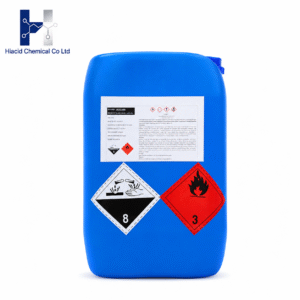
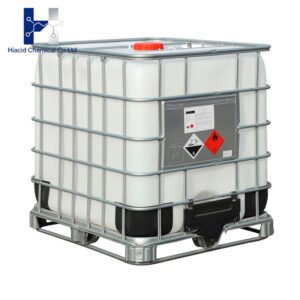
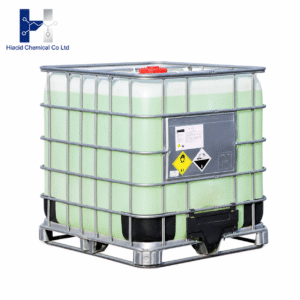
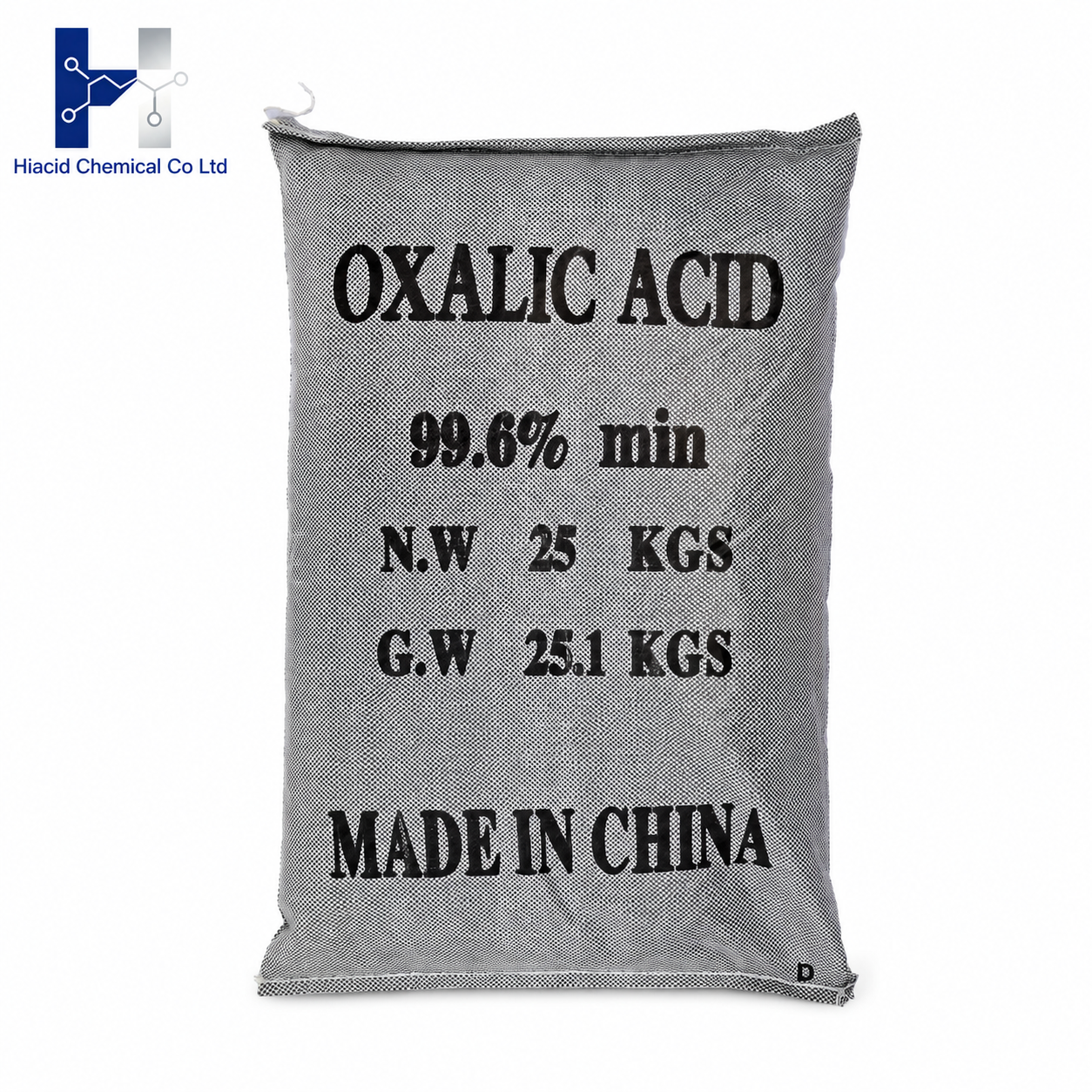
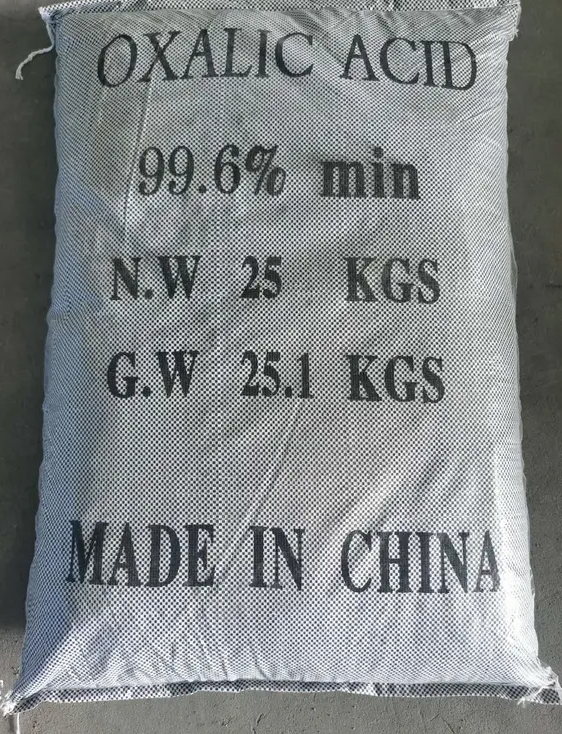
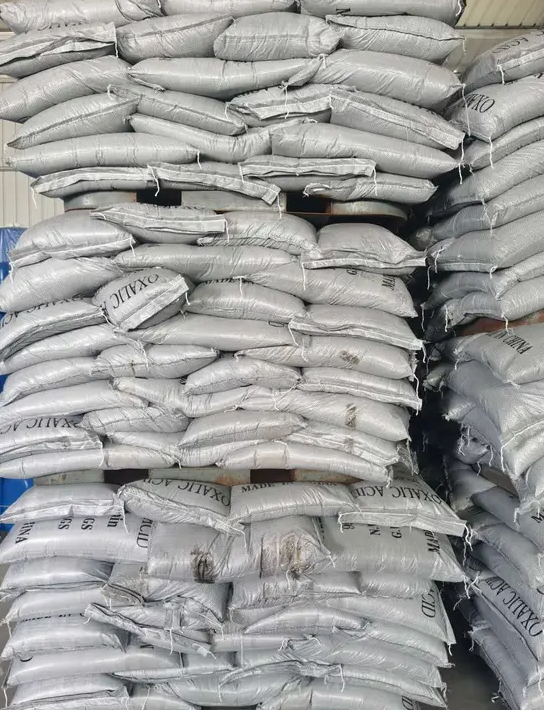
25 kg / plastic woven bag = 1000 bags / 20ft container = 25 MT / 20ft container Or according to your requirements
*20FCL = 20‑foot container loading capacity *MT = Metric ton
2. Oxalic Acid Product Overview
Name: Oxalic Acid Grade: Industrial grade Content: 99.6%
2.1 Identifiers
| IUPAC Name | Oxalic acid |
|---|---|
| Synonyms | Ethanedioic acid; Wood bleach; Oxalic acid |
| Molecular formula | C₂H₂O₄ |
| Molecular weight | 90.034 g/mol |
| CAS‑No. | 144‑62‑7 |
| InChI | InChI=1S/C6H6O6/c3‑1(4)2(5)6/h(H,3,4)(H,5,6) |
| SMILES | OC(=O)C(=O)O |
| ChemSpider | 946 |
| ChEMBL | ChEMBL146755 |
| ECHA InfoCard | 100.005.123 |
| EC Number | 205‑634‑3 |
| PubChem CID | 971 |
| Second University | 9E7R5L6H31 |
| UN Code | 3261 |
| HS Code | 2917111000 |
2.2 Physical and Chemical Properties
| Physical state | Solid |
|---|---|
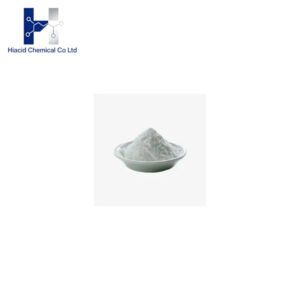
| Appearance | White |
| Odor | Odorless |
| Odor threshold | No data available |
| pH | Ca. 1 at 100 g/L, 20 °C (68 °F) |
| Melting point / melting range | 189.5 °C (373.1 °F) – dec. |
| Boiling point / boiling range | No data available |
| Flash point | No data available |
| Evaporation rate | No data available |
| Flammability (solid, gas) | Not applicable |
| Upper flammability or explosive limit | Upper explosive limit: 19.9% (V) |
| Lower flammability or explosive limit | Lower explosive limit: 4% (V) |
| Vapor pressure | 21.5 hPa at 50 °C (122 °F) 0.01 hPa at 25 °C (77 °F) |
| Vapor density | No data available |
| Relative density | 1.9 g/cm³ at 20 °C (68 °F) |
| Solubility | Approx. 108 g/L at 25 °C (77 °F) |
| Partition coefficient (n‑octanol/water) | logPow: -1.7 at 23 °C (73 °F) – Bioaccumulation not expected |
| Auto‑ignition temperature | No data available |
| Decomposition temperature | No data available |
| Viscosity | No data available |
2.3 Spectroscopic Information
No data available
2.4 Safety and Hazard Information
2.4.1 Classification of the substance or mixture
GHS classification in accordance with 29 CFR 1910 (OSHA HCS) Acute toxicity, oral (Category 4), H302 Acute toxicity, dermal (Category 4), H312 Serious eye damage (Category 1), H318 Short‑term (acute) aquatic hazard (Category 3), H402
2.4.2 GHS label elements, including precautionary statements
Hazard pictograms Signal word: Danger
Hazard statements H302+H312 Harmful if swallowed or in contact with skin. H318 Causes serious eye damage. H402 Harmful to aquatic life.
Precautionary statements P264 Wash skin thoroughly after handling. P270 Do not eat, drink or smoke when using this product. P273 Avoid release to the environment. P280 Wear protective gloves / protective clothing / eye protection / face protection.
P301+P312+P330 IF SWALLOWED: Call a poison control center / doctor if you feel unwell. Rinse mouth.
P302+P352+P312 IF ON SKIN: Wash with plenty of water. Call a poison control center / doctor if you feel unwell.
P305+P351+P338+P310 IF IN EYES: Rinse cautiously with water for several minutes. Remove contact lenses, if present and easy to do. Continue rinsing. Immediately call a poison control center / doctor.
P363 Wash contaminated clothing before reuse. P501 Dispose of contents / container to an approved waste disposal plant.
2.4.3 Hazards not otherwise classified (HNOC) or not covered by GHS
‑ None
2.5 Stability and Reactivity
Reactivity No data available
Chemical stability Stable under recommended storage conditions.
Possibility of hazardous reactions No data available
Conditions to avoid Avoid moisture.
Incompatible materials No data available
Hazardous decomposition products Hazardous decomposition products formed under fire conditions — Oxides of carbon Other decomposition products — No data available
2.6 Toxicological Information
2.6.1 Information on toxicological effects
Acute toxicity LD50 Oral‑ Rat‑ Female‑ 375 mg/kg Remark: (ECHA)
Inhalation: No data available
LD50 Dermal‑ Rabbit‑ 20,000 mg/kg Remark: (Regulation (EC) No 1272/2008 Annex VI) (ECHA) No data available
Skin corrosion / irritation Rabbit skin Result: No skin irritation (OECD Test Guideline 404)
Serious eye damage / eye irritation Eyes‑ Rabbit Result: Risk of serious eye damage.‑ 24 h (OECD Test Guideline 405)
Respiratory or skin sensitisation LLNA test‑ Mouse Result: Negative (OECD Test Guideline 429)
Germ cell mutagenicity Mutagenicity (chromosome aberration test): Chinese hamster lung cells Result: Negative
Ames test‑ Salmonella typhimurium Result: Negative
In‑vitro mammalian cell gene mutation test‑ Chinese hamster lung cells Result: Negative
Carcinogenicity IARC: No component of this product present at levels ≥ 0.1 % is identified as probable, suspected or confirmed human carcinogen.
NTP: No component of this product present at levels ≥ 0.1 % is listed as known or anticipated carcinogen.
OSHA: No component of this product present at levels ≥ 0.1 % is on OSHA’s list of regulated carcinogens.
Reproductive toxicity No data available
Specific target organ toxicity ‑ single exposure No data available
Specific target organ toxicity ‑ repeated exposure No data available
Aspiration hazard No data available
Additional information Repeated‑dose toxicity‑ Rat‑ Male and female‑ Oral‑ 90 d‑ NOAEL‑ 63 mg/kg RTECS: RO2450000
May cause kidney injury. Contact with eyes may cause eye injury. To the best of our knowledge, the chemical, physical and toxicological properties have not been thoroughly investigated. Gastrointestinal upset‑ Human evidence Gastrointestinal upset‑ Human evidence
2.7 Ecological Information
2.7.1 Toxicity
Toxicity to fish Static test LC50‑ Leuciscus idus melantus‑ 160 mg/l‑ 48 h Remark: (ECHA)
Toxicity to daphnia and other aquatic invertebrates EC50‑ Daphnia magna‑ 162.2 mg/l‑ 48 h (OECD Test Guideline 202)
Toxicity to algae Static test EC50‑ Pseudokirchneriella subcapitata‑ 19.83‑21.35 mg/l‑ 72 h (OECD Test Guideline 201)
2.7.2 Persistence and degradability
Biodegradability Aerobic‑ Exposure period 20 d Result: 89 % – Readily biodegradable. Remark: (ECHA)
2.7.3 Bioaccumulative potential
No data available
2.7.4 Mobility in soil
No data available
2.7.5 Results of PBT and vPvB assessment
PBT/vPvB assessment not available as chemical safety assessment is not required / not performed.
2.7.6 Other adverse effects
Potential for environmental harm cannot be excluded if improperly handled or disposed. Harmful to aquatic life‑ No data available