Oxalic acid is used in selected metal-cleaning formulations because its acidity and interaction with iron compounds can help remove certain rust stains and oxide deposits. The result is highly dependent on the alloy, surface finish, deposit composition, temperature, contact time, agitation and the other ingredients in the bath. It should not be treated as a universal answer for every metal or every scale. Industrial users need laboratory screening, controlled line trials and a defined rinse and wastewater plan before routine production. Procurement teams also need a consistent grade whose assay, insoluble matter and metal impurities stay inside the process specification.
Match the chemistry to the deposit
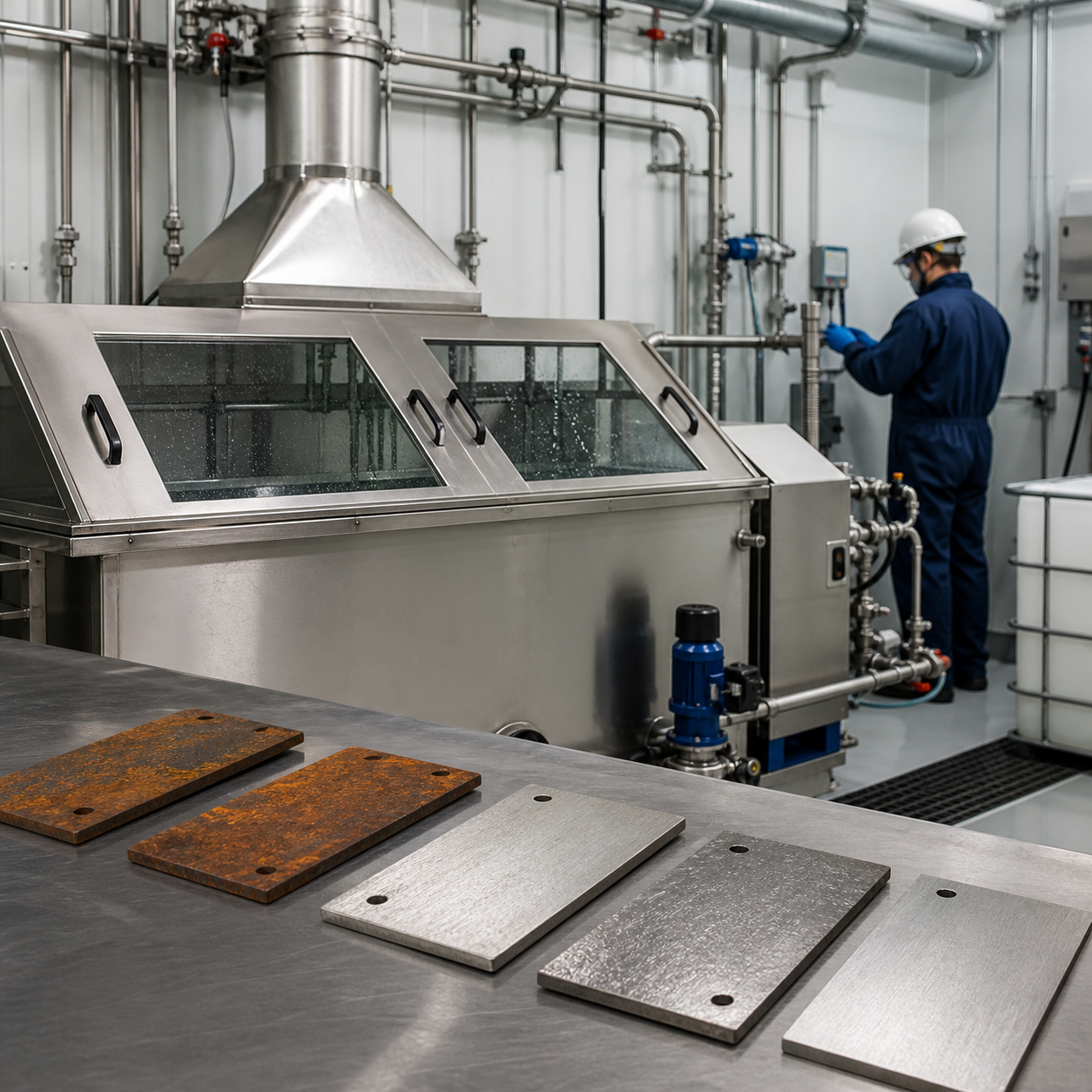
Rust can contain several iron oxide and hydroxide phases mixed with oil, salts, shop soil or process residues. Oxalic acid may help dissolve or complex some iron-containing material, but performance changes when the deposit includes silicate, carbonate, paint, welding scale or heavy organic contamination. Identify the soil first and compare candidate cleaning systems on representative coupons. The objective is not simply the fastest visual brightening; it is controlled deposit removal without unacceptable attack, discoloration or residue.
Separate cleaning from pickling
A maintenance wash, a precision surface-cleaning step and an aggressive pickling operation have different acceptance criteria. Define the target surface, allowed material loss, required roughness and downstream coating or welding needs. A bath that is acceptable for carbon steel may be unsuitable for stainless steel, galvanized surfaces, aluminum, copper alloys or assembled equipment containing multiple materials.
Build a controlled trial program
Screen concentration, temperature, contact time and mechanical action in a small, contained test. Measure the starting and final condition with more than photographs: coupon mass, surface profile, residual contamination, coating adhesion or another plant-relevant method may be needed. Include the actual rinse water and drying method because flash rust or retained salts can appear after the cleaning bath has performed well.
Monitor bath loading and endpoint
As a cleaning bath dissolves deposits, dissolved metal and suspended solids increase. Track the indicators that predict loss of cleaning efficiency or redeposition. A validated endpoint may combine time, appearance, solution analysis and coupon results. Do not extend a bath only because its acid concentration remains measurable; contaminant loading and impurity balance can become the limiting factors.
Protect the substrate and downstream process
Compatibility testing should cover the base metal, welds, seals, gaskets, coatings and any mixed-metal contact in the real equipment. After cleaning, verify that the surface is suitable for the next operation, whether that is painting, phosphating, plating, assembly or storage. Residual oxalate or poorly controlled neutralization can interfere with later steps.
Plan rinsing and wastewater treatment
Define rinse stages, water quality, drainage segregation and analytical checks before commissioning the process. Oxalate can interact with calcium and other metals, so the wastewater team should evaluate precipitation, sludge handling and discharge requirements using representative solutions. Never send a trial bath to the general drain without a site-approved treatment route.
Specify industrial oxalic acid quality
The purchase specification should state chemical form, assay basis, moisture or water of crystallization, insoluble matter, sulfate, chloride, iron and any application-sensitive impurity. Require the test method, unit and reporting basis for every controlled item. A batch COA should identify the delivered lot and report actual results rather than only repeating specification limits.
Qualify packaging and handling
Moisture-resistant packaging helps protect a crystalline product during storage and ocean transit. Confirm inner liner, bag construction, net mass, palletization, lot marking and container-loading plan. Receiving procedures should prevent torn bags, dust release and cross-contamination from the warehouse or previous cargo.
Control worker exposure
The NIOSH Pocket Guide for oxalic acid identifies inhalation, ingestion, skin and eye contact as exposure routes and recommends preventing skin and eye contact, with immediate irrigation or flushing after exposure. Site controls should use the current SDS, enclosed charging or local exhaust where appropriate, suitable PPE, housekeeping and accessible emergency facilities.
Prepare a complete metal-cleaning RFQ
State the required form and assay, controlled impurities, annual volume, shipment size, packaging, destination and trial quantity. Share the intended substrate and process only to the level needed for grade review. Compare the Hiacid oxalic acid supply page, the catalogue product record and the existing storage and handling guide, then request a quotation.
Related oxalic acid resources
- Oxalic Acid in Textile Bleaching and Dyeing
- Oxalic Acid for Rare Earth Precipitation and Processing
- Oxalic Acid Buying Guide
Frequently asked questions
Can oxalic acid remove every type of rust?
No. Performance depends on the oxide, other soils, alloy, surface condition and process settings, so representative trials are required.
Can the same bath be used on different metals?
Not without compatibility testing. Different alloys, coatings, welds and mixed-metal assemblies can respond very differently.
Which oxalic acid quality items matter for cleaning?
Buyers commonly define chemical form, assay basis, insoluble matter, sulfate, chloride, iron, moisture and lot traceability.
What should be checked after cleaning?
Verify deposit removal, substrate condition, rinsing, residual salts, flash rust risk and suitability for the next manufacturing step.