Oxalate precipitation is used in selected rare earth separation and refining flowsheets to recover dissolved rare earth elements as solid oxalate compounds before further processing. Oxalic acid can serve as the precipitating reagent, but recovery, purity, particle behavior and filtration depend on the composition of the feed solution and the complete operating sequence. Acidity, temperature, addition rate, mixing, residence time and interfering ions must be established through metallurgical test work. For procurement, the reagent specification should be tied to impurity transfer, mass balance and stable plant operation rather than a broad “industrial grade” label.
Connect reagent quality to the flowsheet
The same oxalic-acid lot can perform differently in chloride, nitrate, sulfate or mixed process liquors because solution chemistry affects supersaturation and co-precipitation. Define the precipitation stage, upstream purification and downstream conversion before setting the reagent specification. Bench and pilot work should use representative liquors, including recycle streams and normal impurity variation.
Use a mass balance based on the stated form
Oxalic acid may be supplied and reported on different chemical-form or hydration bases. Procurement, laboratory and operations teams must use the same basis when calculating reagent consumption. Confirm assay method, water of crystallization and the relationship between purchased mass and active oxalate in the plant model.
Control precipitation conditions
Addition rate and mixing influence local supersaturation, particle size and entrainment. A validated sequence should define reagent-solution preparation, feed location, agitation, temperature, acidity and aging time. Operators should not compensate for poor mixing by adding an uncontrolled excess of reagent, because excess can increase cost and affect recycle or effluent treatment.
Measure recovery and selectivity
Track dissolved rare earths before and after precipitation together with relevant impurities in the solid and filtrate. Recovery alone is not enough if calcium, iron, thorium, uranium or other process-specific species transfer into the product. The exact analytical program depends on the deposit, flowsheet and product specification.
Design solid-liquid separation and washing
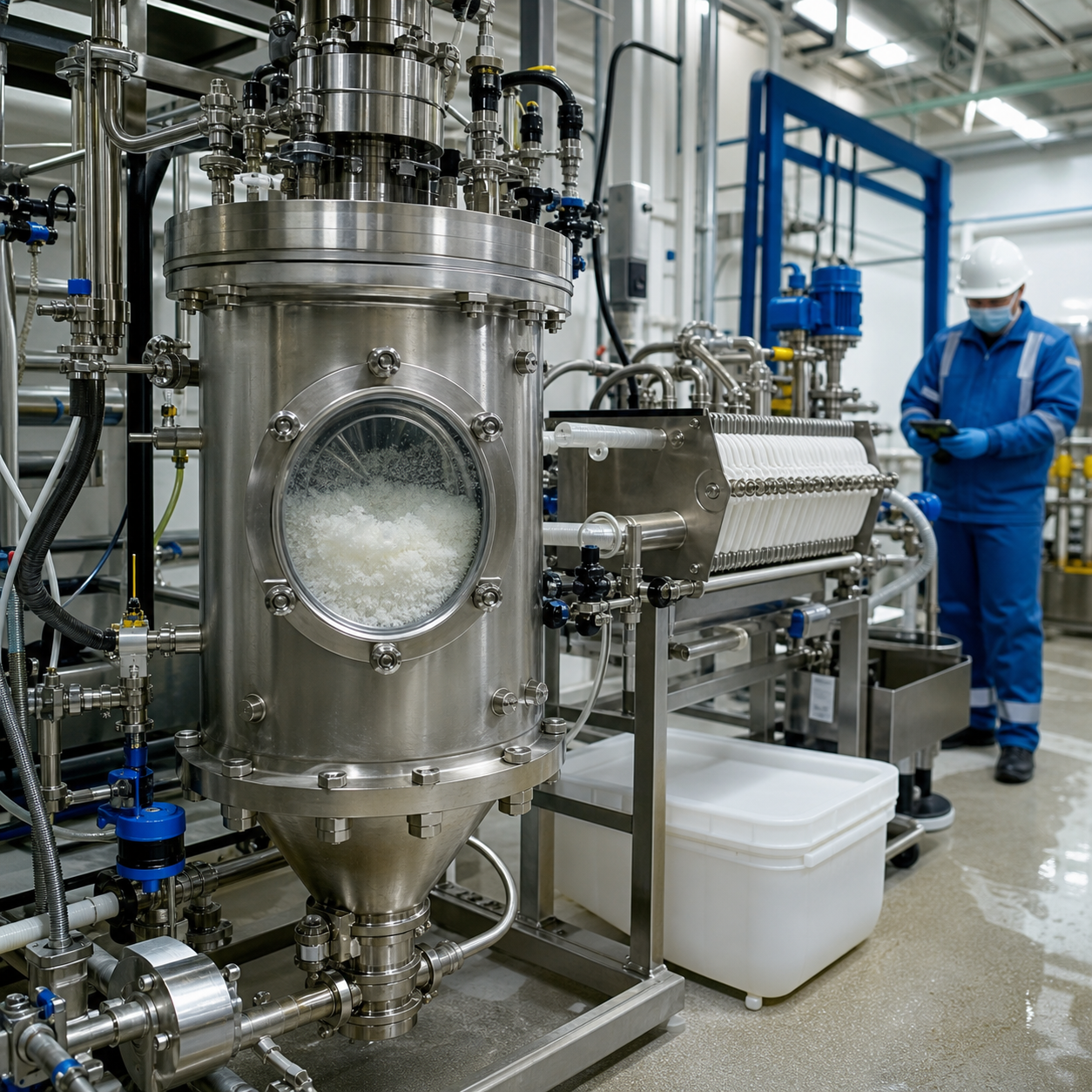
Precipitate morphology affects settling, filtration, washing and dryer or calciner feed. Test filter rate, cake moisture, washing efficiency, cloth behavior and solids handling under representative conditions. A laboratory precipitate that assays well but filters poorly can create a plant bottleneck.
Control wash water and recycle
Washing should remove soluble mother liquor without unacceptable product loss or excessive effluent volume. Define water quality, temperature, wash ratio and endpoint analytically. If filtrate or wash liquor returns to the circuit, include oxalate and impurity accumulation in the recycle model.
Specify impurities with a technical purpose
Potentially relevant controls can include assay basis, insoluble matter, sulfate, chloride, iron, calcium, sodium and heavy metals. Do not tighten every limit without evidence; link each requirement to product purity, precipitation behavior or downstream conversion. Require actual lot results and agreed methods on the COA.
Qualify consistency across several lots
Compare multiple recent COAs and a representative sample before approval. During the plant trial, preserve reagent lot identity and feed-solution analysis. Agree how manufacturing-source, form, packaging or method changes will be communicated and evaluated.
Plan safe dry handling and supply continuity
Oxalic acid is an odorless solid but dust exposure can affect eyes, skin and the respiratory system. The NIOSH Pocket Guide provides occupational-hygiene information, including exposure limits and first-aid guidance. Enclosed transfer, dust control, housekeeping, PPE and emergency facilities must follow the current SDS and site assessment.
Send a rare-earth processing RFQ
State the chemical form, assay basis, impurity limits, consumption profile, bag construction, shipment size, destination, documentation and trial quantity. Include only non-confidential flowsheet information needed for grade review. See the Hiacid oxalic acid supply page and supplier qualification guide, then contact the export team.
Related oxalic acid resources
- Oxalic Acid for Metal Cleaning and Rust Removal
- Oxalic Acid in Textile Bleaching and Dyeing
- Oxalic Acid Storage and Handling
Frequently asked questions
Why is oxalic acid used in rare earth processing?
It can precipitate dissolved rare earth elements as oxalate compounds in selected validated refining flowsheets.
Which operating variables affect precipitation?
Feed composition, acidity, temperature, mixing, addition rate, reagent concentration, aging time and recycle chemistry can all matter.
Is maximum recovery the only objective?
No. Product purity, particle behavior, filtration, washing, reagent consumption and downstream conversion must also be evaluated.
Which supplier documents should be requested?
Request the agreed specification, batch COA, current SDS, chemical-form basis, test methods, lot traceability and change notification.