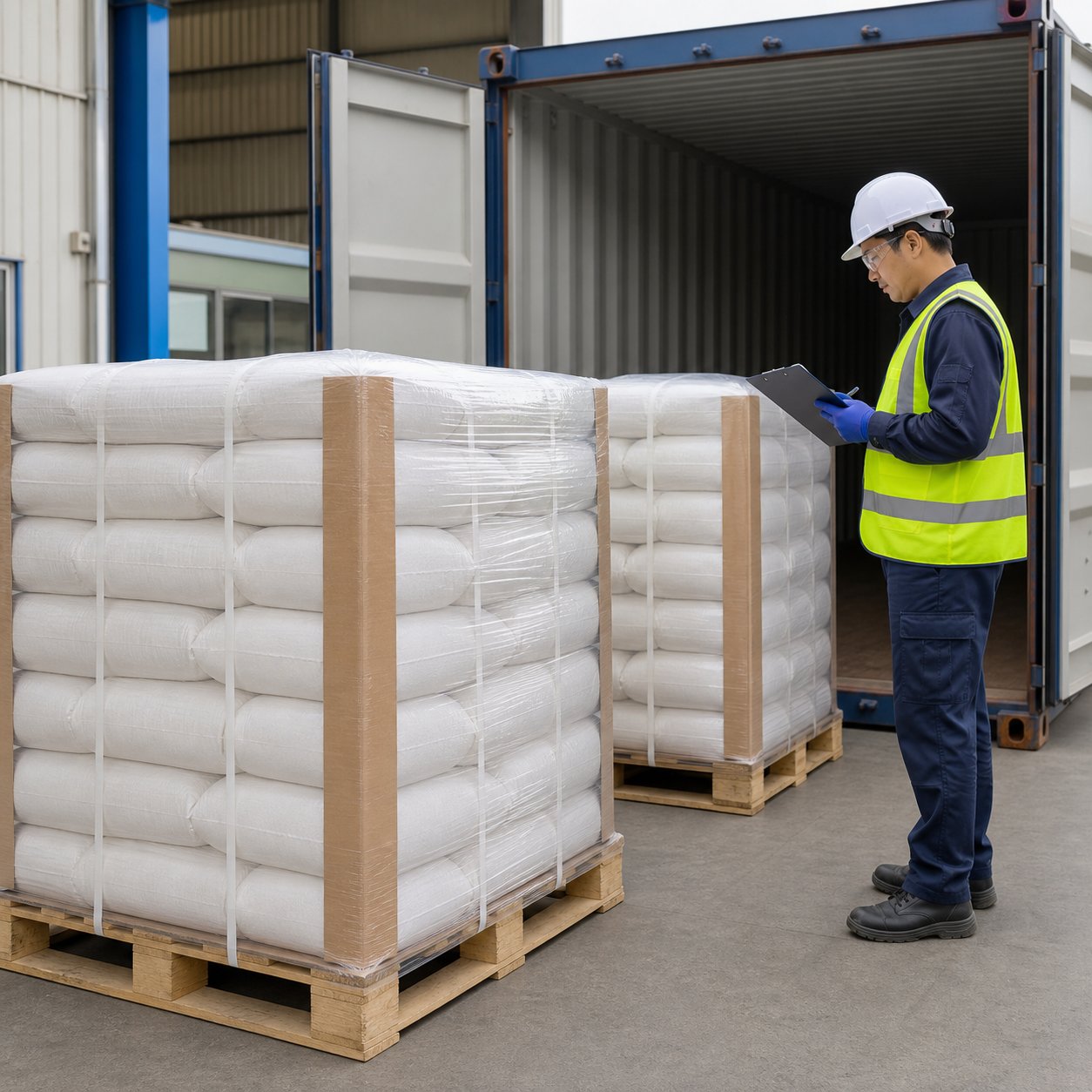
Oxalic acid is commonly traded as a crystalline solid in industrial bags, but “25 kg bag” does not fully define the package. The outer material, inner liner, seam, pallet, stretch wrap, lot marking and container-loading method all affect moisture protection, dust control and receiving efficiency. Ocean transit can expose cargo to temperature cycles, condensation, handling shocks and long dwell times. Importers should therefore specify the complete packing system and verify it before loading instead of assuming that every bag with the same net weight provides the same protection.
Define the primary bag construction
The RFQ should identify the outer bag material, number of layers, inner liner, liner thickness where required, closure method and net mass tolerance. The selected construction must suit the oxalic-acid form, expected route and warehouse conditions. If a buyer uses automated bag handling or a specific discharge station, include dimensional and seam requirements.
Make labels useful at receiving
Each bag or unit should carry the agreed product name, net mass, lot identity, supplier identity and required handling or regulatory information. Label content and language must match the destination. Lot numbers should be readable after palletizing and traceable to the COA and packing list.
Choose palletized or floor-loaded supply
Pallets can speed unloading and reduce manual handling, but they consume payload and require approved dimensions, strength, treatment and entry configuration. Floor loading may maximize net quantity but increases handling labor and the consequences of a torn bag. Compare the receiving site’s equipment, labor, storage and safety controls before choosing.
Specify pallet and wrapping details
For palletized cargo, define bags per layer, layers per pallet, total pallet mass, corner protection, stretch wrap and top cover where required. Confirm whether pallets must meet phytosanitary rules. The package should remain stable through inland haulage, port transfer and ocean movement without relying on excessive wrap that hides damage.
Control moisture and container condition
Inspect the container for holes, water, odor, contamination, protrusions and floor damage before loading. Bags should not contact wet or contaminated surfaces. Condensation risk depends on cargo moisture, ambient conditions, route and packing practice; the logistics plan may need suitable liners, desiccant or other controls selected by a competent specialist.
Document loading evidence
Record container number, seal number, package count, pallet count, lot numbers, condition and loading photographs. Reconcile the evidence with the commercial invoice, packing list, bill of lading instructions and buyer requirements before release. Early review reduces amendment costs and receiving disputes.
Plan warehouse receiving and storage
Receiving teams need space to inspect, quarantine and sample the cargo without damaging bags. Store in a dry, controlled area away from incompatible materials and traffic that could puncture packages. Use lot segregation and first-in, first-out rules consistent with the buyer’s quality system.
Manage damaged bags and dust
Define how to isolate a torn or wet package, collect spilled solid without dispersing dust, label recovered material and decide disposition. The current SDS and site risk assessment should govern PPE, ventilation, housekeeping and waste handling. Do not return contaminated material to good stock.
Compare landed cost on a usable-tonne basis
Normalize product assay, net payload, pallet weight, ocean freight, terminal charges, unloading labor, damaged-bag risk, waste and residual material. A floor-loaded offer may appear cheaper per tonne but cost more at a site that requires extensive manual unloading. Packaging quality also affects customer complaints and production continuity.
Send a complete export RFQ
State chemical form, assay basis, bag and liner, pallet preference, shipment size, destination port, Incoterm, marking, documents and inspection needs. Review the Hiacid oxalic acid page, the storage guide and the metal-cleaning application guide, then request pricing.
Related oxalic acid resources
- Oxalic Acid for Metal Cleaning and Rust Removal
- Oxalic Acid in Textile Bleaching and Dyeing
- Oxalic Acid Buying Guide
Frequently asked questions
Is every 25 kg oxalic acid bag equivalent?
No. Outer material, liner, seam, net-mass tolerance, labels and pallet protection can differ significantly.
Should oxalic acid be palletized?
The choice depends on payload, receiving equipment, labor, warehouse rules, damage risk and pallet requirements at the destination.
What should be checked before container loading?
Inspect container dryness, cleanliness, odor, holes, floor condition and protrusions, then record package condition, count, lots and seal number.
Which documents should match the cargo?
The COA, invoice, packing list, labels, booking and bill of lading instructions should use consistent product, quantity and lot information.