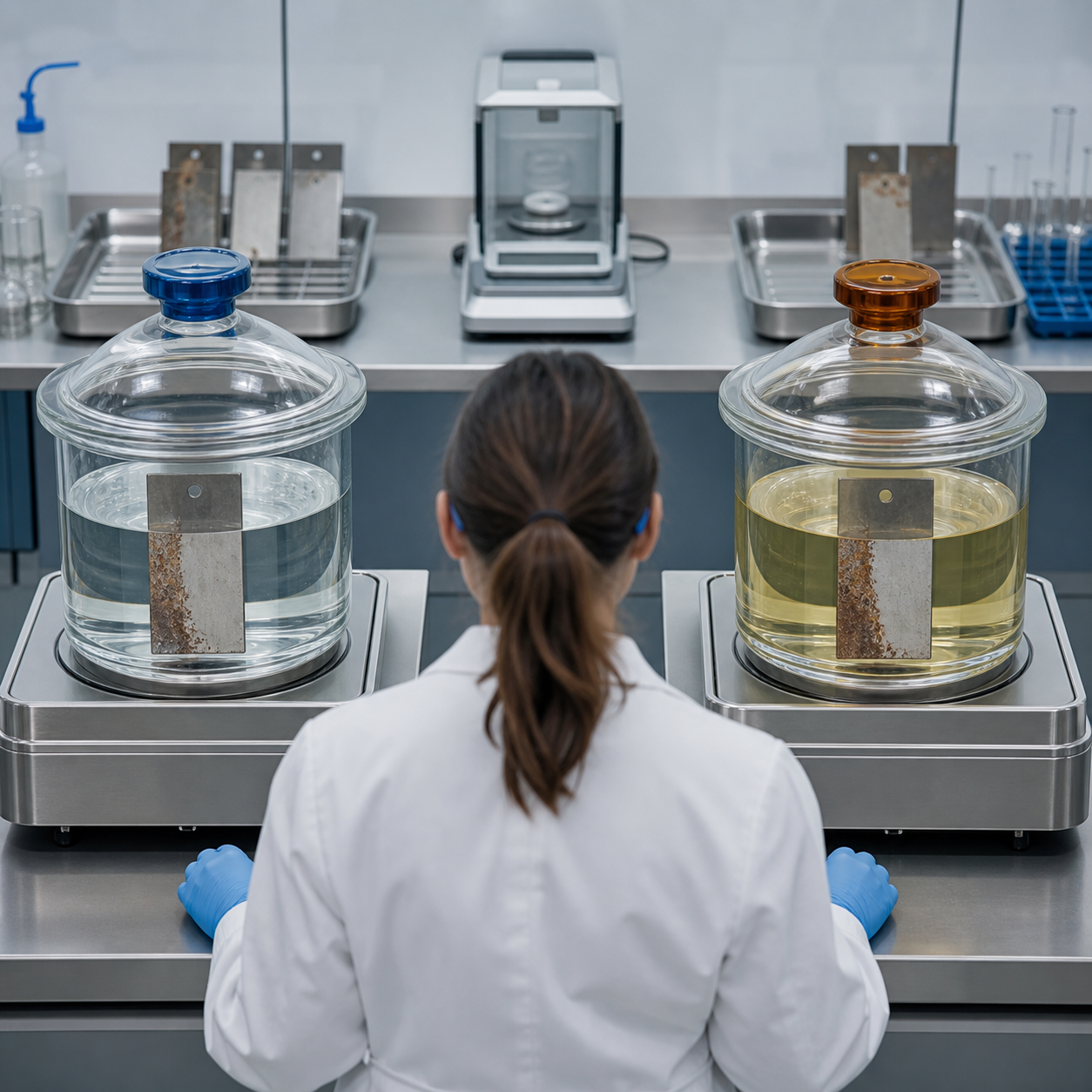
Oxalic acid and citric acid are both organic acids used in selected industrial cleaning systems, but they are not interchangeable. Each has different acidity, metal-binding behavior, solubility, hazard profile and interaction with the deposit and substrate. The better choice depends on what must be removed, which materials are exposed, how the bath is controlled and how the spent solution will be treated. A useful comparison therefore starts with representative deposits and measurable cleaning criteria, not a generic claim that one acid is stronger, safer or cheaper.
Compare the deposit and cleaning objective
Oxalic acid may be considered for certain iron stains and oxide deposits, while citric acid is used in selected chelation, passivation-support and scale-removal formulations. Neither description guarantees performance on a real plant soil. Analyze whether the deposit contains iron oxide, carbonate, silicate, oil, process chemicals or mixed corrosion products, then screen formulations on representative coupons.
Define success beyond appearance
Set limits for residual contamination, material loss, surface roughness, discoloration, coating adhesion, passivation or other downstream needs. A bright surface can still contain residue or suffer unacceptable attack. Include rinse and drying performance in the evaluation because flash rust and retained salts may appear after the cleaning stage.
Compare substrate compatibility
Both acids can affect metals, coatings, seals and gaskets differently as concentration, temperature and contact time change. Test the complete assembly or every exposed material, including welds and mixed-metal joints. Do not transfer a procedure from carbon steel to stainless steel, galvanized steel, aluminum or copper alloys without approval.
Use inhibitors only as validated components
Some cleaning systems use corrosion inhibitors or additional chelants, surfactants and reducing agents. Their effectiveness is specific to the acid, substrate and operating window. Treat the full formulation as the controlled process; substituting one acid while leaving the rest unchanged can alter corrosion and cleaning behavior.
Compare process control and bath life
Evaluate dissolution time, solution preparation, filtration, temperature control, addition sequence and endpoint. Track dissolved metals and contaminant loading as the bath ages. The active-acid result alone may not predict cleaning capacity once metal complexes, solids and carryover accumulate.
Run trials on equal technical targets
Compare formulations at an equivalent cleaning objective rather than equal kilograms or equal nominal concentration. Record chemical consumption, cycle time, energy, rinsing, rework and bath disposal. This creates a process and cost comparison instead of a simple raw-material price comparison.
Compare safety and wastewater impact
Oxalic acid has significant exposure hazards; NIOSH identifies eye, skin, respiratory and kidney concerns. Citric acid also requires SDS-based handling and can irritate exposed tissue. The site industrial hygienist should select controls for the actual concentration and physical form rather than assuming “organic acid” means low risk.
Test the spent solution, not only fresh chemicals
Oxalate and citrate can change metal solubility and wastewater-treatment behavior. Use representative spent baths to evaluate neutralization, precipitation, sludge, chemical oxygen demand where relevant and discharge compliance. A cleaning system that performs well but disrupts treatment can have a higher total cost.
Compare suppliers and total cost
For each candidate, define chemical form, assay basis, impurity limits, packaging, COA, SDS, lot traceability and change notification. Normalize offers by usable active material and include freight, solution preparation, cycle time, bath life, rinsing, corrosion, rework and disposal.
Request an application-focused quotation
Describe the deposit, substrate, temperature range, current process, annual consumption, package and destination without sharing confidential details unnecessarily. Review the Hiacid oxalic acid supply page, the rust-removal guide and the industrial uses overview, then contact Hiacid for a specification-based offer.
Related oxalic acid resources
- Oxalic Acid for Metal Cleaning and Rust Removal
- Oxalic Acid in Textile Bleaching and Dyeing
- Oxalic Acid Grades and Purity
Frequently asked questions
Is oxalic acid always stronger than citric acid for cleaning?
No. Performance depends on the deposit, substrate, complete formulation and process conditions, so representative trials are required.
Which acid is safer for metals?
Neither can be assumed safe for every alloy or coating. Compatibility testing must cover concentration, temperature, time and the full formulation.
How should cleaning cost be compared?
Include usable chemical, cycle time, energy, bath life, rinsing, corrosion, rework, wastewater treatment and disposal—not only price per tonne.
Can wastewater treatment decide the preferred acid?
Yes. Spent-bath behavior and treatment compatibility can materially affect operating cost and compliance.