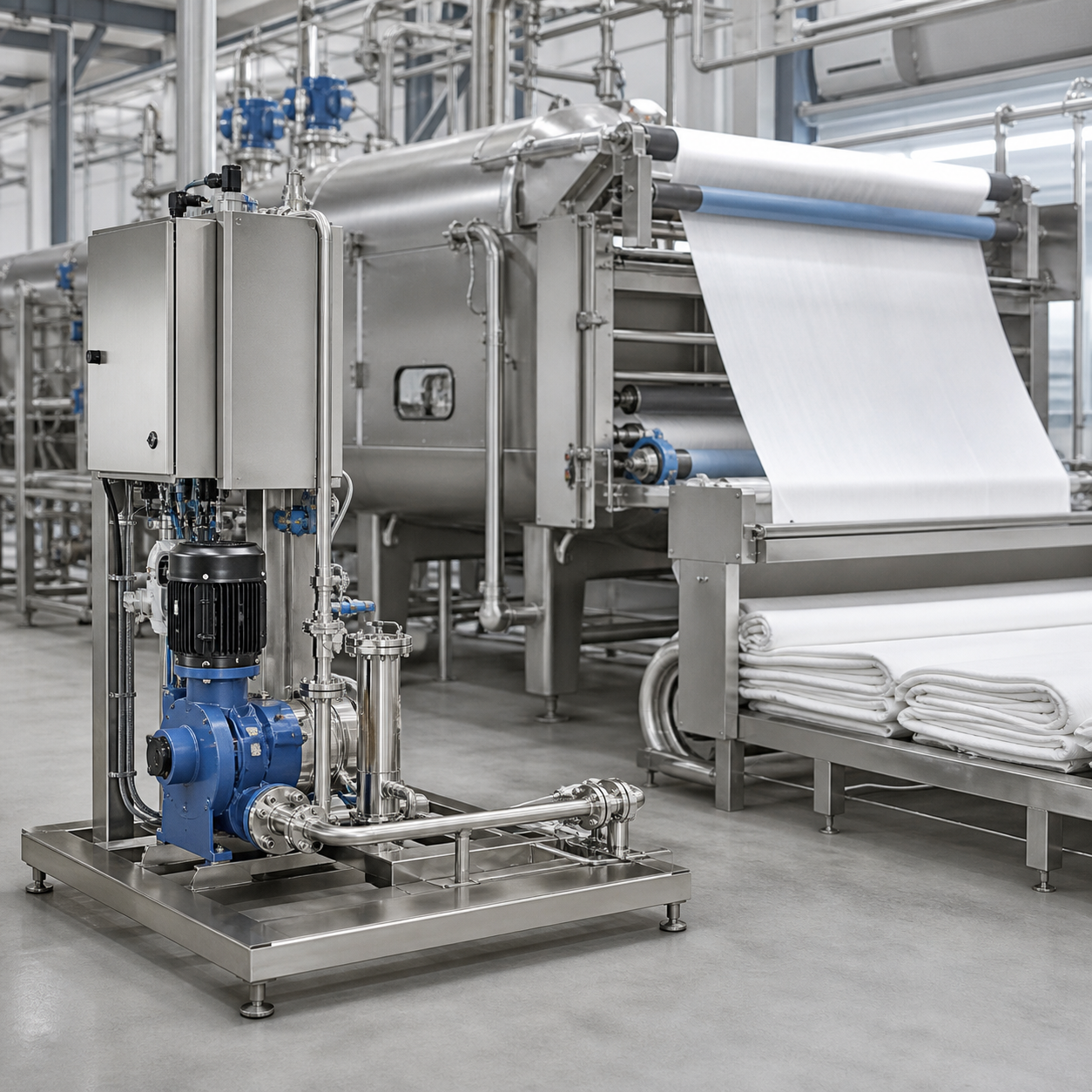
Hydrogen peroxide is widely used in textile bleaching, particularly for cellulosic materials, but successful production depends on the complete bath and fabric history. Concentration, pH, alkalinity, stabilizer, water hardness, trace metals, temperature, time and liquor circulation influence whiteness and fiber strength. A mill should qualify peroxide against the actual cotton, blends, pretreatment and dyeing sequence. Procurement teams need consistent assay and a grade whose impurities and stabilizers do not undermine shade reproducibility, absorbency or wastewater treatment. Qualification should cover several peroxide lots and representative fabric batches, with chemical lot identity retained in the bleaching record. This makes it possible to separate supplier variation from changes in cotton, water, auxiliaries or machine circulation when a shade or strength deviation occurs. Storage age and delivery temperature should also be recorded during trials because they can affect the condition of peroxide received by the dosing system.
Define fabric and quality targets
State fiber composition, construction, incoming contaminants and the required whiteness or absorbency. Cotton, regenerated cellulose, blends and sensitive elastane-containing goods need different limits. Measure whiteness together with strength, weight loss, wettability and downstream shade. A visually bright sample can still fail if degradation or unevenness increases.
Reproduce production conditions in trials
Laboratory development should match water, liquor ratio, auxiliaries, temperature profile, circulation and fabric loading. Include representative greige goods and several lots. Define an operating window rather than one ideal point so production can manage normal fabric and water variation.
Control pH and stabilization
Peroxide bleaching commonly uses alkaline conditions, which increase bleaching activity but can also accelerate uncontrolled decomposition. Use the validated alkali and stabilizer system, addition order and mixing. Local high pH or concentrated contact can create pinholes, strength loss or uneven bleaching.
Manage hardness and metals
Iron, copper and manganese can catalyze peroxide loss and fabric damage. Control incoming water, salt, alkali and equipment cleanliness. Chelation or sequestration must be validated for the full process and wastewater. Track metal sources rather than treating every instability with additional stabilizer.
Dose, heat and sample consistently
Prepare the bath with calibrated meters and a written addition sequence. Record concentration, batch volume, peroxide charge, temperature and pH trend. Sample after adequate circulation and use a validated residual-peroxide method. Sudden local excursions may not be visible in a final pH result.
Protect shade reproducibility
Residual peroxide can interfere with subsequent dyeing if neutralization or peroxide killing is incomplete. Define rinse, neutralization and residual acceptance before dye addition. When qualifying a new peroxide source, compare whiteness, residual, strength and dye shade under controlled conditions.
Specify textile-relevant peroxide quality
Potential controls include concentration, acidity, residue, iron, copper, chloride and stabilizer suitability. Pale shades and optical brightener systems may require stricter color or residue control than general white goods. Set limits from trials and request actual lot results.
Integrate safety and wastewater
Use closed transfer, compatible equipment, ventilation where exposure may occur, PPE and emergency washing according to the SDS and site assessment. Evaluate how stabilizers, chelants and residual peroxide affect biological treatment, color removal and chemical oxygen demand. Quench or segregate streams only through an approved plan.
Source for consistent mill performance
NIOSH identifies higher-strength peroxide as an industrial bleach for textiles and paper. Review the occupational guidance, the Hiacid product record and current supplier documents. Keep source changes under laboratory and mill approval.
Send the textile RFQ
State concentration, impurity controls, annual volume, package, destination and trial size. Describe fiber, process and critical shade requirements without unnecessary confidential details. Review the Hiacid supply page and request a quotation based on active content, quality consistency and delivery plan.
Related hydrogen peroxide resources
- Hydrogen Peroxide Buying Guide: Concentration and Purity
- Hydrogen Peroxide for Pulp and Paper Bleaching
- Hydrogen Peroxide for Industrial Wastewater Oxidation
Frequently asked questions
Why is peroxide stabilization important in textiles?
It moderates decomposition so bleaching remains controlled and fiber damage is limited.
Which metals are process-sensitive?
Iron, copper and manganese are common concerns because they can catalyze peroxide decomposition.
What should be measured besides whiteness?
Check strength, weight loss, absorbency, residual peroxide and downstream dye shade.
Can peroxide remain before dyeing?
Residual peroxide may affect dyes, so the validated process needs an acceptance limit and removal step.