Iron oxides and iron-bearing coatings can darken clay and limit its use in light-colored ceramics, fillers or other mineral products. Oxalic acid is one reagent investigated for selectively dissolving responsive iron phases while leaving much of the silica and alumina framework intact. Results depend on clay mineralogy, iron form, particle size, organic matter, solids loading, acid concentration, temperature, mixing and residence time. A promising color change in a beaker is not enough for production. The processor must verify mineral yield, rheology, filtration, wash-water demand, fired color, strength and effluent load. Oxalic acid quality should be specified from these results, with attention to assay, iron, insoluble matter and consistent dissolution.
For B2B implementation, assign purchasing, production, quality, engineering and EHS ownership before the first delivery. Approve receiving tests, sampling tools, storage, dosing basis, deviation response and retained-sample period in writing. This control plan helps separate raw-material variation from equipment or operating changes and provides objective evidence for buyer-supplier investigations. During qualification, compare at least several representative acid lots under the same operating conditions and record mass balance, product quality, waste load and equipment observations. Establish who can approve a temporary deviation and what evidence is required before material is released. Review transportation, package integrity and unloading alongside laboratory results, because contamination or moisture can enter after the supplier’s final test. Close every trial with a written conclusion, updated specification and defined requalification triggers.
Map iron species and clay variability
Analyze total iron, oxide phases, structural iron, titanium, carbonates and organic matter. Compare deposits, benches and seasons. Iron substituted inside the clay lattice will not respond like a surface coating, so set realistic removal targets from mineralogical evidence.
Define both wet and fired acceptance
Measure brightness or color after drying and after firing at the customer’s temperature. Also track plasticity, shrinkage, water absorption, strength and glaze interaction where relevant. A whiter wet cake can still perform poorly in the ceramic body.
Develop the leach window experimentally
Screen acid concentration, temperature, time, mixing and solids loading with representative feed. Analyze the washed solid and liquor for iron and other dissolved elements. Determine the lowest robust dose that reaches the product target without unnecessary mineral loss.
Watch for iron reprecipitation
Oxalate complexes and iron solids can change with pH, light, oxygen, temperature and concentration. Control cooling, neutralization and washing so dissolved iron is not redeposited on the clay. Use timed samples and mass balance to understand the complete route.
Engineer slurry handling and filtration
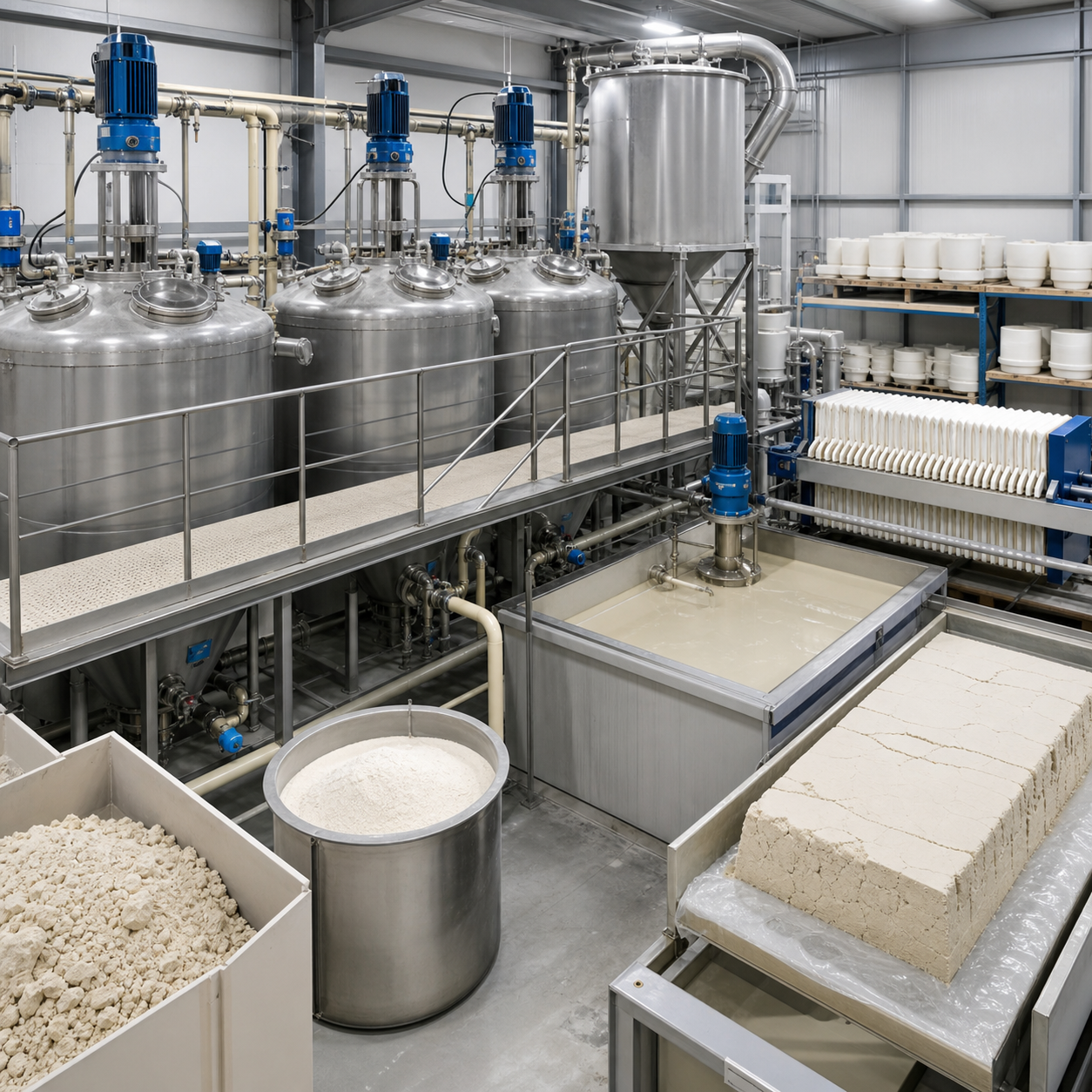
Fine clay can be difficult to settle or filter. Test actual filter cloth, pressure, cake thickness, washing and drying. Include acid effects on viscosity and particle aggregation. A chemically effective treatment may be uneconomic if it doubles filtration cycle time.
Protect the product from equipment iron
Review reactors, agitators, pumps, filters and dryers for corrosion and abrasion. Rust or steel wear can recontaminate a brightened mineral. Select and maintain contact materials based on trials and the actual operating solution.
Connect acid specification to product quality
Specify hydrate form, assay, iron, insoluble matter, color and relevant contaminants. Validate several acid lots through the full process and retain samples. Avoid demanding unrelated trace limits that do not affect clay or fired product.
Use research results responsibly
A recent red-clay leaching study reports substantial iron reduction under its experimental conditions. That evidence supports development, but each deposit and ceramic formulation requires independent optimization and customer approval.
Manage exposure and wastewater
Use enclosed powder handling, dust extraction, controlled dissolution and compatible PPE. Follow the current SDS and NIOSH hazard guidance. Characterize acidic iron-bearing liquor, wash water and solids before selecting treatment or disposal.
Issue a clay-processing RFQ
State form, assay, iron and insoluble limits, methods, trial and annual volume, package, destination, documents and change control. Review the Hiacid oxalic acid page and the silica purification guide, then contact Hiacid.
Related oxalic acid resources
- Oxalic Acid for Silica Sand Iron Removal and Purification
- Oxalic Acid for Controlled Industrial System Decontamination
- Oxalic Acid for Spent Vanadium Catalyst Recovery
Frequently asked questions
Will oxalic acid remove structural iron from every clay?
No. Response depends on whether iron is in removable coatings, separate minerals or the clay lattice.
Why test fired color?
Ceramic firing can reveal impurities or phase changes that are not visible in the wet or dried clay.
What can limit commercial scale-up?
Slurry mixing, filtration, washing, corrosion, water use and effluent treatment can be limiting.
Is the highest acid concentration always best?
No. Use the lowest validated dose that meets product targets and acceptable yield and cost.