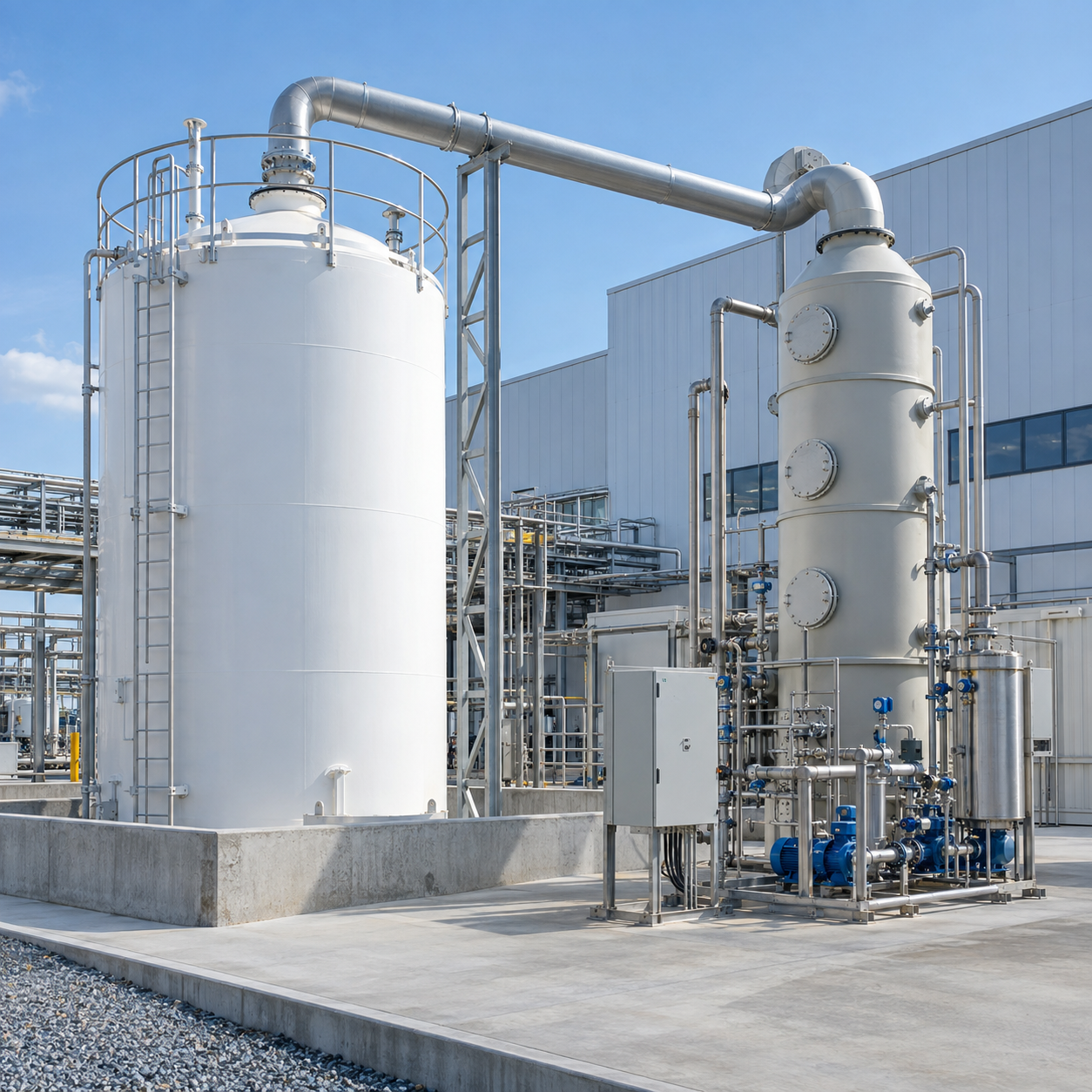
Nitric acid storage is part of an engineered vapor-management system. Tank breathing, unloading displacement, temperature change, acid decomposition, contamination and abnormal events can all affect the vent stream. A small connection on top of the tank is therefore not a complete design. Facilities need compatible storage materials, pressure and vacuum protection, closed routing, effective vapor capture, appropriately sized treatment and monitoring tied to operating limits. Concentration, throughput, climate and regulatory requirements make each site different. This planning guide helps procurement and engineering teams organize design inputs; it is not a scrubber sizing method or permission to modify equipment without qualified review.
For dependable B2B implementation, assign purchasing, quality, engineering, operations and EHS responsibilities before the first shipment. Approve the receiving method, sample point, test frequency, storage system, transfer equipment, deviation process and retained-sample period in writing. Compare several representative supplier lots under controlled conditions and record product quality, process response, waste load and equipment observations. This evidence helps separate raw-material variation from operating or analytical changes. Review packaging, transport, seal integrity and unloading records together with laboratory results because contamination can occur after the supplier’s final test. Define who may release a lot, what requires quarantine, what evidence resolves a dispute and which supplier changes trigger requalification. Include current SDS and COA review, emergency contacts, complaint response and delivery continuity in the same approval plan. Close qualification with an authorized report, a controlled specification and assigned follow-up actions.
Define the complete venting basis
Document tank volume, fill rate, normal level range, acid concentration, temperature envelope, delivery method and simultaneous operations. Include routine breathing, tanker unloading displacement, recirculation and credible deviations. The basis must distinguish normal vapor control from emergency pressure protection.
Identify every connected source
Map storage tanks, day tanks, sample points, unloading lines and process vessels connected to the header. Changes elsewhere can increase flow or alter composition at the scrubber. Keep drawings, valve lists and operating descriptions current.
Select materials for actual service
Qualified corrosion specialists should select tank, piping, gaskets, instruments and scrubber internals for the acid concentration and contaminants. Water dilution, mixed acids or chloride can change corrosion behavior. Inspect linings, nozzles and supports on a risk-based schedule.
Prevent contamination at the source
Segregate nitric acid from organics, reducing agents and incompatible chemicals. Use dedicated connections and positive identification during receipt. Contamination can increase heat, gas generation and corrosion beyond the normal design basis.
Capture and treat acid mist and nitrogen oxides
Route vents through closed compatible equipment to the approved treatment system. Scrubber effectiveness depends on gas composition, liquid chemistry, contact, temperature and maintenance. Do not assume that visible plume absence proves adequate control.
Use current regulatory context
The U.S. EPA nitric acid plant standards page illustrates formal controls for nitrogen oxide emissions from production sources. Storage installations need their own applicability review under current local permits and regulations.
Monitor performance and equipment condition
Define meaningful indicators such as differential pressure, liquid flow, pH or oxidation-reduction condition where applicable, reagent status, temperature and stack or area monitoring. Alarms need documented response and testing. Trend data rather than relying only on occasional visual inspection.
Maintain availability for unloading
Coordinate scrubber readiness with delivery scheduling. If vapor treatment or critical monitoring is unavailable, the approved procedure should define whether unloading is prohibited. Maintain spares for pumps, instruments and seals based on consequence and lead time.
Prepare for abnormal conditions
Include loss of power, blocked vent, overfill, excessive fill rate, contaminated acid, fire exposure and treatment failure in the hazard review. Emergency relief and normal emissions control have different purposes and must not compromise one another.
Align supply data with the design
Tell the supplier the approved concentration, shipment size, unloading rate constraints and documentation requirements. Review the Hiacid nitric acid page and contact the export team for current COA, SDS, package and delivery information.
Related nitric acid resources
- Nitric Acid Concentration Verification by Density and Titration
- Bulk Nitric Acid Unloading Checklist for Industrial Sites
- Nitric Acid for Controlled Copper Etching and Surface Preparation
Frequently asked questions
Is a storage tank vent the same as emergency relief?
No. Normal breathing and vapor treatment are distinct from emergency pressure or vacuum protection, though the systems must be coordinated.
Why can unloading govern scrubber capacity?
Filling displaces tank vapor at a rate linked to delivery flow, potentially creating the highest routine vent load.
Does a clear stack prove NOx control?
No. Performance requires validated monitoring, operating indicators, maintenance and applicable compliance testing.
When should unloading stop?
The site procedure should prohibit or stop transfer when critical containment, vent treatment, monitoring or receiving capacity is unavailable.