
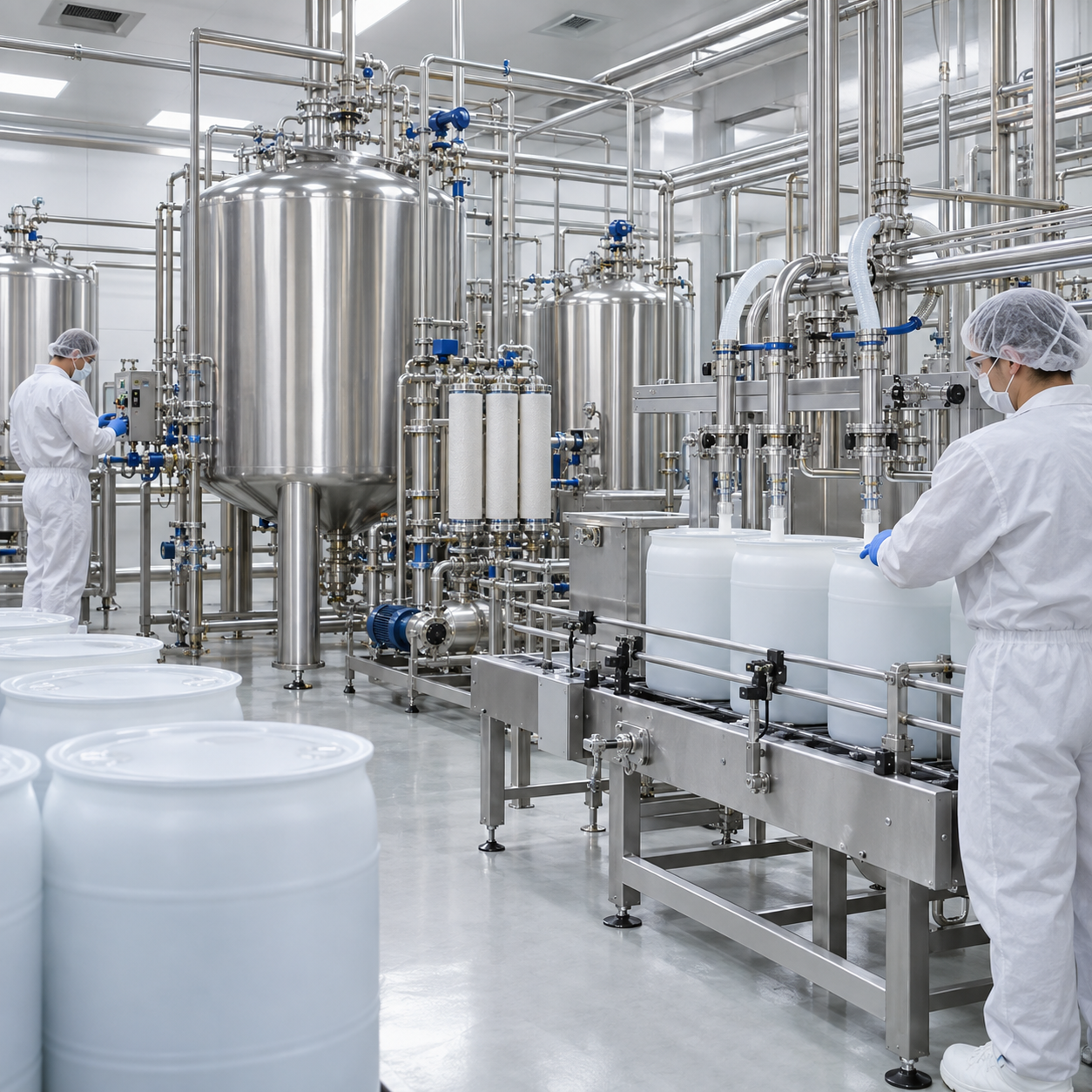
Food-grade formic acid is a regulatory and supply-chain designation, not merely a concentration claim. The permitted function, maximum use, purity criteria, labeling and responsible party depend on the destination market and intended food or processing application. A supplier certificate of analysis supports lot release, but it does not by itself establish that a use is lawful. Industrial buyers should therefore begin with the regulatory basis, translate it into a written material specification, and qualify the complete chain from manufacture through packaging and delivery. This guide describes a compliance-first B2B framework and does not authorize any particular food use or dosage.
For industrial qualification, assign purchasing, quality, engineering, operations, logistics and EHS ownership before the first commercial delivery. Approve the formic acid concentration, analytical methods, sample point, retained-sample period, storage conditions, transfer equipment, deviation response and release authority in writing. Compare representative lots under controlled conditions and record process performance, mass balance, waste, equipment observations and final product quality. This separates raw-material variation from changes in water, feedstock, equipment, operator or analytical method. Review the chain from supplier release through carrier, package, receiving connection and day tank because contamination or misidentification can occur after final analysis. Reconcile ordered, received, stored and consumed quantities and investigate unexplained differences. Supplier scorecards should cover documentation accuracy, delivery condition, corrective-action quality and change notification as well as price. Qualify a contingency source before a disruption using the same methods and process criteria. When buyer and supplier results differ, review sample representativeness, temperature, calibration, detection limits and uncertainty before deciding disposition. Confirm emergency contacts, unloading hours and stop-work authority for every shipment. Include maintenance and warehouse teams in the post-trial review because they often identify seal, vent, hose or handling issues not visible on a certificate of analysis. Close qualification with an authorized report, approved-supplier status and a defined routine-monitoring plan. The NIH PubChem record for formic acid provides broad identity and hazard context; the current SDS, local law and site procedures remain controlling.
Confirm the legal basis before sourcing
Identify the country, product category, technical function, use level and party responsible for regulatory approval. The FDA Food Substances inventory entry for formic acid provides United States context, while FDA also explains how to determine the regulatory status of a food ingredient. Other markets require their own review.
Separate ingredient status from application approval
A substance may be listed for limited functions or conditions without being permitted for every food, process or concentration. Record the exact legal citation, restrictions and labeling obligations. Obtain qualified regulatory advice when the intended use is new, unusual or crosses multiple jurisdictions.
Translate compliance into a purchase specification
Define assay, water, color, residue, metals, organic impurities and microbiological or other criteria where relevant. Cite validated test methods, units, detection limits and release rules. State whether the supplier must meet a compendial, national or buyer-specific standard.
Require evidence behind every lot decision
Approve a certificate-of-analysis format that identifies the product, lot, manufacture date, test results, methods and authorized release. Establish matched-sample or independent-laboratory procedures before a dispute occurs rather than improvising after delivery.
Qualify hygienic manufacture and packaging
Review production segregation, cleaning, water quality, filtration, foreign-material controls, allergen assessment and traceability. Approve the exact container, liner, closure and tamper-evident system because packaging can affect purity and identity.
Protect identity through logistics
Use unambiguous labels and sealed, compatible equipment. Define carrier cleanliness, prior-load restrictions, transfer connections and receiving inspection. A food-grade release can be undermined by an unqualified tanker, hose or intermediate storage vessel.
Build recall-ready traceability
Link incoming raw materials, production batch, analytical records, package numbers, carrier and customer shipment. Test the traceability system periodically so affected lots can be identified quickly without recalling unrelated material.
Control supplier and process changes
Require advance notice for site, synthesis route, raw material, purification, analytical method, packaging or logistics changes. Decide which changes require document review, comparison testing, audit or full requalification.
Use a staged commercial approval
Begin with document review and representative samples, then conduct controlled application trials under the buyer’s food-safety system. Confirm product performance, residues, sensory effects and cleaning interactions as applicable before routine purchasing.
Prepare a food-grade inquiry
Provide destination market, permitted function, required standard, specification, annual volume, package and documents. Review the Hiacid formic acid product page, then request a compliance-based supply assessment.
Related formic acid resources
- Formic Acid for Wood Adhesive Resin pH Control
- Formic Acid for Sodium Formate Deicer Production
- Formic Acid for Transparent Wood Film Manufacturing
Frequently asked questions
Does a food-grade label make every use legal?
No. Legality depends on the jurisdiction, intended function, food category, conditions of use and applicable purity requirements.
Is a certificate of analysis enough for approval?
No. Buyers should also review regulatory status, manufacturing controls, packaging, traceability and change management.
Why qualify the exact package?
Container, liner, closure and transport conditions can affect purity, identity and hygienic status.
Which changes should a supplier report?
Changes to site, process, raw materials, methods, purification, packaging or logistics may require review or requalification.