
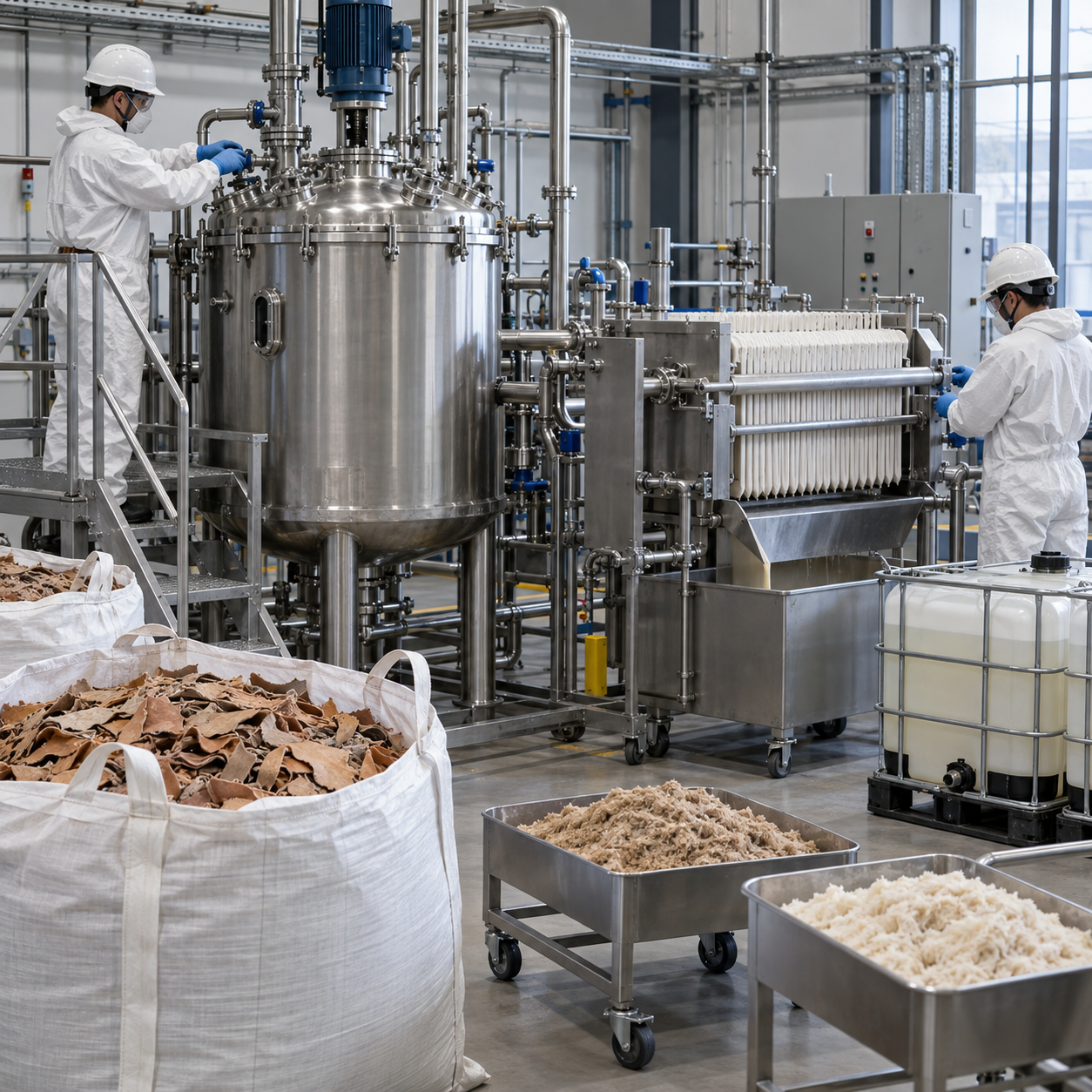
Chrome-tanned leather shavings and offcuts contain collagen that may have value, but chromium and finishing chemicals complicate recovery. Research has evaluated oxalic acid as one component of dechroming systems because oxalate can interact strongly with chromium and other metals. Performance depends on leather origin, tanning history, particle preparation, moisture, additives and the quality target for recovered collagen. A result from one waste stream cannot be transferred directly to another. This article outlines industrial feed qualification and supplier controls; it does not provide an operating recipe or authorize recovered material for food, medical or feed use.
For industrial qualification, assign purchasing, quality, engineering, operations, logistics and EHS ownership before the first commercial delivery. Approve the oxalic acid hydration state, assay basis, analytical methods, sample point, retained-sample period, storage conditions, transfer method, deviation response and release authority in writing. Compare representative lots under controlled conditions and record process performance, mass balance, waste, equipment observations and final product quality. This separates raw-material variation from changes in water, feedstock, equipment, operator or analytical method. Review the chain from supplier release through carrier, package, warehouse and point of addition because contamination, moisture uptake or misidentification can occur after final analysis. Reconcile ordered, received, stored and consumed quantities and investigate unexplained differences. Supplier scorecards should cover documentation accuracy, delivery condition, corrective-action quality and change notification as well as price. Qualify a contingency source before a disruption using the same methods and process criteria. When buyer and supplier results differ, review sample representativeness, hydration state, drying basis, calibration, detection limits and uncertainty before deciding disposition. Confirm emergency contacts, unloading hours and stop-work authority for every shipment. Include maintenance and warehouse teams in post-trial review because they often identify dust, seal, liner or handling issues not visible on a certificate of analysis. Close qualification with an authorized report, approved-supplier status and a defined routine-monitoring plan. The NIH PubChem record for oxalic acid provides broad identity and use context; the current SDS, local law and site procedures remain controlling.
Characterize the leather waste before selecting chemistry
Separate chrome-tanned shavings, finished-leather scrap, polymer-coated material and mixed municipal waste. Measure chromium, moisture, ash, oils, dyes, finishing polymers and foreign matter. Representative sampling is essential because a few heavily finished pieces can distort a small trial.
Define both dechroming and collagen outcomes
Set targets for chromium removal, collagen yield, molecular integrity, color, ash, residual chemicals and the intended downstream market. A high metal extraction result is not sufficient if the collagen is degraded or the liquid waste becomes impractical to treat.
Use published work as screening evidence
A peer-reviewed study on chromium removal from tanned leather waste evaluated oxalic-acid-based extraction while monitoring collagen hydrolysis. Its specific conditions are evidence for laboratory screening, not a universal production instruction.
Design representative comparison trials
Compare candidate chemistries using multiple leather lots, replicated tests and predetermined acceptance criteria. Close chromium, collagen, acid, water and solids balances. Include the untreated feed and process blanks so analytical recovery can be checked.
Qualify oxalic acid for reproducible trials
Specify hydration state, assay basis, water, insoluble matter, residue and metals that could affect extraction or recovered-product analysis. Use methods with reporting limits below the project acceptance criteria.
Link every result to material genealogy
Record oxalic acid lot, leather source, preparation, equipment, run history and analytical samples. Retain matched material so unexpected chromium or collagen results can be investigated without relying on a different batch.
Engineer separation and waste treatment early
Assess solid-liquid separation, washing, chromium recovery, oxalate fate, water reuse and final residue classification before scale-up. A successful extraction can still fail when filtration, wastewater or chromium disposition is considered.
Complete materials and exposure review
Oxalic acid dust and solutions require controlled handling. Evaluate tanks, pumps, seals, filters and ventilation for the planned concentration and contaminants. Use the current SDS, industrial hygiene monitoring and an approved emergency plan.
Stage purchasing with technical gates
Begin with documented small packages, then move to pilot quantities only after reproducible balances and product testing. Require retained samples, deviation response and change notification before commercial supply.
Prepare a leather-recycling inquiry
Provide required grade, impurity limits, trial volume, package, destination, COA and scale-up outlook. Review the Hiacid oxalic acid product page, then request a documented trial-supply proposal.
Related oxalic acid resources
- Oxalic Acid for Iron Recovery from Wet-Process Phosphoric Acid
- Oxalic Acid for Bauxite Residue and Red Mud Valorization
- Oxalic Acid Recovery from High-Iron Process Liquors
Frequently asked questions
Can one dechroming condition work for every leather waste stream?
No. Tanning history, finishes, particle form and chromium content require feed-specific validation.
Does chromium removal prove recovered collagen is suitable for sale?
No. Collagen integrity, impurities, legal status and the requirements of its intended market must also be verified.
Why close the chromium and oxalate balances?
Complete balances show where hazardous constituents and reagent report and whether the proposed waste plan is credible.
When should supply move beyond laboratory packages?
Only after reproducible trials, an approved hazard review and a defined downstream recovery and waste strategy.