
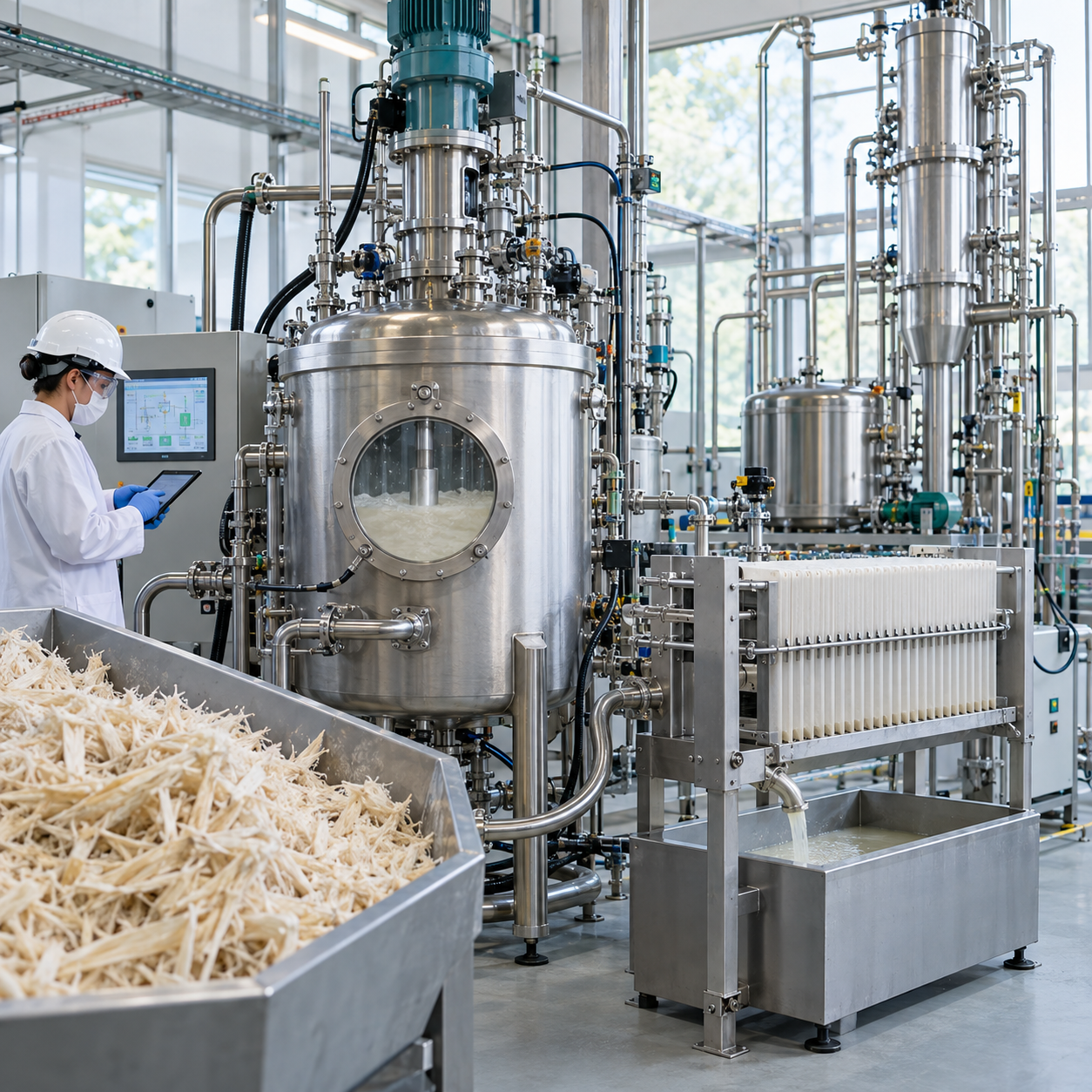
Nanocellulose developers evaluate organic-acid routes to separate or modify cellulose while controlling crystallinity, thermal behavior, surface chemistry and fiber dimensions. Formic acid appears in published pretreatment and isolation work, sometimes alongside oxidants or other processing steps. The laboratory result is highly dependent on biomass, prior delignification, water, temperature history, washing and mechanical treatment. Commercial qualification must also address acid recovery, accumulated extractives, corrosion, wastewater and worker exposure. Procurement should be linked to an experimental mass balance and product specification rather than to acid concentration alone.
Industrial buyers should establish written ownership across purchasing, quality, engineering, operations, logistics and EHS before a commercial trial. Approve the formic acid specification, analytical methods, sample point, retained-sample period, storage conditions, transfer equipment, release authority and deviation response. Compare more than one representative lot under controlled conditions and record material balance, process performance, equipment observations, waste and final product quality. This makes it possible to distinguish acid variation from changes in water, feedstock, equipment, operator or test method. Review the entire chain from supplier release through package or carrier, receiving connection and day tank because contamination or misidentification can occur after manufacture. Reconcile ordered, received, stored and consumed quantities and investigate unexplained differences. Supplier scorecards should include document accuracy, delivery condition, corrective-action quality and change notification as well as price. Qualify a contingency source before a disruption using the same tests and process criteria. If buyer and supplier results differ, review sampling, temperature, calibration, detection limits and uncertainty before disposition. Confirm emergency contacts, unloading hours and stop-work authority for every shipment. Include warehouse and maintenance teams in post-trial review because they often identify seal, vent, hose or handling issues not visible on a certificate. Close qualification with an authorized report, approved-supplier status and routine monitoring. The NIH PubChem record for formic acid provides identity and broad hazard context; the current SDS, local law and site procedures remain controlling.
Define the nanocellulose product and biomass
Set targets for cellulose nanocrystal or nanofibril dimensions, crystallinity, surface functionality, thermal stability, color, dispersion and intended application. Characterize species, harvest or supplier, lignin, hemicellulose, ash, extractives and moisture.
Avoid combining unlike feedstocks in early trials
Agricultural residue, wood pulp and microcrystalline cellulose can respond differently. Preserve feedstock identity through trials so an apparent acid effect is not actually caused by biomass variation.
Use literature as a screening map
A review of nanocellulose materials and processing discusses organic-acid isolation routes and reports formic-acid-related examples. Published conditions establish possibilities, but they do not replace trials with the buyer’s biomass, equipment and product tests.
Create a staged design of experiments
Vary only controlled factors, include replicates and close cellulose, lignin, acid, water and solids balances. Predefine how yield and quality will be calculated so selective reporting does not hide losses in wash or filtrate streams.
Specify acid quality for material consistency
Evaluate assay, water, color, nonvolatile residue, metals and organic impurities against nanocellulose color, stability, surface chemistry and downstream formulation. Approve methods with reporting limits that support the experimental question.
Track fresh and recovered acid separately
Recovered acid can accumulate water and biomass-derived compounds. Assign unique tank and sample identities, trend composition and establish a data-based maximum recycle condition or purge rule.
Design recovery and washing before scale-up
Model evaporation or separation duty, condensate quality, wash-water demand, solids filtration and residue disposal. Include acid losses in wet cake and off-spec material. Recovery percentage alone is incomplete without recovered-acid quality.
Complete a materials and hazard review
Confirm compatibility of reactors, filters, pumps, seals, hoses and recovery equipment. Review heat release, pressure, oxidant interaction where applicable, ventilation, relief, exposure, containment and emergency response with qualified engineering and EHS teams.
Gate purchasing to technical evidence
Begin with traceable small packages, progress to pilot quantities after repeatable product data, and consider bulk supply only after a stable mass balance and approved recovery concept. Include retained samples and supplier change notification.
Prepare a nanocellulose inquiry
Provide concentration, impurity priorities, trial volume, package, destination and scale-up outlook. Review the Hiacid formic acid product page, then request a staged development-supply proposal.
Related formic acid resources
- Formic Acid for Fish Silage Production
- Formic Acid for Swine Feed Acidification
- Formic Acid for Polyamide Electrospinning
Frequently asked questions
Does formic acid produce the same nanocellulose from every biomass?
No. Cellulose structure, lignin, hemicellulose, ash, extractives and prior treatment all affect the result.
Why test recovered acid?
Water and extracted organics can accumulate and change pretreatment performance or final material properties.
Which quality attributes should trials measure?
Yield, dimensions, crystallinity, surface chemistry, thermal stability, color and dispersion should match the intended application.
When is bulk acid supply appropriate?
After repeatable pilot data, a closed mass balance, approved recovery design and completed safety review.