
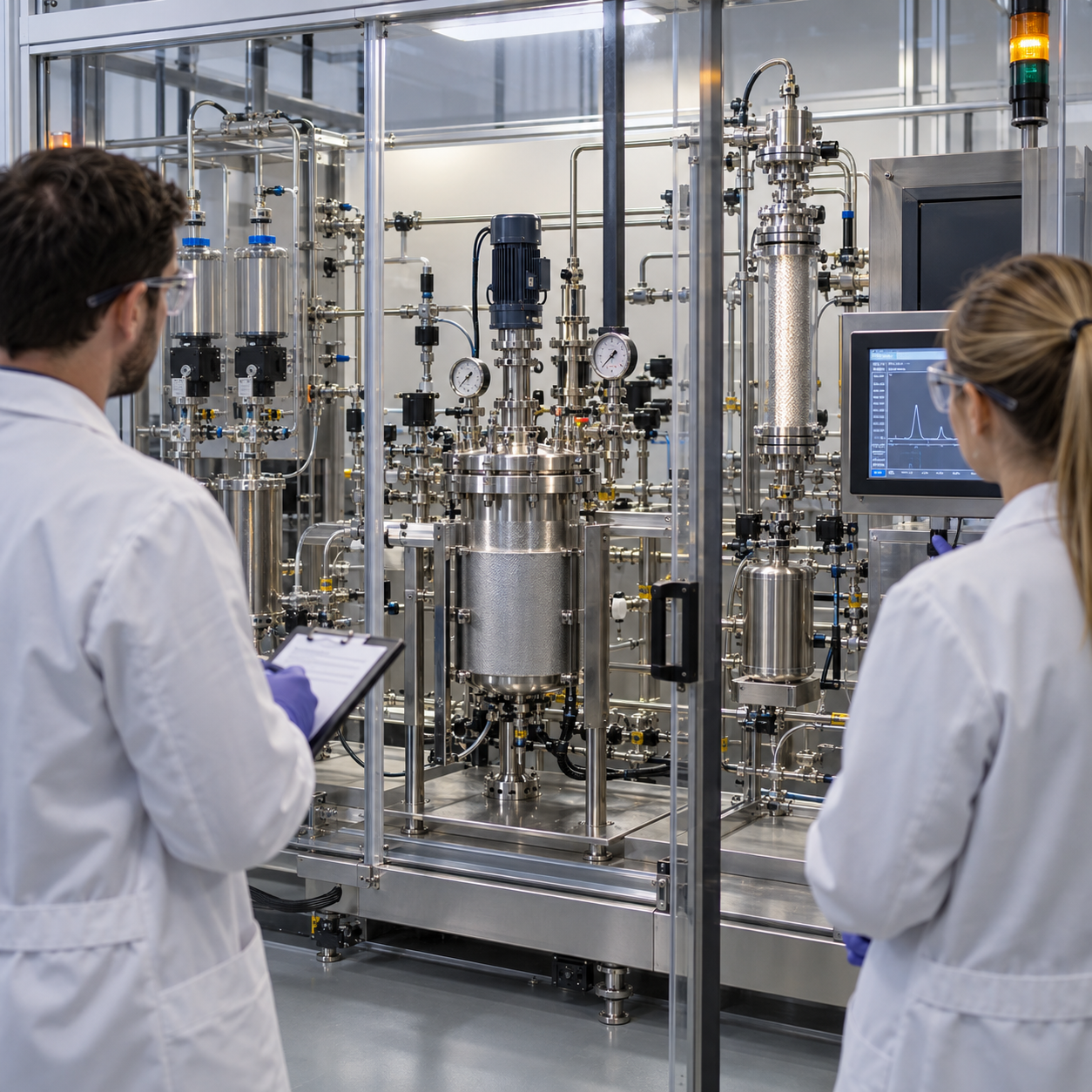
Research groups and fine-chemical developers have investigated formic acid as a source of carbon monoxide for selected carbonylation and reductive transformations. The attraction is controlled generation at the point of use rather than routine handling of a larger external CO inventory. The hazard is not removed: carbon monoxide is toxic, difficult to detect without instruments and capable of creating pressure and flammability risks in process equipment. Chemistry, gas rate, impurities, pressure relief, containment, detection and scrubbing must be engineered as a closed system. This article describes a qualification framework and intentionally omits an operating recipe.
Industrial buyers should establish written ownership across purchasing, quality, engineering, operations, logistics and EHS before a commercial trial. Approve the formic acid specification, analytical methods, sample point, retained-sample period, storage conditions, transfer equipment, release authority and deviation response. Compare more than one representative lot under controlled conditions and record material balance, process performance, equipment observations, waste and final product quality. This makes it possible to distinguish acid variation from changes in water, feedstock, equipment, operator or test method. Review the entire chain from supplier release through package or carrier, receiving connection and day tank because contamination or misidentification can occur after manufacture. Reconcile ordered, received, stored and consumed quantities and investigate unexplained differences. Supplier scorecards should include document accuracy, delivery condition, corrective-action quality and change notification as well as price. Qualify a contingency source before a disruption using the same tests and process criteria. If buyer and supplier results differ, review sampling, temperature, calibration, detection limits and uncertainty before disposition. Confirm emergency contacts, unloading hours and stop-work authority for every shipment. Include warehouse and maintenance teams in post-trial review because they often identify seal, vent, hose or handling issues not visible on a certificate. Close qualification with an authorized report, approved-supplier status and routine monitoring. The NIH PubChem record for formic acid provides identity and broad hazard context; the current SDS, local law and site procedures remain controlling.
Confirm that the chemistry needs this route
Define the target transformation, catalyst, substrate sensitivity, required gas profile and reasons for considering formic acid. Compare external CO, solid or liquid surrogates and non-carbonylative routes using safety, waste, selectivity, scale and economics.
Use research as evidence, not authorization
An ACS study reports formic acid as a carbon monoxide source in a palladium-catalyzed heterocyclization, while an RSC engineering paper discusses low-cost instant generation for carbonylation. Each plant still needs independent development and formal process-safety approval.
Close carbon and pressure balances
Quantify possible gas generation, dissolution, consumption, venting and residual inventory under normal and credible upset conditions. Include reagent overcharge, loss of cooling, blocked outlet, catalyst variation and delayed initiation.
Verify gas identity and rate analytically
Use qualified online or at-line methods capable of measuring carbon monoxide and relevant by-products. Do not infer complete conversion or safe vent conditions solely from liquid-phase yield.
Design multiple layers of protection
Use pressure-rated closed equipment, appropriate relief, inerting where justified, ventilation, fixed and personal CO detection, automated isolation, contained sampling and validated off-gas treatment. Define alarm response and evacuation.
Keep scale-up behind formal gates
Laboratory success does not justify direct plant charging. Hazard studies, calorimetry, gas-rate data, materials review, relief design and management of change should precede each scale increase.
Qualify acid against reaction performance
Evaluate assay, water, color, residue, metals and selected organic impurities for their effects on catalyst activity, induction, gas evolution, selectivity and workup. Compare representative lots and retain matched samples.
Control catalyst and upstream interactions
Map impurities from substrates, catalysts, acids, anhydrides or activating agents as applicable. The observed gas profile is a property of the whole reaction system, not formic acid in isolation.
Build a documented supply agreement
Approve manufacturing site, test methods, COA, package, seals, storage, shelf life, deviation response and change notification. Match package size to controlled consumption so unnecessary inventory is not created.
Prepare a development inquiry
Provide concentration, impurity limits, package, annual or campaign volume, destination and quality documents. Review the Hiacid formic acid product page, then request a confidential technical quotation.
Related formic acid resources
- Formic Acid for Fish Silage Production
- Formic Acid for Swine Feed Acidification
- Formic Acid for Nanocellulose Isolation
Frequently asked questions
Does on-demand generation eliminate carbon monoxide risk?
No. Toxicity, pressure, flammability, detection, ventilation and off-gas treatment still require engineered controls.
Why avoid publishing a generic operating recipe?
Gas rate and hazard depend on the complete chemistry, equipment and scale, so conditions require qualified development and review.
Which formic acid properties may affect the reaction?
Assay, water, metals, residue and organic impurities can influence catalyst behavior, gas evolution and selectivity.
What should be completed before scale-up?
Reaction data, gas analytics, hazard studies, relief design, detection, containment and management-of-change approval are essential.