
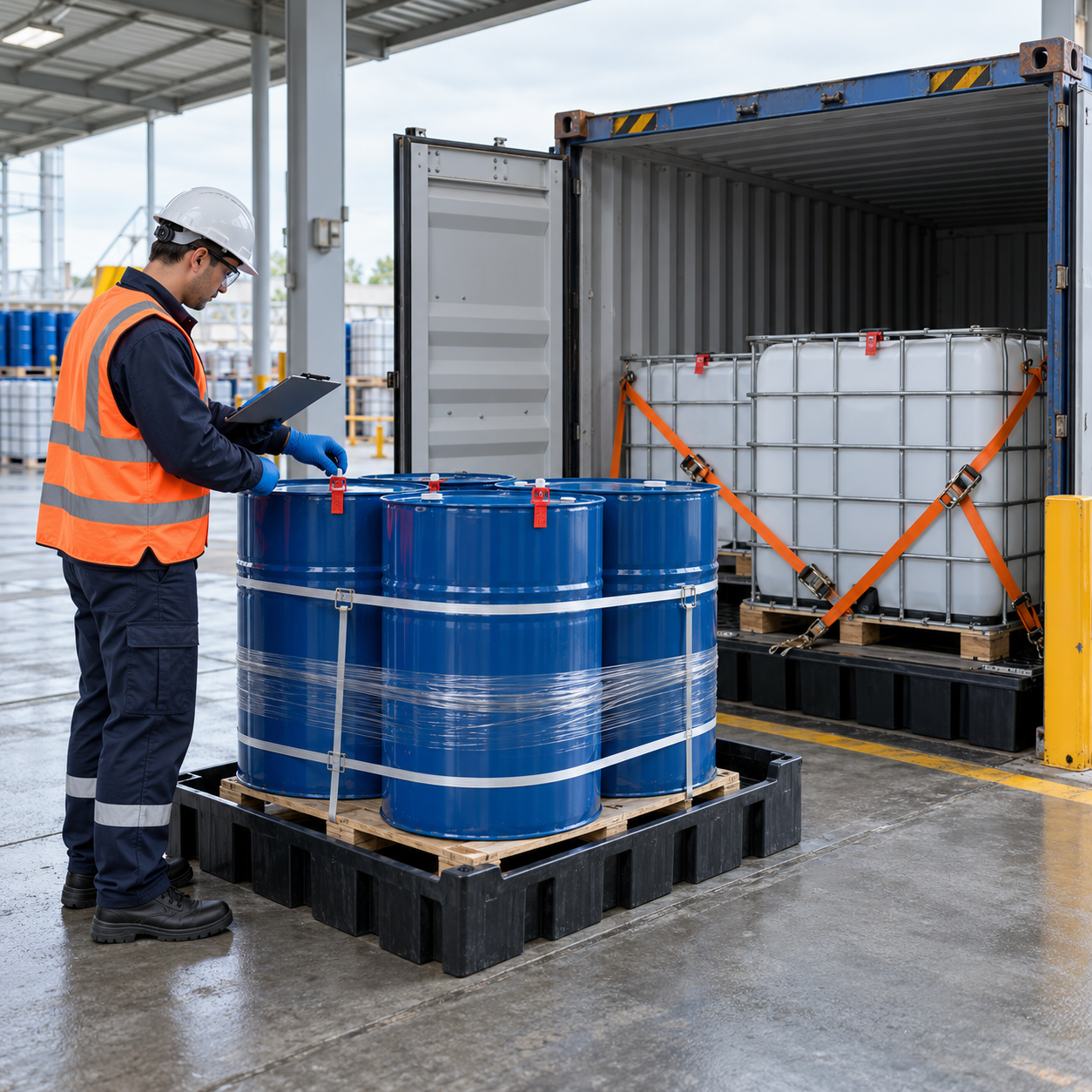
A formic acid shipment can be chemically on specification and still be delayed if concentration, dangerous-goods description, package approval, marks, carrier records or consignee data do not agree. Classification may depend on acid concentration and the transport mode, while national implementation, carrier rules and route restrictions can add requirements. Sales names must never replace the proper regulated description. The safest workflow is a documented review by trained dangerous-goods personnel using the current rules for the origin, transit countries, destination and mode. This checklist supports coordination among buyer, supplier, forwarder and carrier; it is not a classification decision or legal advice.
The UN Model Regulations, Revision 24 provide the current international model framework. Formic acid entries distinguish concentration ranges, so the exact product assay and current modal rules must be checked by a qualified shipper before documentation is issued.
Industrial qualification should have named ownership across purchasing, quality, engineering, operations, logistics and EHS. Approve the formic acid specification, test methods, sample points, retained-sample period, package or carrier, unloading connection, storage limits, release authority and deviation response before the first commercial lot. Compare representative lots under controlled conditions and record material balance, process performance, equipment observations, waste and final-product quality. This helps separate acid variation from changes in water, feedstock, equipment, operator or test method. Review the entire chain from supplier release through transport, receiving and point of use because contamination or misidentification can occur after manufacture. Reconcile ordered, received, stored and consumed quantities and investigate unexplained differences. Supplier scorecards should include document accuracy, delivery condition, corrective-action quality and change notification as well as price. Qualify contingency supply before a disruption using the same tests and process criteria. Where buyer and supplier results differ, review sampling, temperature, calibration, detection limits, units and measurement uncertainty before disposition. Confirm emergency contacts, unloading hours and stop-work authority for every shipment. Include warehouse and maintenance personnel in the trial review because they often identify seal, vent, hose or handling issues not visible on a certificate. Close qualification with an authorized report, approved-supplier status, routine monitoring and requalification triggers. Formic acid is corrosive and concentrated grades may introduce additional transport and fire considerations. The NIH PubChem record for formic acid provides identity and broad hazard context; the current SDS, local law, permit conditions and site procedures remain controlling. Buyers should not infer regulatory approval or guaranteed process performance from a product description or published study.
Confirm product identity and concentration
Match chemical name, CAS identity, assay range, water and any mixture components across purchase order, SDS, specification, certificate and booking. Resolve whether concentration values are mass fraction or another basis. Do not classify from a shortened catalog name.
Use the current applicable rules
Identify sea, air, road, rail and inland-water legs plus every jurisdiction. Verify proper shipping name, UN entry, class, subsidiary risk, packing group and special provisions from current authoritative rules. Record the rule edition and reviewer.
Approve packaging for the exact movement
Confirm drum, IBC, tank or portable tank design is permitted for the classification, concentration and mode. Check valid approval marks, test dates, closure instructions, gasket compatibility, maximum filling, ullage and gross mass. Carrier acceptance does not substitute for shipper compliance.
Inspect condition and containment
Before loading, examine corrosion, dents, swelling, valve protection, caps, vents, pallets, overpack and secondary containment where used. Verify closure torque or procedure and evidence of leak testing. Quarantine any package with an unexplained stain or damaged seal.
Align marks labels and documents
Reconcile package and vehicle or container marks with the transport document, container packing certificate, booking and emergency information. Confirm shipper, consignee, quantity, package count and contact details. Use required language and units for the route.
Control revisions and handoffs
Issue documents from an approved source with version control. Define who may correct a booking, SDS or dangerous-goods declaration and how the carrier receives the revision. Keep an auditable record of approval rather than exchanging uncontrolled screenshots.
Verify loading and route readiness
Check segregation from incompatible goods, package orientation, blocking, bracing, weight distribution, container condition and door clearance. Confirm temperature exposure, port restrictions, transshipment, customs data and delivery appointment before release.
Prepare incident and discrepancy response
Provide the required emergency contact and information. Establish stop-shipment criteria for leaks, seal mismatch, document conflict, refused booking or route change. Notify responsible dangerous-goods specialists before moving a questionable load.
Close shipment records and learn
Capture package numbers, seal, vehicle or container identity, departure, handoffs, delivery condition and any carrier observations. Investigate wet packaging, odor, damage, delay or quantity discrepancy and feed corrective action into future orders.
Prepare an export inquiry
Provide concentration, quantity, package, destination, mode, delivery term and required documents. Review the Hiacid formic acid product page, then request an export quotation for review by your logistics team.
Related formic acid resources
- Formic Acid for Multilayer Film Delamination Recycling
- Formic Acid for Wet Flue Gas Desulfurization Trials
- Formic Acid Recovery and Distillation Process Design
Frequently asked questions
Does every formic acid concentration use the same transport entry?
No. Applicable entries and requirements can differ by concentration, mode and jurisdiction.
Can the SDS alone authorize a shipment?
No. Trained personnel must apply current transport rules and verify the actual product, package, route and mode.
Why compare every document before dispatch?
Conflicting names, quantities, package counts or consignee details can cause rejection, delay or unsafe response.
What should happen if a seal or package is damaged?
Stop the shipment, isolate the issue and follow the approved dangerous-goods and emergency procedure.