
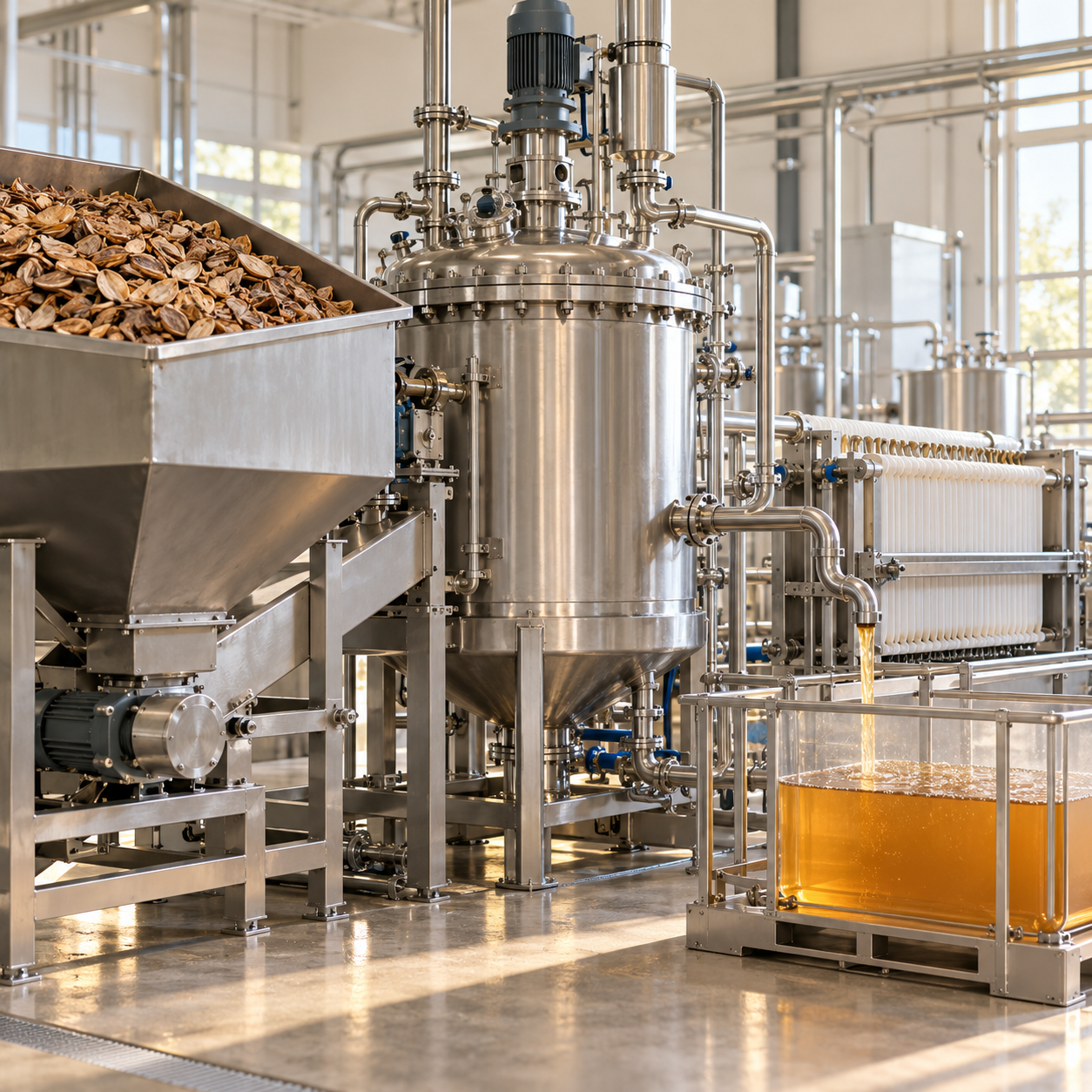
Some seed shells and processing residues contain mannan-rich hemicellulose that can be hydrolyzed into mannose-rich liquor. Dilute oxalic acid is attractive in research because it can catalyze hydrolysis at relatively low concentration and may offer different corrosion, recovery and inhibitor profiles from mineral acids. Biomass is inherently variable, however, and severe treatment can degrade sugars into furans and organic acids. A commercial assessment must connect feed composition, hydrolysis severity, solid separation, detoxification, acid recovery and the specification of the final sugar stream. Food, fermentation and chemical routes also impose different purity and regulatory requirements.
For B2B implementation, assign owners in process engineering, quality, production, purchasing and EHS before the first delivery. Approve the sampling plan, receiving tests, storage conditions, dosing basis, deviation response and retained-sample period in writing. Compare representative oxalic acid lots under identical operating conditions and record mass balance, product quality, waste load, energy and equipment observations. Define who may approve a temporary deviation and what evidence is required before release. Review transportation, packaging, unloading and moisture control alongside the supplier’s laboratory data. Close every trial with an updated material specification, a documented conclusion and clear requalification triggers. Procurement should confirm lead time, minimum order, container loading, port documentation and contingency stock. Quality teams should trend results instead of recording only pass or fail, while production records actual consumption per tonne of acceptable output. A periodic supplier review can combine delivery performance, complaint response, COA trends and process results into one evidence-based decision. This disciplined approach separates raw-material variation from feed, equipment or operating changes and supports faster investigation if recovery or purity shifts. Before scale-up, repeat the trial at the expected operating solids, residence time and recycle ratio. Sample during startup, stable operation and shutdown because transient conditions can expose impurity or filtration problems hidden by a short batch test. Document calibration, detection limits and calculation formulas so laboratories can reproduce the reported recovery. Include raw material, utilities, labor, maintenance, waste treatment and working inventory in the economic model. Finally, review emergency isolation, secondary containment, labeling and worker training before commissioning. These controls turn a promising laboratory result into an auditable process-development package and help the buyer compare technical offers on the same basis.
Characterize the seed-shell feed
Measure moisture, ash, extractives, mannan, cellulose, lignin, particle size and storage age across seasons. Remove stones, metals and excess soil before milling. Establish a dry-mass basis so sugar yield and acid consumption are comparable.
Choose the downstream product first
Define whether the liquor will feed fermentation, purification to mannose, catalytic conversion or another process. Set targets for sugar concentration, inhibitors, ash, color, residual oxalate and microbial control before selecting hydrolysis conditions.
Use published work to set trial boundaries
A Green Chemistry study reports oxalic-acid hydrolysis of açaí seed waste to produce a mannose-rich hydrolysate under defined conditions. Other seed shells require independent composition and severity testing.
Apply a severity matrix
Vary temperature, time, acid concentration and solids loading while keeping particle preparation and heating profile controlled. Include acid-free and benchmark controls. Replicate center points to distinguish real effects from biomass variation.
Measure sugars and degradation products
Use validated chromatography for mannose, glucose, galactose, xylose, furfural, hydroxymethylfurfural, acetic acid and other relevant compounds. Report sugar released, sugar retained in solids and carbon lost to degradation.
Track residual oxalate and mineral interactions
Calcium and other minerals can bind oxalate or create precipitates. Analyze liquid and solid phases, and determine whether residual oxalate interferes with fermentation, purification or wastewater treatment.
Integrate separation and acid recovery
Pilot pressing or filtration with realistic solids. Evaluate washing, concentration, ion exchange, membrane or solvent-based acid recovery only after testing fouling and selectivity with the actual hydrolysate.
Account for energy, water and coproducts
Include feed drying, milling, heating, cooling, evaporation and wastewater treatment. Characterize lignin-rich solids for fuel or material use. A favorable sugar yield can still be uneconomic if dilution and recovery duties are excessive.
Specify suitable oxalic acid supply
Define form, assay, water, insolubles and metals relevant to the intended biorefinery route. For food or fermentation applications, determine all applicable regulatory and purity requirements rather than assuming industrial grade is suitable.
Plan laboratory-to-pilot purchasing
Share grade, analytical needs, quantity, package, destination and schedule. Review the Hiacid oxalic acid page, then ask the team about documented supply options.
Related oxalic acid resources
- Oxalic Acid for Niobium and Tantalum Recovery
- Oxalic Acid for Tin Recovery from Zinc Leaching Residue
- Oxalic Acid for Electrolytic Manganese Residue Recovery
Frequently asked questions
Does oxalic acid always produce a mannose-rich hydrolysate?
No. The feed must contain suitable mannan, and severity must release mannose without excessive degradation.
Why measure furans and organic acids?
They indicate sugar degradation and may inhibit fermentation or complicate purification.
Can industrial-grade oxalic acid be used for food applications?
Suitability depends on the final use and applicable regulations; the required grade must be established explicitly.
What makes biomass trials comparable?
Use a dry-mass basis, controlled particle size, measured composition, replicated conditions and complete sugar and carbon balances.