
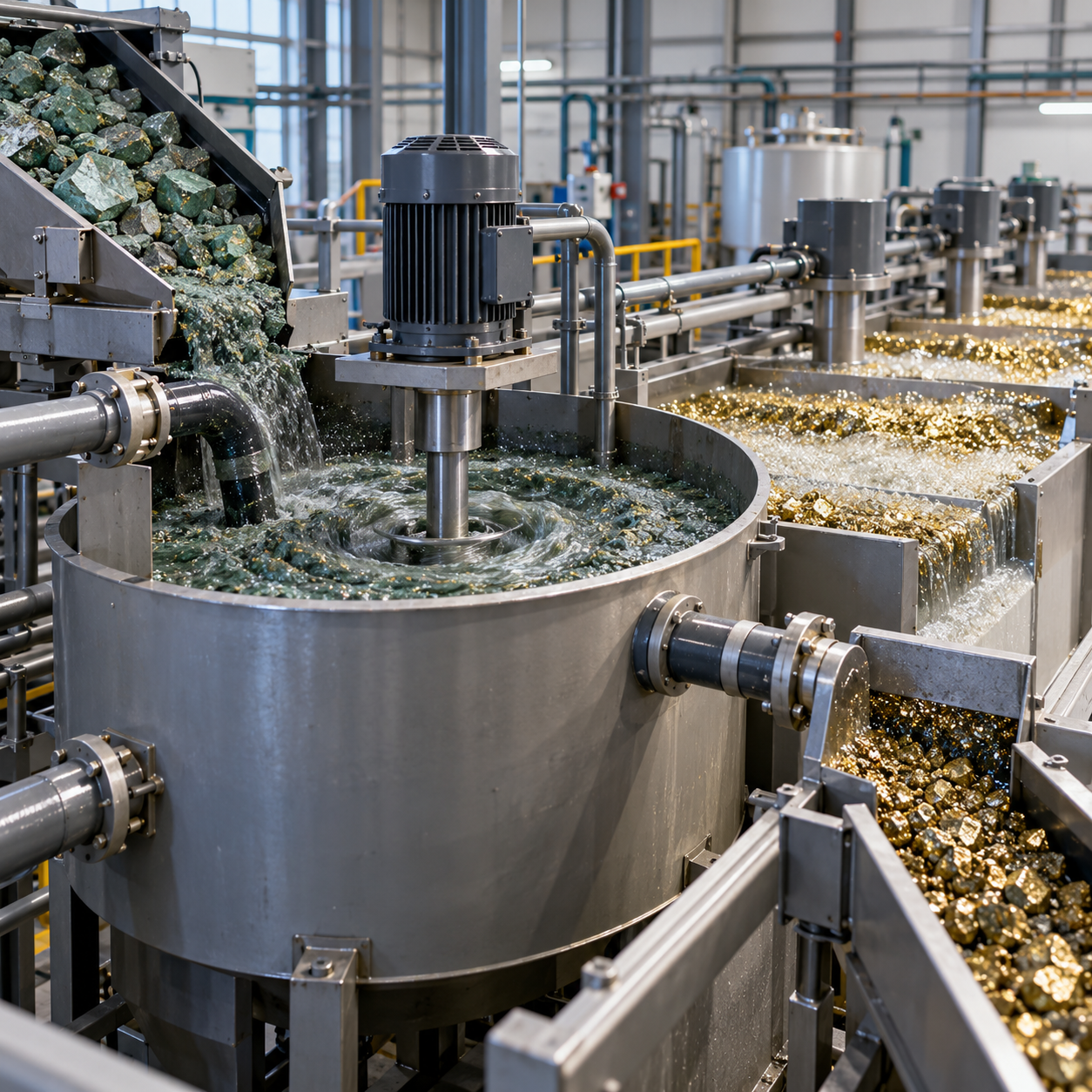
Fine serpentine can coat pyrite particles, alter their surface charge and suppress collector contact. This slime-coating problem is common in sulfide ores associated with magnesium silicates and can reduce flotation recovery even when liberation is adequate. Research has shown that oxalic acid conditioning can shift serpentine surface behavior, increase electrostatic repulsion and reduce coating on pyrite. The effect depends on water chemistry, particle size, pH and reagent sequence. Plant evaluation should begin with diagnostic evidence that slime coating is the limiting mechanism, then test oxalic acid against ore variability, concentrate quality, water recycle and magnesium-rich tailings.
a peer-reviewed Minerals Engineering study provides the application evidence used to frame this qualification guide. Published conditions are specific to the studied feed and equipment and must not be treated as guaranteed plant performance.
For industrial qualification, assign named owners in process engineering, metallurgy, quality, purchasing, production and EHS. Approve the sampling plan, oxalic acid specification, solution-preparation method, dosing basis, retained-sample period and deviation response before the first plant trial. Compare representative reagent lots under identical operating conditions and record mass balance, concentrate or product quality, waste load, utilities and equipment observations. Review packaging, storage humidity, unloading, dust control and solution concentration alongside supplier laboratory data. Define who may change a dose or trial boundary and what evidence is required before scale-up. Where buyer and supplier results differ, compare sampling point, moisture basis, analytical method, calibration, detection limit and uncertainty before disposition. Oxalic acid is corrosive and harmful if swallowed or inhaled as dust; current SDS information, local regulations and site procedures remain controlling. Use enclosed charging where practical, compatible equipment, local exhaust, approved PPE and secondary containment. Confirm emergency isolation, eyewash and shower access, spill response and worker training before commissioning. Inspect bags, pallets and seals on receipt and quarantine wet, damaged or unidentified material. Verify solution strength before dosing and reconcile delivered, stored, dissolved and consumed mass. Record water quality, ambient conditions and operator changes that could confound a trial. Close every trial with an authorized report, updated specification, routine monitoring plan and requalification triggers. A promising extraction or flotation result does not by itself establish commercial suitability: product purity, reagent consumption, water recycle, residues, emissions, corrosion, energy and economics must be considered together. Supplier scorecards should include COA trends, delivery condition, change notification and corrective-action quality as well as price. Validate contingency supply before a disruption using the same ore, residue or catalyst and the same acceptance criteria. These controls turn laboratory research into an auditable development package and help buyers compare technical offers on a consistent basis.
Diagnose slime coating first
Measure serpentine and pyrite by size, clay-like fines, magnesium, dissolved ions and zeta potential. Use microscopy or surface analysis to confirm that fine serpentine is attached to pyrite rather than assuming all recovery loss is a coating problem.
Set recovery and concentrate targets
Define pyrite or sulfide recovery, sulfur grade, magnesium penalty, downstream use and tailings criteria. Include froth stability and water clarity in acceptance.
Design conditioning tests
Vary oxalic acid dosage, pH, time, solids and order of addition while holding grind and collector conditions constant. Include blank and benchmark dispersant tests.
Measure surface-charge response
Track zeta potential, turbidity and dissolved magnesium or iron where useful. Link these measurements to flotation response so the selected dose has a defensible mechanism.
Separate dispersion from activation
Improved recovery may arise from reduced slime coating, removal of surface films or other chemical effects. Characterize pyrite and serpentine surfaces and test whether concentrate impurities rise with recovery.
Close the mineral balance
Report pyrite, serpentine and valuable sulfides through concentrate, middlings and tailings. Measure mass pull and entrainment so apparent recovery is not simply increased gangue carryover.
Test recycled water and feed variability
Run repeated cycles using plant water because calcium, magnesium and residual reagents can alter charge and precipitation. Include ore blends with different serpentine content and oxidation history.
Evaluate downstream impacts
Assess concentrate filtration, magnesium penalty, tailings settling, residual oxalate and water treatment. Confirm construction-material compatibility and controlled reagent preparation.
Specify reliable oxalic acid
Name hydration state and assay basis, and control insolubles, iron and trace metals. Use an enclosed dissolving and dosing system with verified concentration and dust control.
Prepare a concentrator inquiry
Provide trial scale, required form, packaging, destination and schedule. Review the Hiacid oxalic acid product page, then contact Hiacid about staged supply.
Related oxalic acid resources
- Oxalic Acid for Bismuth Recovery from Blast Furnace Dust
- Oxalic Acid for Platinum Recovery from Spent Refinery Catalyst
- Oxalic Acid Pretreatment for Low-Grade Bauxite Flotation
Frequently asked questions
What is serpentine slime coating?
Very fine serpentine particles attach to mineral surfaces and interfere with collector contact and flotation selectivity.
How may oxalic acid help?
It can change serpentine surface charge and promote repulsion from pyrite under suitable conditions.
Does higher recovery prove successful slime control?
No. Concentrate grade, magnesium, entrainment, froth, water and tailings performance must also be acceptable.
Why test recycled water?
Dissolved calcium, magnesium and residual reagents can change surface charge and precipitate behavior.