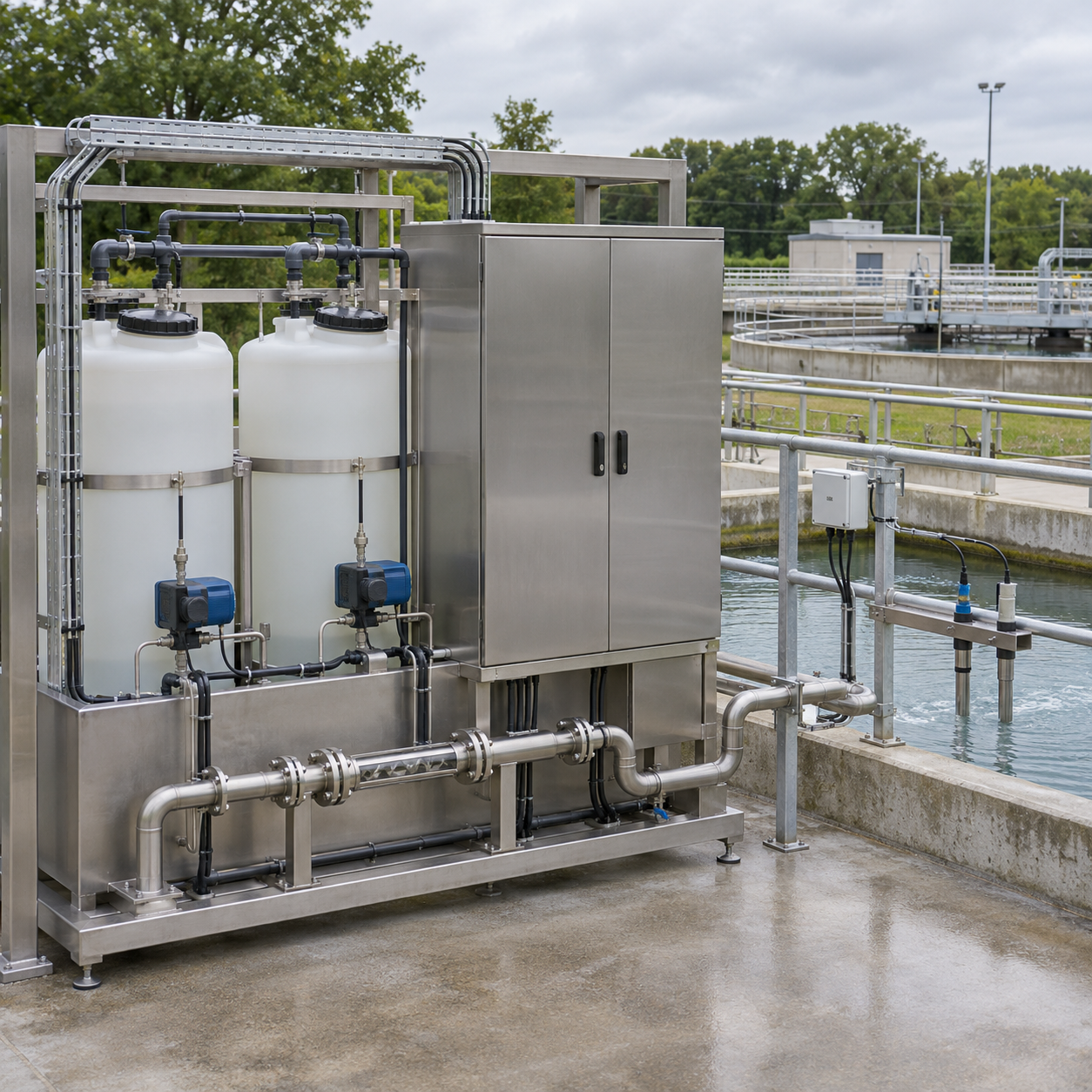
Performic acid, also called peroxyformic acid, is a fast-reacting oxidant that can be generated from formic acid and hydrogen peroxide near the point of use. Published full-scale and laboratory studies have evaluated it for municipal effluent and combined-sewer-overflow disinfection. Its instability makes generation, mixing, residual exposure and control architecture central to performance. A water utility should not purchase formic acid on assay alone or infer that one published dose will work across all effluents. Precursor purity, oxidant grade, water quality, suspended solids, temperature, microbial targets, contact hydraulics, residual decay, by-products, corrosion and receiving-water requirements must be validated as one system.
Begin commercial qualification with written ownership for purchasing, quality, engineering, operations, laboratory, logistics and EHS. Approve identity, assay, impurity limits, test methods, sampling, storage, transfer, deviation response and release authority before the first production lot. Test multiple representative raw-material and process-feed lots under controlled conditions. Record mass balance, process performance, equipment observations, waste streams and final product or treatment results. This discipline separates formic acid variation from changes in water, feedstock, catalyst, equipment, operator or analytical method.
Review the complete delivery path from supplier release through container, carrier, receiving connection, storage and point of use. Contamination or dilution can occur after the supplier’s final analysis. Reconcile ordered, received, stored and consumed quantities and investigate unexplained differences. A supplier scorecard should cover COA accuracy, delivery condition, corrective-action quality and change notification as well as price. Qualify contingency supply with the same methods before a disruption. When buyer and supplier results differ, compare sample representativeness, temperature, standards, calibration, detection limits and uncertainty before disposition.
Formic acid is corrosive and can cause severe burns; concentrated vapor is hazardous. Use the current SDS, compatible closed equipment, ventilation, secondary containment, eyewash and shower access, trained response and jurisdiction-specific controls. The NIH PubChem formic acid record provides general identity and hazard context. It does not replace the supplier SDS, site risk assessment, transport rules or local law.
Use research as qualification evidence
A full-scale wastewater study reports generation of performic acid by mixing hydrogen peroxide and formic acid and evaluates bacterial reductions at municipal plants: performic acid full-scale trial evaluation. A later study reports inactivation kinetics for murine norovirus and fecal indicators in secondary effluent: municipal effluent disinfection kinetics. These data support treatability testing, not transfer of a universal operating setpoint.
Translate published conditions into a controlled trial
Record the exact feed, reagents, equipment, analytical methods and acceptance criteria used in each trial. Identify which variables are held constant, which are investigated and which stop conditions protect people, equipment and product. Scale only after replicated evidence, a reviewed hazard assessment and an approved disposition for every output stream support the decision.
Define the treatment objective
List target organisms, required log reductions, effluent limit, reuse or discharge context, maximum contact time and verification method. Include seasonal flow, temperature, turbidity, suspended solids, organic demand and ammonia. Define how wet-weather and upset water will be handled.
Use exposure rather than nominal dose alone
Performic acid decays and is consumed by the water matrix. Measure validated residual over time and relate microbial reduction to integrated concentration-time exposure. A pump setting without residual evidence cannot demonstrate delivered treatment.
Qualify both chemical precursors
Specify formic acid assay, water, metals, chloride, sulfate and residue together with hydrogen peroxide assay and stabilizers. Confirm dilution-water quality, container compatibility, storage temperature, age and metering calibration. Lot changes in either precursor should trigger defined bridging checks.
Control on-site generation
Validate mixing sequence, residence time, concentration, temperature, sensor response and transfer delay within the selected commercial system. Because performic acid is unstable, it should be generated and used only in purpose-designed equipment under vendor and site safety instructions.
Verify contact hydraulics and microbial response
Use tracer or hydraulic evidence to establish effective contact time and short-circuiting. Sample upstream, early contact, outlet and receiving points with neutralization and holding procedures suited to the analyte. Include indicators and any site-specific pathogens or surrogates required by the permit.
Account for solids shielding and regrowth
Suspended particles can shield microorganisms and consume oxidant. Compare culture and, where appropriate, complementary viability methods. Evaluate post-treatment regrowth over the relevant storage or receiving-water period rather than relying only on the immediate outlet sample.
Evaluate effluent quality and materials
Monitor pH, chemical oxygen demand, residual peroxide or peracid, toxicity and applicable disinfection by-products. Test stainless steel, carbon steel, elastomers, seals, tubing and instrumentation under realistic concentrations and cleaning cycles.
Design precursor and process safeguards
Use segregated compatible storage, secondary containment, ventilation, leak detection, backflow prevention, interlocks, emergency shutdown and reviewed relief paths. Prevent unintended concentrated mixing outside the generation device and train operators for both acid and peroxide incidents.
Establish operational and supplier governance
Create routine checks for precursor identity, concentration, generator output, residual, flow pacing, microbial performance, calibration and alarms. Require current SDS, batch COA, traceability and advance notice of formic acid manufacturing, purification, package or logistics changes.
Prepare a wastewater-treatment inquiry
Provide required formic acid grade, concentration, package or bulk mode, consumption profile, destination and documentation. Do not ask the raw-material supplier to select a disinfection dose without representative water testing and the approved system provider.
Request a specification-led quotation
Review the Hiacid formic acid product page, then contact the export team. Include end use, target concentration, analytical limits, annual and shipment volume, preferred package, destination, delivery profile and required documentation. Hiacid can respond against a defined commercial specification; the buyer remains responsible for process design, regulatory approval and final-use validation.
Related formic acid resources
- Formic Acid for Cobalt Removal from WC-Co Hardmetal Scrap
- Formic Acid Pretreatment of Spent Automotive Catalysts
- Formic Acid for Spent Ni-Cd Battery Metal Recovery
Frequently asked questions
What is performic acid made from?
It can be generated from formic acid and hydrogen peroxide in a controlled on-site system, producing an unstable oxidant that is used near the point of generation.
Why is a fixed dose not transferable between plants?
Water matrix, temperature, solids, flow, microorganisms, contact hydraulics and residual decay differ between sites and seasons.
Should performic acid be stored as a bulk product?
Its instability generally favors controlled on-site generation in purpose-designed equipment; the specific system provider and site safety review govern operation.
What verifies successful disinfection?
Validated residual-exposure data, representative microbiological sampling, hydraulic evidence and compliance with the applicable discharge or reuse requirements.