
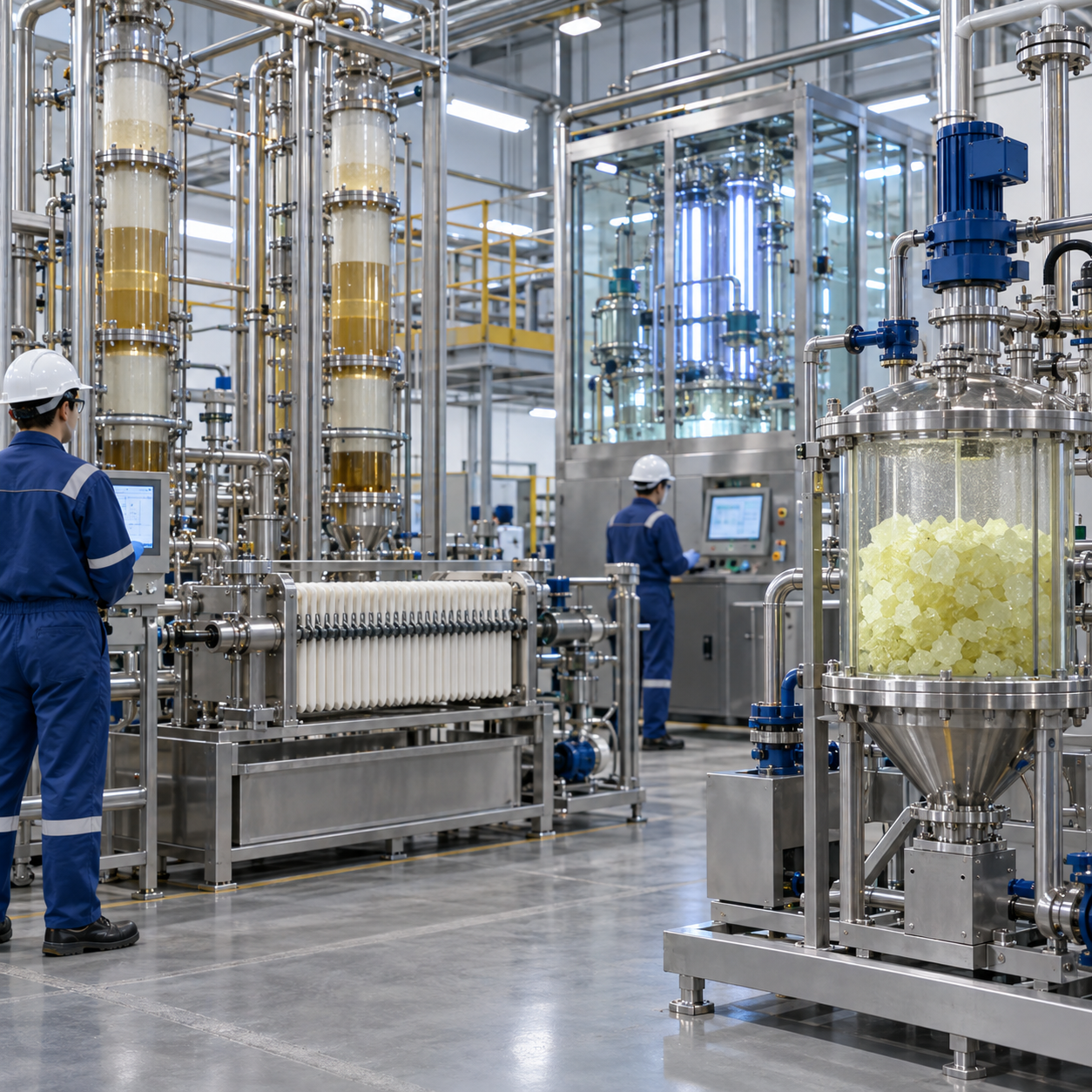
Wet-process phosphoric acid contains iron and other impurities inherited from phosphate rock and processing. Research has explored solvent extraction followed by oxalic-acid stripping and photochemical conversion as a route to recover iron while producing ferrous oxalate. That is a multi-stage development concept rather than a drop-in purification step. Rock source, acid strength, solvent system, oxygen control, illumination, pH, impurity loading and desired ferrous oxalate grade all affect performance. This guide focuses on oxalic acid qualification, scale-up evidence and supply governance without prescribing process conditions.
For industrial qualification, assign purchasing, quality, engineering, operations, logistics and EHS ownership before the first commercial delivery. Approve the oxalic acid hydration state, assay basis, analytical methods, sample point, retained-sample period, storage conditions, transfer method, deviation response and release authority in writing. Compare representative lots under controlled conditions and record process performance, mass balance, waste, equipment observations and final product quality. This separates raw-material variation from changes in water, feedstock, equipment, operator or analytical method. Review the chain from supplier release through carrier, package, warehouse and point of addition because contamination, moisture uptake or misidentification can occur after final analysis. Reconcile ordered, received, stored and consumed quantities and investigate unexplained differences. Supplier scorecards should cover documentation accuracy, delivery condition, corrective-action quality and change notification as well as price. Qualify a contingency source before a disruption using the same methods and process criteria. When buyer and supplier results differ, review sample representativeness, hydration state, drying basis, calibration, detection limits and uncertainty before deciding disposition. Confirm emergency contacts, unloading hours and stop-work authority for every shipment. Include maintenance and warehouse teams in post-trial review because they often identify dust, seal, liner or handling issues not visible on a certificate of analysis. Close qualification with an authorized report, approved-supplier status and a defined routine-monitoring plan. The NIH PubChem record for oxalic acid provides broad identity and use context; the current SDS, local law and site procedures remain controlling.
Define the phosphoric acid and recovery objective
Characterize phosphoric acid concentration and the levels of iron, aluminum, magnesium, calcium, fluoride, sulfate, organics and suspended solids. State whether the objective is product-acid purification, iron recovery, ferrous oxalate production or a combination.
Set specifications for every output stream
Define allowable iron in the treated acid, ferrous oxalate purity and crystal properties, solvent losses, aqueous raffinate quality and residue disposition. Optimization should consider all outputs, not only iron transfer.
Use primary research with proper boundaries
An ACS Sustainable Chemistry & Engineering study reports oxalic acid as a stripping agent and evaluates photochemical preparation of high-purity ferrous oxalate from wet-process phosphoric acid. Its feed and equipment remain study-specific.
Build a staged experimental program
Confirm extraction and stripping equilibria, phase separation, impurity behavior and photochemical response with the actual plant acid. Use replicates and full mass balances before extending residence time or reactor scale.
Specify oxalic acid against product risk
Control hydration state, assay, water, residue, metals and organic impurities where they affect stripping, crystal purity or optical behavior. Approve methods, detection limits and a retained-sample plan.
Test several commercial lots
A process developed around one sample may hide normal lot variation. Compare representative lots against iron removal, phase behavior, ferrous oxalate purity, filtration and recycle performance before approving routine supply.
Engineer the integrated process
Review solvent compatibility, light source containment, oxygen management, heat removal, filtration, washing and mother-liquor handling. Confirm construction materials for phosphoric acid, oxalic acid and mixed-metal solutions.
Plan reagent and solvent recovery
Model oxalate inventory, solvent carryover, wash water, purge and waste. Recycle streams can accumulate impurities even when fresh-feed specifications remain stable, so establish monitoring and maximum recycle criteria.
Qualify supply for pilot campaigns
Align package size and delivery schedule with campaign demand to avoid aged or open inventory. Require lot genealogy, COA, SDS, deviation contacts and advance notice of manufacturing or packaging changes.
Prepare a phosphate-processing inquiry
Provide hydration state, impurity limits, trial volume, package, destination and quality documents. Review the Hiacid oxalic acid page, then request a staged industrial supply proposal.
Related oxalic acid resources
- Oxalic Acid for Leather Waste Dechroming and Collagen Recovery
- Oxalic Acid for Bauxite Residue and Red Mud Valorization
- Oxalic Acid Recovery from High-Iron Process Liquors
Frequently asked questions
Does oxalic acid directly purify every wet-process phosphoric acid?
No. Feed composition, extraction system and downstream product targets require plant-specific development.
Why specify hydration state?
Dihydrate and anhydrous material provide different active oxalic acid per unit mass and affect the process water balance.
Which results matter beyond iron removal?
Treated acid quality, solvent behavior, ferrous oxalate purity, filtration, recycle and waste all matter.
When is pilot-scale supply appropriate?
After reproducible laboratory mass balances, materials review and an approved process-safety plan.