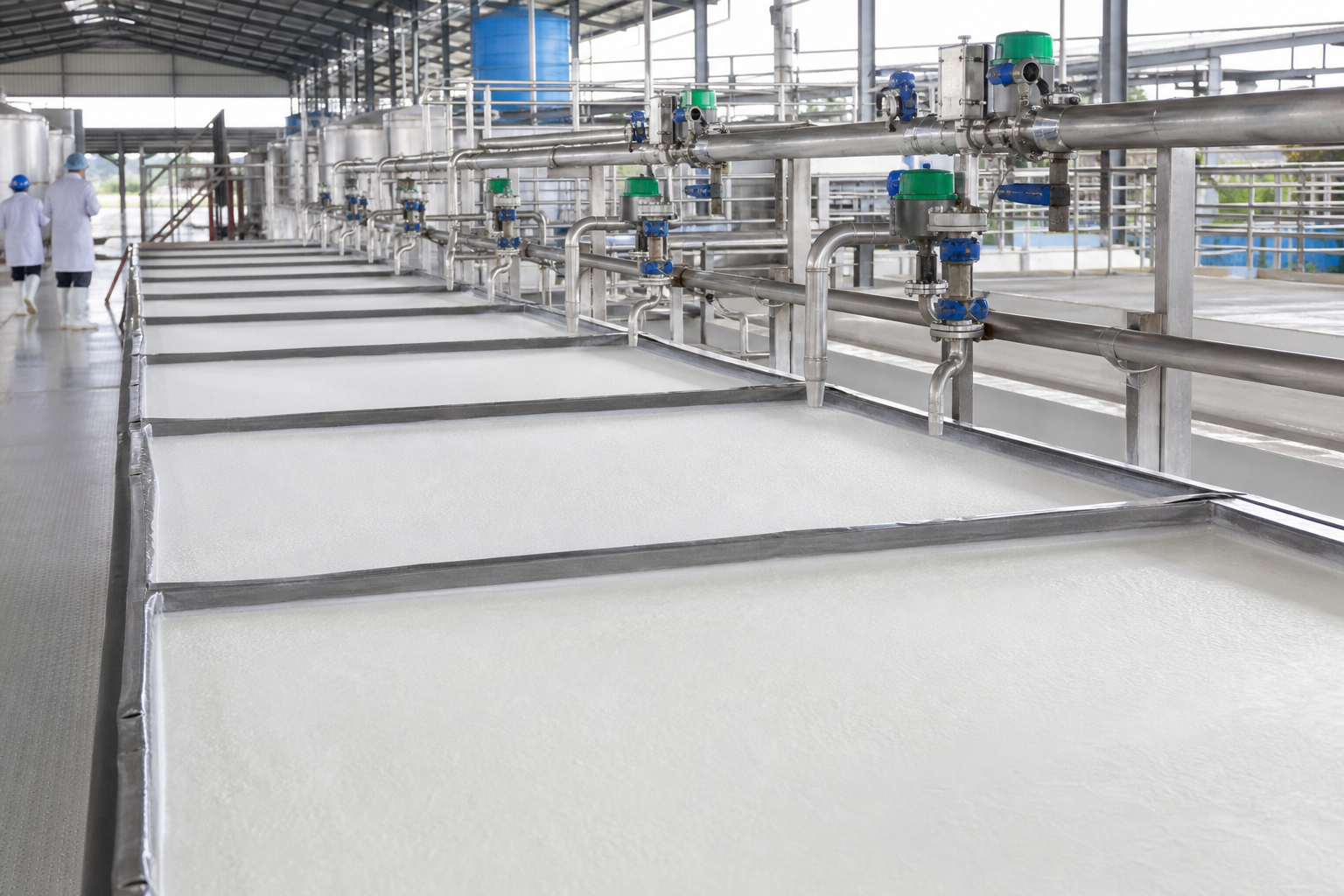
Natural rubber processing converts field latex into controlled solid forms through coagulation, washing, milling and drying. Formic acid is used by many processors as a coagulating acid because it can be diluted and metered into latex under defined plant conditions. Consistent results require more than selecting a commercial concentration. Latex dry-rubber content, ammonia level, residence time, mixing, water quality and temperature all influence acid demand and coagulum structure.
Define the process endpoint
The plant should establish the required pH or coagulation behavior for its product and equipment. A fixed acid volume can produce different results when latex composition changes. Incoming latex tests, recipe control and representative pH measurement provide a stronger basis than visual judgment alone.
Separate acid strength from dosage
Commercial assay determines how much active formic acid is delivered per kilogram, while the process dose depends on the latex batch. Record both values. When feed concentration changes, revise the dilution and metering calculation rather than keeping the same pump setting.
Control dilution and mixing
If concentrated material is diluted before use, the procedure should specify mass balance, water quality, sequence, mixing time and temperature control. An engineered system normally establishes water first and adds acid gradually under mixing. Final concentration should be verified with an approved method before the solution enters routine service.
Prevent local over-acidification
Introduce diluted acid across the process in a way that achieves even distribution without aggressive mechanical damage to the coagulum. Validate nozzle or channel arrangement, addition rate and mixing time. Local excess can create uneven coagulation and complicate washing or milling.
Specify quality for rubber production
State assay, water and any limits relevant to color, odor, metals or nonvolatile residue. Require actual batch results, method references and lot traceability. Multiple recent COAs help reveal normal variation and whether the source maintains a stable operating range.
Evaluate changes before approval
A change in production source, concentration, package or transport history can affect process calculations or contamination risk. Use traceable trials and compare coagulation time, crumb condition, washing, drying and finished-rubber indicators before extending approval.
Design safe receiving and storage
Formic acid is corrosive and can injure eyes, skin and the respiratory system. Use closed transfer, compatible tank and piping materials, secondary containment, ventilation where required and accessible emergency flushing. The site’s risk assessment and current SDS must determine PPE and response measures.
Control inventory through the production season
Align delivery lot size, storage capacity and safety stock with latex throughput. Confirm that transport documentation and labels match the delivered concentration. First-in, first-out controls and clear lot segregation support investigations when raw latex or product quality changes.
Send a complete rubber-industry RFQ
Include the required assay, impurities, annual demand, shipment size, package or bulk mode, destination, COA format and trial plan. Review the Hiacid formic acid page, see the storage and transport guide, and request a quotation.
undefined
undefined
Related formic acid resources
- Formic Acid in Leather Tanning and pH Control
- Formic Acid for Silage and Feed Preservation
- Formic Acid in Textile Dyeing and pH Control
Frequently asked questions
Why is formic acid used for latex coagulation?
It provides controllable acidity that can destabilize latex under a validated plant recipe.
Should dosage change when acid concentration changes?
Yes. Recalculate active-acid delivery and verify the final dilution before changing the pump setting.
Which quality parameters matter?
Buyers commonly review assay, water, color, relevant impurities, residue, test methods and lot traceability.
How should a new source be qualified?
Run traceable plant trials and compare coagulation, washing, drying and finished-rubber results with the approved source.