Formic acid is used in some silage and feed preservation programs to reduce pH and influence microbial activity. Effective use depends on crop or feed characteristics, moisture, buffering capacity, application uniformity, storage conditions and the rules that apply in the destination market. Purchasing a high assay alone does not guarantee preservation performance. Feed businesses need an approved formulation, accurate dosing equipment, traceable material and a safety system designed for corrosive liquid handling.
Start with the approved use and local rules
Feed-additive authorizations vary by market, product type and intended function. In the European Union, formic acid appears under defined authorizations and conditions, including requirements for operational procedures and protective measures. Buyers should confirm the current legal basis, permitted concentration, labeling, documentation and any restrictions with their regulatory team before procurement.
Do not copy a dosage from another crop
Forage species, dry matter, sugar, buffering capacity, chop length and weather can change the response. A qualified nutritionist or silage specialist should define the program from representative material and local conditions. Application rate, target distribution and verification should be written into the operating procedure.
Specify feed-appropriate product quality
The RFQ should state assay, relevant impurity limits, water, color, traceability and the required regulatory declarations. The COA must identify the lot and report agreed results with units and methods. If a formulated acid blend is required, list every component and concentration rather than ordering only by a trade name.
Control source and change management
A feed business should know the manufacturing source and be notified before material changes. Qualification may include supplier questionnaires, audit evidence, sample testing and confirmation that transport equipment is suitable for feed-chain requirements. Keep retained samples according to the buyer’s quality plan.
Achieve uniform application
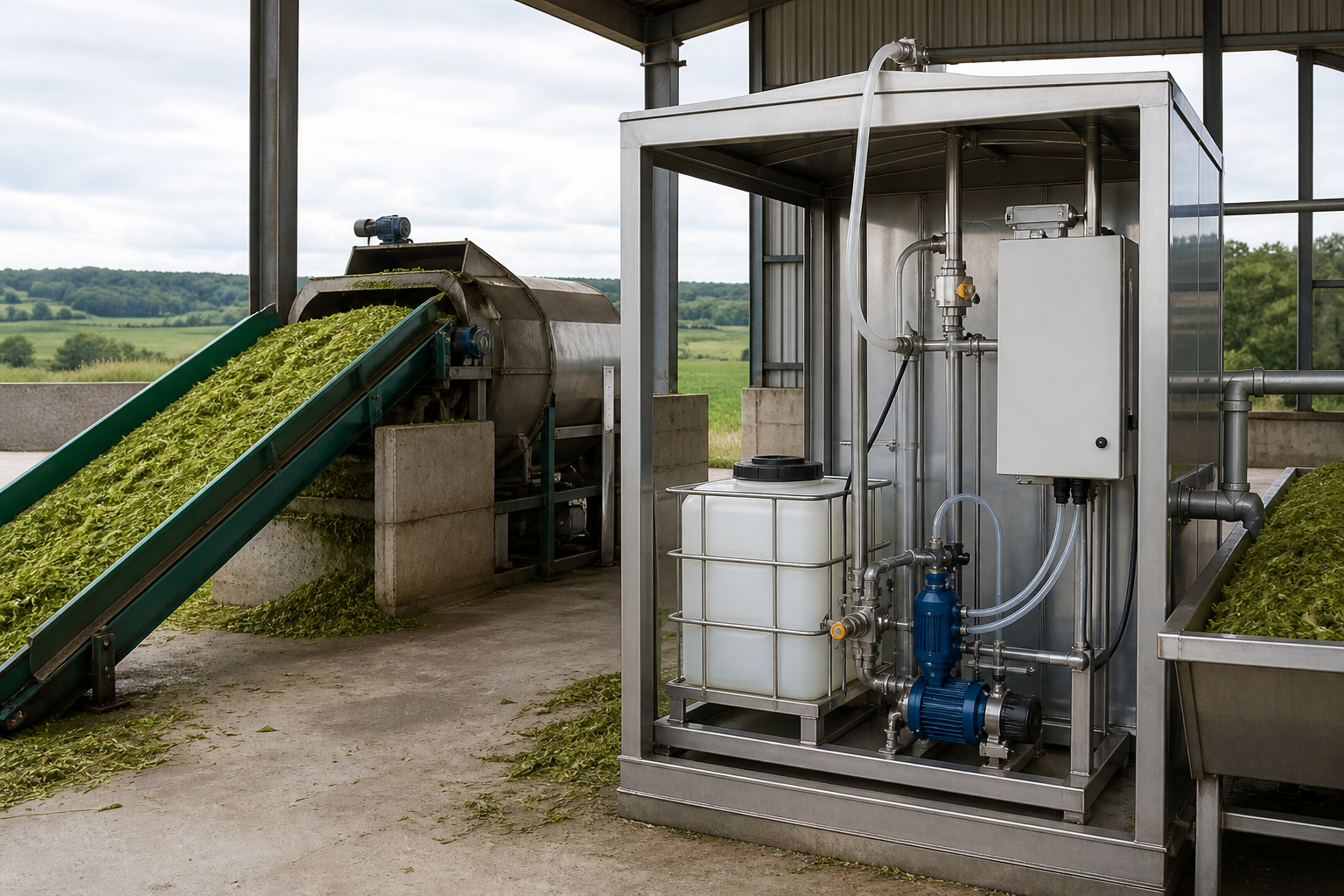
A calibrated pump, suitable nozzles and a flow signal linked to forage or feed throughput help prevent untreated zones and excessive local dosing. Inspect filters, hoses, check valves and spray patterns before the season. Recalibrate after maintenance or product-concentration changes, and record actual chemical use against processed tonnes.
Plan for variable operating conditions
Throughput and material moisture can change during harvest. The control system should remain inside its validated turndown range and alarm when chemical flow does not track product flow. Operators need a clear response for blocked nozzles, empty supply, rainfall, line stops and off-spec application.
Protect workers and equipment
NIOSH describes formic acid as a corrosive liquid with eye, skin and respiratory hazards. Closed transfer, compatible components, ventilation where needed, eyewash, quick drench and trained emergency response are basic planning elements. Never treat agricultural location as a reason to lower industrial chemical-control standards.
Inspect storage before the season
Confirm tank and bund condition, level indication, venting, fill connection, signage and vehicle access. Separate incompatible materials and prevent accidental cross-connection. Use the current SDS and supplier compatibility guidance for the actual concentration and temperature range.
Build a preservation-grade purchase specification
State concentration, formulation, quality limits, regulatory documents, seasonal volume, delivery profile, tank or package size and destination. Review the formic acid product information, compare the existing grade and COA guide, and contact Hiacid with the full requirement.
undefined
undefined
Related formic acid resources
- Formic Acid in Leather Tanning and pH Control
- Formic Acid for Natural Rubber Latex Coagulation
- Formic Acid in Textile Dyeing and pH Control
Frequently asked questions
Does formic acid guarantee good silage?
No. Preservation also depends on material quality, moisture, buffering, compaction, sealing, storage and uniform application.
Can one application rate be used for every forage?
No. The program should be set for the crop, dry matter, local conditions, equipment and applicable regulations.
What documents should a feed buyer request?
Request the specification, lot COA, SDS, traceability and all market-specific feed-additive or regulatory declarations.
How is application consistency checked?
Calibrate the pump and nozzles, link flow to throughput where possible, inspect spray patterns and reconcile chemical use with processed tonnes.