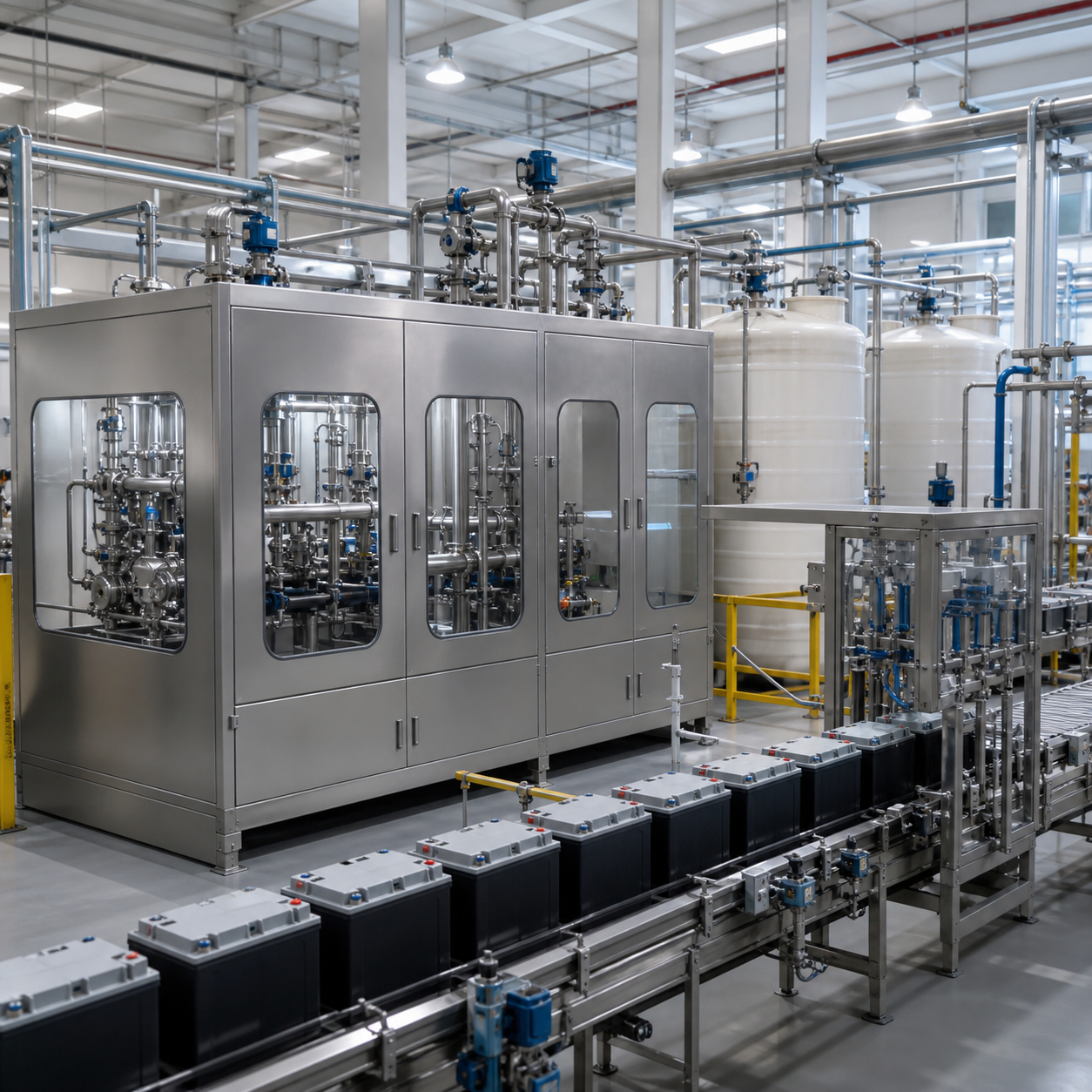
Sulfuric acid is central to lead-acid battery manufacturing, where it is used in plate-paste preparation and as the basis of the finished electrolyte. The required concentration and purity depend on the battery design, manufacturing sequence and customer specification. A supplier’s headline assay does not by itself establish suitability. Battery producers need controlled dilution water, verified density-temperature relationships, limits for metals and other contaminants, closed transfer, lot traceability and analytical release. The raw-material specification must connect directly to plate performance, formation, self-discharge, service life and the plant’s safety controls.
Define the battery process requirement
Separate the sulfuric acid requirements for paste mixing, formation, initial filling and service electrolyte. The same plant may use different concentrations at different stages. Engineering and quality teams should define concentration at a stated reference temperature, permitted impurities, water quality and the analytical method for each use. Purchasing should not combine these into one vague “battery acid” description.
Connect acid quality to battery performance
Trace metallic impurities may promote unwanted reactions, gas evolution or self-discharge, while suspended matter can affect processing and cleanliness. The relevant limits vary by battery technology and internal standard. Establish them with production trials and life testing, then require actual lot results rather than a generic certificate that only repeats maximum limits.
Control concentration and density
Sulfuric acid concentration is often monitored through density or specific gravity, but the relationship changes with temperature. Use a validated table or method, calibrated instruments and temperature compensation. Sampling must represent the mixed tank and avoid contamination from containers or transfer lines. A density reading is useful only when operators know the temperature, reference basis and acceptable uncertainty.
Use a controlled dilution procedure
Dilution releases substantial heat. Add acid to water using the approved closed system, controlled rate, agitation and cooling; never reverse the plant procedure or improvise in open vessels. Confirm tank and piping compatibility for both concentrated acid and the evolving dilute mixture. Define high-temperature alarms, interlocks, emergency shutdown and the hold time required before final concentration testing.
Specify dilution water
Water can introduce chloride, iron, copper, manganese, organic matter and suspended solids that negate the value of high-purity acid. Set conductivity or resistivity and specific impurity limits from the battery process. Maintain the treatment system, storage tank and distribution loop as controlled production equipment. A clean water result at the treatment outlet does not guarantee cleanliness at the point of use.
Protect the electrolyte system from contamination
Use dedicated or verified-clean tanks, hoses, pumps and sampling tools. Prevent carryover from maintenance chemicals or previous products. Establish flushing, line-clearance and inspection procedures before receiving a new acid lot. Lot identity should remain visible through dilution, filling and formation so a quality investigation can trace every affected battery batch.
Verify the finished electrolyte
Release tests may include density, acid concentration, appearance, insoluble matter and application-specific metal or anion limits. Confirm calibration, sample temperature and method precision. Retain raw-acid and diluted-electrolyte samples according to the quality system. Trend results across incoming lots to identify gradual changes before they exceed specifications.
Qualify packaging or bulk delivery
For packaged material, confirm container compatibility, closure, lot marking, palletization and damage inspection. For bulk delivery, approve tanker construction, previous-cargo controls, dedicated connections, seals and unloading checks. Receiving staff should compare documents, seal numbers, quantity and COA before connecting to the storage system.
Use authoritative safety information
The U.S. EPA battery-production overview identifies sulfuric acid in lead-acid battery processes. The NIOSH Pocket Guide lists sulfuric acid exposure routes, corrosive effects and occupational controls. Site procedures and the current SDS remain controlling.
Send a battery-grade RFQ
State concentration, assay basis, impurity limits, test methods, annual volume, delivery mode, destination and trial quantity. Review the Hiacid sulfuric acid supply page, concentration and grade guide and request a specification-based quotation.
Related sulfuric acid resources
- Sulfuric Acid for Steel Pickling and Metal Processing
- Sulfuric Acid for Phosphate Fertilizer Production
- Sulfuric Acid Buying Guide
Frequently asked questions
Is every high-concentration sulfuric acid suitable for batteries?
No. Battery production may require specific impurity, cleanliness and concentration controls beyond the main assay.
Why must density be measured with temperature?
Sulfuric acid density changes with temperature, so the result needs a defined reference basis and compensation method.
Which water quality matters for dilution?
Control conductivity or resistivity and process-sensitive contaminants such as chloride, metals, organics and suspended solids.
What should a bulk receiving check include?
Check supplier documents, seal, tanker suitability, quantity, COA, connection identity and a representative receiving sample.