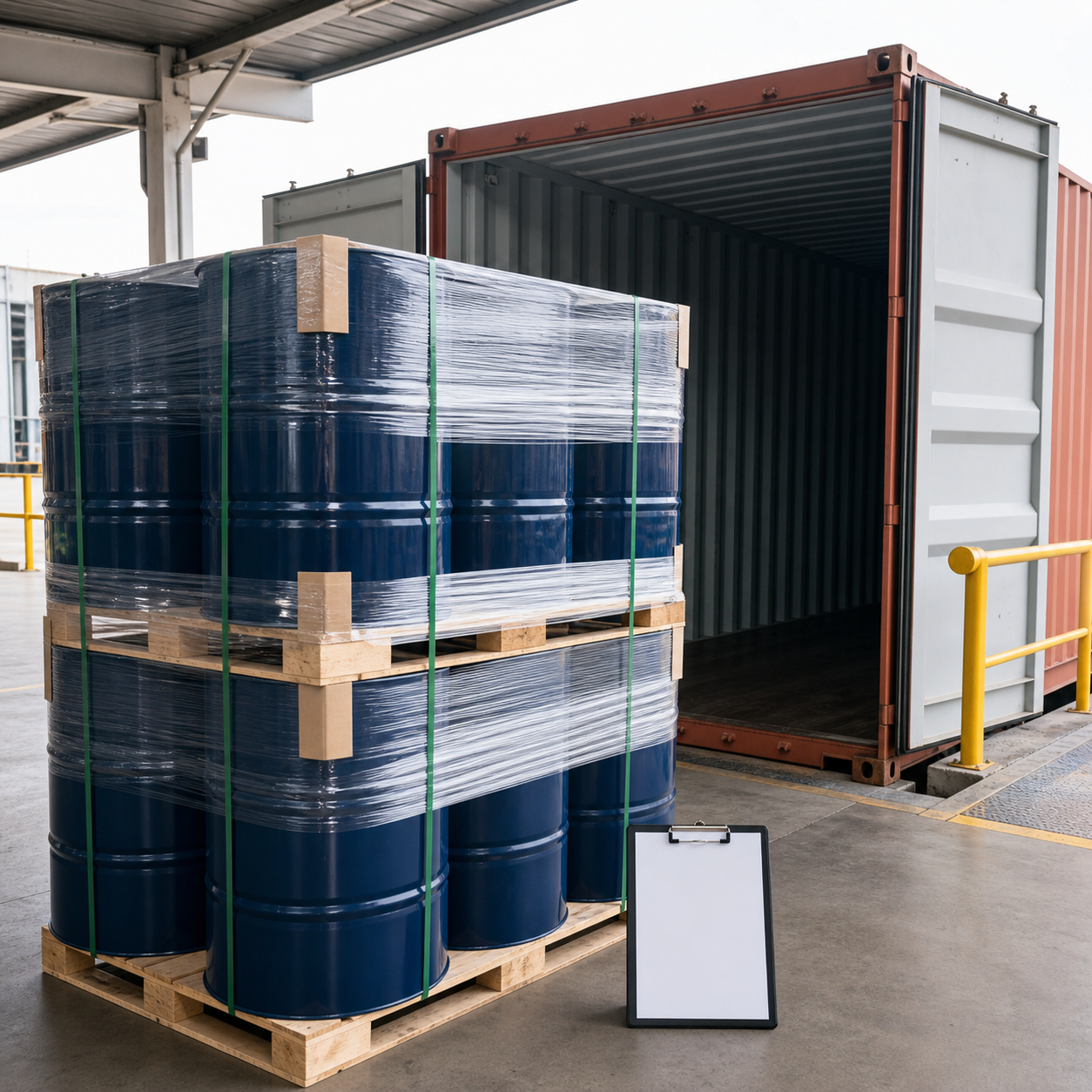
Sulfuric acid exports require accurate dangerous-goods classification, compatible authorized packaging, qualified documentation and controlled loading. NIOSH lists DOT identifiers including UN 1830 for sulfuric acid, while fuming acid and spent acid have different entries. The shipper must confirm the exact product concentration, proper shipping name, hazard class, packing group and modal rules from the current SDS and applicable regulations. Air, sea, road and rail requirements can differ, and national variations may apply. Commercial and logistics teams should resolve these details before cargo is booked. The buyer should review the same information before approving a route, because a technically correct product can still be delayed by mismatched documents, unsuitable packaging or an unapproved carrier connection.
Classify the exact material
Do not select a UN number from a generic web listing. Confirm chemical identity, concentration, physical form and whether the product is ordinary, fuming or spent sulfuric acid. Use competent dangerous-goods personnel and current rules for the origin, destination and mode. Record the classification basis with the shipment file.
Align every description
Invoice, packing list, SDS, dangerous-goods declaration, booking and package marks should describe the same material, quantity and package count. Correct inconsistencies before loading. A carrier can reject cargo when the documents use different concentrations, names, weights or packing groups.
Choose compatible authorized packaging
Packaging must be permitted for the classification and compatible with the delivered concentration for the intended journey. Confirm UN performance marking where required, package code, closure instructions, gasket, filling limit and gross mass. Bulk and tank transport requires its own design, inspection and operating controls.
Verify filling and closures
Use a written procedure based on the packaging manufacturer instructions. Inspect each package for damage, external contamination, correct closure, leakage, mark legibility and lot code. Record package and product lots. Acid residue on the exterior can injure handlers and damage adjacent cargo even when the container itself does not leak.
Engineer the loading plan
Inspect the freight container or vehicle for structural damage, moisture, contamination and protrusions. Distribute weight within floor and payload limits and secure packages against movement. Follow segregation and compatibility requirements for other cargo. Photograph the empty container, loading stages, securing and sealed doors.
Account for temperature and route
High or low temperature, port dwell, transshipment and vibration can stress packaging and affect product handling. Confirm the route, emergency contacts and damaged-cargo procedure before departure. Do not rely on a generic ocean-transit assumption when the shipment includes long inland legs or multiple carriers.
Prepare shipment and receiving records
The commercial pack may include invoice, packing list, COA, SDS, origin documents and bill-of-lading instructions. Dangerous-goods declarations must be completed by trained personnel where required. Use a shipment-specific checklist because destination, contract and transport mode determine the exact documents.
Define receiving inspection
Before unloading, check seal, container condition, package count, marks, leakage, dents and pallet stability. Quarantine damage and use the emergency plan. Match lot codes to the COA and take a representative sample under the buyer’s receiving procedure before releasing acid to production.
Use reliable references and supplier controls
The NIOSH Pocket Guide lists sulfuric acid DOT identifiers, incompatibilities and occupational hazards. The current SDS and applicable transport code remain controlling for the shipment. Review the storage and handling guide before receipt.
Send a logistics-ready inquiry
State concentration, specification, package, quantity, Incoterm, origin and destination ports, schedule and document needs. Ask how packages are inspected, palletized and secured. Review the Hiacid sulfuric acid page and contact the export team for a compliant shipment plan.
Related sulfuric acid resources
- Sulfuric Acid for Lead-Acid Battery Manufacturing
- Sulfuric Acid for Steel Pickling and Metal Processing
- Sulfuric Acid Concentrations and Grades
Frequently asked questions
Is every sulfuric acid shipment UN 1830?
Do not assume so. Fuming, spent or differently classified products may use other entries; confirm the exact material and current rules.
Can any chemical drum be used?
No. Packaging must be authorized, compatible, correctly marked and closed for the applicable classification and mode.
What should the buyer inspect on arrival?
Check seal, container, packages, labels, leakage, pallet stability, lot codes and shipment documents before release.
Which source controls the transport classification?
Use the current product SDS and applicable modal regulations with qualified dangerous-goods review.