Hydrogen peroxide transport classification depends strongly on concentration. NIOSH lists DOT entries including UN 2984 for certain 8–20% solutions, UN 2014 for 20–60% solutions and UN 2015 for higher-strength material, but the shipper must confirm the exact product, concentration, stabilizer system, proper shipping name, class, packing group and modal rules from current documents. Packaging and venting must account for peroxide’s oxidizing nature and potential oxygen release. Sea, air, road and rail requirements and national variations can differ, so qualified dangerous-goods personnel should approve every route. The buyer should review the same route and classification before purchase, because an accepted factory quotation does not guarantee that every carrier, port or inland connection will handle the proposed concentration and package. A pre-booking review should also confirm permitted container type, package count, gross mass, segregation and emergency contact arrangements for every planned transfer point.
Classify the exact concentration
Do not reuse classification from another hydrogen peroxide grade. Confirm assay range, physical form and any applicable concentration thresholds from the current SDS and governing code. Record the classification basis and ensure the carrier accepts the product and package. A change from one commercial concentration to another may change the transport entry and operational requirements.
Align all documents
Invoice, packing list, SDS, dangerous-goods declaration, booking and package marks should use consistent descriptions, quantity, package count and concentration. Resolve discrepancies before loading. A technically correct product can still be rejected when documents conflict.
Use authorized compatible packaging
Select packaging approved for the exact classification and compatible with hydrogen peroxide. Confirm material, cleanliness, vent design, closure instructions, fill limit, package code and required performance marking. Never substitute a visually similar drum without documented approval.
Protect against contamination
Use dedicated clean filling equipment and inspect every package. Organic matter, incompatible metals or previous-product residue can accelerate decomposition. Do not return samples or spills to the container. Record packaging and product lots for traceability.
Plan segregation and loading
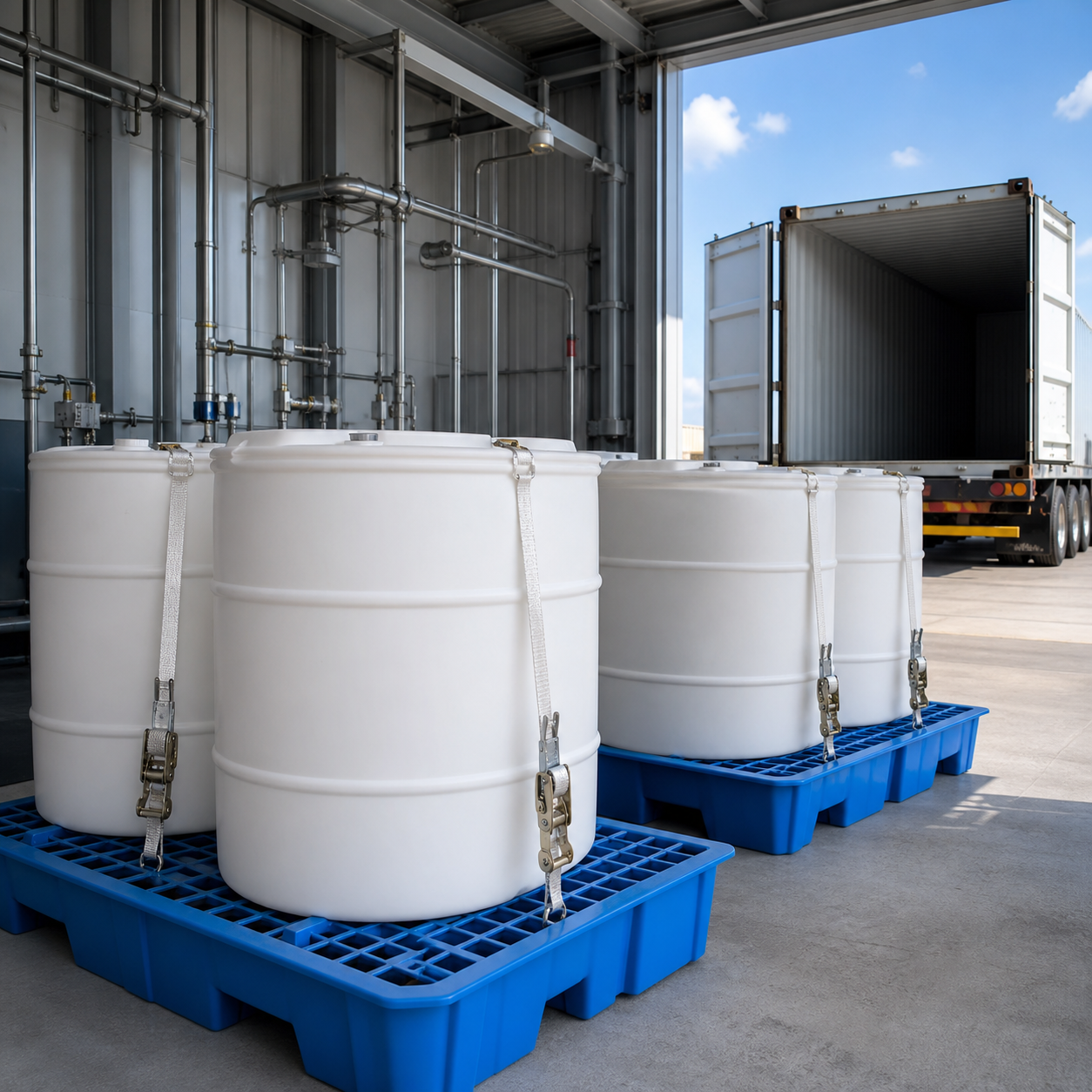
Inspect the freight container or vehicle for contamination, damage, moisture and protrusions. Follow oxidizer segregation and compatibility requirements for other cargo. Distribute weight correctly and secure pallets against movement without blocking required package venting. Photograph the empty container, loading stages and seal.
Account for route temperature
Review ambient conditions, port dwell, transshipment and inland legs. Maintain the supplier’s storage and transport temperature limits and ensure emergency contacts are available throughout the route. Define the response to heating, venting, damage or delayed cargo before departure.
Prepare receiving controls
The buyer should verify seal, container condition, package count, marks, vent condition, leakage and pallet stability before unloading. Quarantine damaged cargo and use the emergency plan. Match lot codes to the COA and sample with approved clean equipment.
Confirm unloading compatibility
Approve hoses, connections, pumps, receiving tank, vent and backflow prevention before the shipment arrives. A correct export package does not eliminate the risk of contamination during transfer. Receiving staff need peroxide-specific training and access to the current SDS.
Use reliable references and a logistics-ready RFQ
The NIOSH Pocket Guide provides concentration-related DOT identifiers, incompatibilities and exposure information. The current SDS and applicable transport code remain controlling. Review the Hiacid hydrogen peroxide product record. Keep the approved classification record with the shipment file.
Request a compliant shipment proposal
State concentration, grade, package, quantity, Incoterm, origin and destination ports, schedule and document requirements. Ask how packaging cleanliness, venting, pallet securing and shipment photos are controlled. Review the Hiacid supply page and contact the export team.
Related hydrogen peroxide resources
- Hydrogen Peroxide Buying Guide: Concentration and Purity
- Hydrogen Peroxide for Pulp and Paper Bleaching
- Hydrogen Peroxide for Textile Bleaching and Process Control
Frequently asked questions
Does every peroxide solution use UN 2014?
No. Transport entries can change with concentration, so confirm the exact product and current rules.
Why can peroxide packages need venting?
Hydrogen peroxide can decompose and release oxygen, so package design must safely address the approved product conditions.
Can peroxide share a container with any chemical?
No. Follow oxidizer segregation and compatibility rules for the applicable transport mode.
What should be checked before unloading?
Verify documents, seal, package condition, vents, leakage, lot identity and receiving-system compatibility.