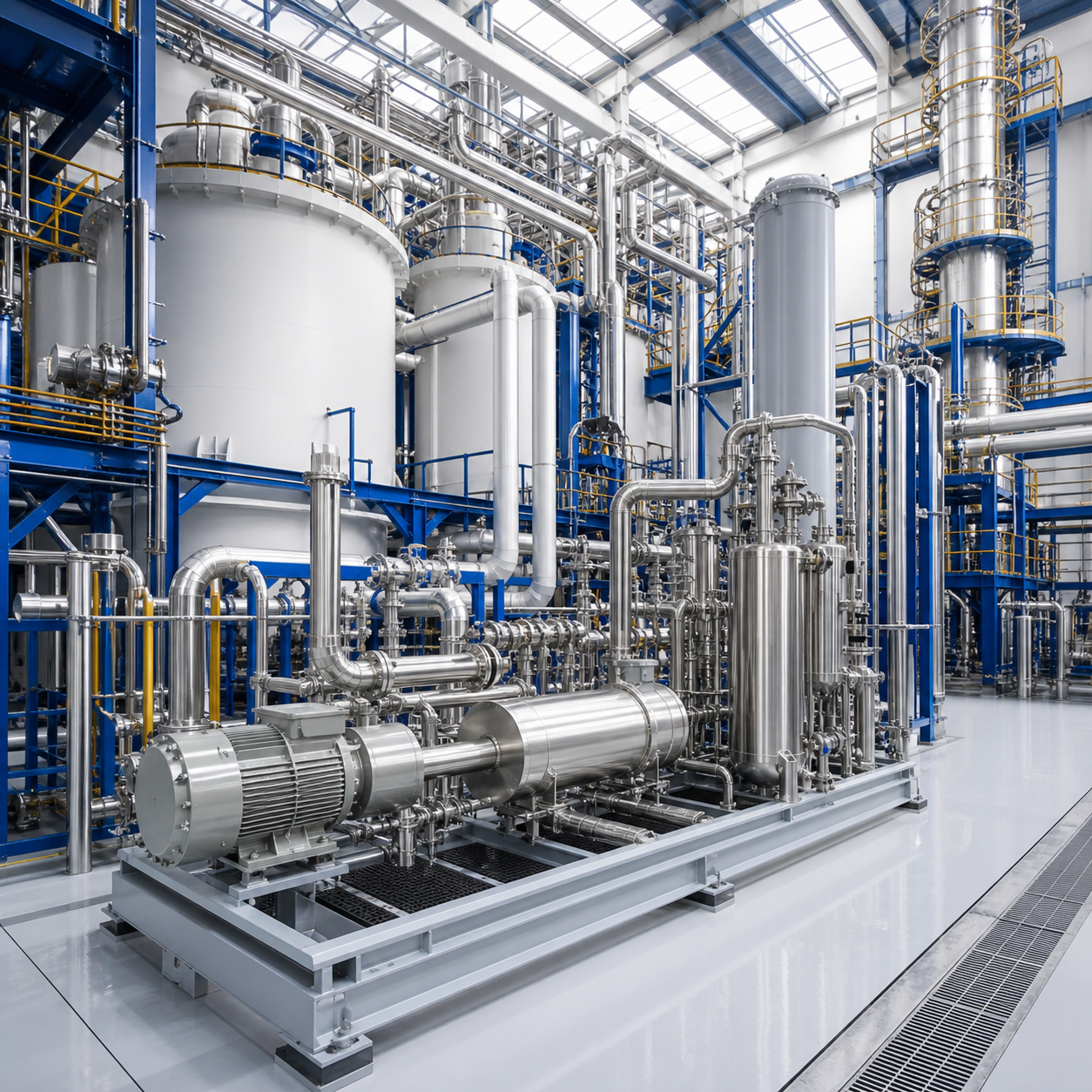
Purified terephthalic acid plants commonly oxidize para-xylene in an aqueous acetic acid medium with a catalyst system and oxygen-containing gas. Acetic acid moves through reaction, crystallization, separation, washing, condensation and distillation steps before a substantial fraction returns to the process. Fresh glacial acetic acid is therefore make-up to a dynamic solvent loop rather than a one-pass ingredient. Procurement quality, water balance, corrosion control and solvent recovery must be evaluated together. The best offer is not simply the lowest price per tonne; it is the supply that maintains a stable solvent inventory, predictable impurities and dependable deliveries without increasing purge, catalyst loss, emissions or product-quality risk.
Define the solvent-loop requirement
Create a mass balance for fresh acid, recovered condensate, mother liquor, wash streams, purge and process losses. Confirm which streams return directly to oxidation and which require separation or purification. Fresh acid demand can change with production rate, water-removal performance, purge policy and turnaround activity, so annual volume alone is not enough for delivery planning.
Specify assay on the correct basis
State concentration, water and test method clearly. Density screening can support receiving control but does not replace a validated assay. Align supplier and buyer sampling procedures, temperature correction and acceptance rules. A small reporting-basis difference becomes significant when multiplied across bulk solvent inventory.
Manage water in oxidation and recovery
Water is part of the process solvent, but its concentration affects reaction conditions, vapor load and recovery duty. Fresh glacial acid helps restore the intended balance when recovered streams contain water. Operators should trend column performance, condensate composition and reactor solvent rather than using fresh acid addition as the only correction.
Protect catalyst consistency
Cobalt, manganese and bromine chemistry is sensitive to the complete process environment. Incoming acid should not introduce uncontrolled metals, halides, sulfur species or organics that interfere with catalyst management or corrosion control. Define impurity limits from plant experience and analytical capability, then trend actual values instead of relying only on pass-or-fail certificates.
Link acid quality to product separation
Crude terephthalic acid leaves oxidation as a slurry in the solvent medium. Crystallization, solid-liquid separation and washing determine how much acid remains with solids or returns to the loop. Monitor filtration behavior, cake washing, mother-liquor composition and product impurities when evaluating a new acid source.
Account for solvent recovery economics
Recovery cost includes steam, cooling, column capacity, purge, residue handling and acid loss. An apparent raw-material saving can disappear if an impurity raises purge or fouling. Compare offers using net fresh-acid consumption per tonne of PTA and the verified effect on recovery, not only delivered price.
Coordinate safety and emissions controls
Acetic acid vapor is both an occupational and process-emissions concern. Use closed transfer, compatible equipment, vapor control and leak detection appropriate to the site. NIOSH identifies acetic acid as corrosive and combustible and lists relevant exposure information. Plant procedures and the current SDS should govern unloading, PPE, ventilation and emergencies.
Plan supply around operating campaigns
PTA plants may consume large, steady volumes and have limited tolerance for interrupted solvent supply. Match tanker or vessel parcels to tank working capacity, inspection schedules and port constraints. Maintain approved backup logistics without substituting an unqualified grade during a disruption.
Use authoritative process context
The EPA AP-42 terephthalic acid document describes acetic acid as the oxidation solvent. This provides process context, but each plant must define its own catalyst, water and recovery conditions. Review operating data before changing assay or impurity limits.
Issue a plant-specific RFQ
Include assay, water, critical impurities, test methods, annual and peak demand, delivery window, bulk connection, destination, COA, SDS and change notification. Read the Hiacid supply overview and the cellulose acetate application guide, then contact Hiacid with the approved specification.
Related glacial acetic acid resources
- Glacial Acetic Acid for Cellulose Acetate Production
- Glacial Acetic Acid for Acetic Anhydride Manufacturing
- Glacial Acetic Acid for Textile Dyeing and pH Control
Frequently asked questions
Why is glacial acetic acid used in PTA production?
It serves as part of the oxidation reaction medium and is circulated through separation and solvent-recovery operations.
Does a PTA plant consume all delivered acid in one pass?
No. Much of the solvent is recovered and recycled, while fresh acid replaces process and purge losses.
Why should water be specified carefully?
Water affects reaction conditions and recovery duty, and the target must match the plant solvent balance.
How should PTA buyers compare suppliers?
Compare verified quality, net consumption, recovery impact, logistics reliability and change control, not only delivered price.