Textile mills use acetic acid in selected dyeing, finishing, neutralization and pH-control operations. Its value comes from controlled acidity and predictable dosing, not from adding the strongest possible acid. Fabric type, dye class, water alkalinity, residual caustic, bath ratio, temperature and addition profile all affect the result. Glacial acetic acid can provide efficient freight and storage, but it normally requires engineered dilution and metering before use. Buyers should define concentration, color, residue and any application-sensitive metals or ions, then validate the grade on actual shades and equipment. A consistent acid supply supports repeatability only when water quality, dosing calibration and bath measurements are also controlled.
Define each textile use separately
Map scouring neutralization, bleaching support, dye-bath pH adjustment, washing and finishing as separate operations. The target pH, addition point and acceptable impurity profile can differ. A single plant-wide dose rule may cause uneven neutralization, shade drift or unnecessary acid consumption.
Build an acid demand curve
Use representative water and fabric carryover to measure how much acid is needed to reach the validated endpoint. Alkalinity determines demand more directly than initial pH alone. Repeat the work across seasonal water variation and normal residual-caustic ranges before setting automatic dosing ratios.
Control dilution and addition
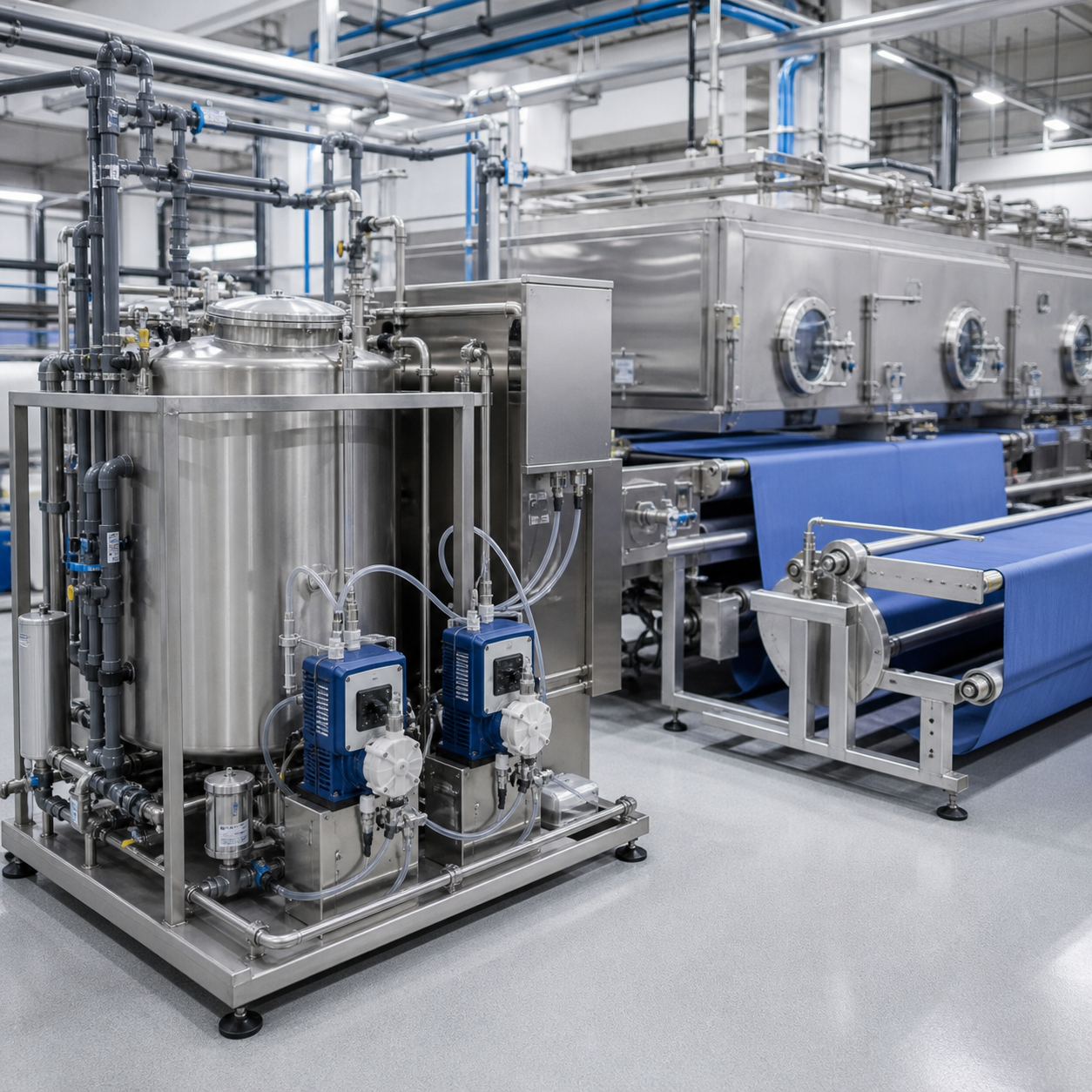
Dilution is exothermic and should use an engineered procedure, compatible equipment and site safety review. Use closed metering into a controlled dilution stream rather than manual drum pouring. Interlocks should prevent acid addition without water flow or bath circulation, and the system should prevent process liquid from flowing back into acid storage.
Choose the right dosing profile
Some processes benefit from staged or ramped acid addition to avoid local low pH and uneven fabric exposure. Confirm mixing and circulation before shortening the addition time. Measure the bath at representative points and allow for sensor response at operating temperature.
Connect quality to shade consistency
Assay variation changes the delivered acid equivalents, while color or residue may matter for pale shades and clean finishing. Trace metals can interact with peroxide or dyes in sensitive recipes. Set limits based on trials and finished-fabric requirements, not a universal textile-grade label.
Validate analytical and process measurements
Calibrate acid assay, water alkalinity and pH instruments. Document electrode care and temperature compensation. When a shade shifts, review fabric preparation, dye lot, salt, alkali, water, temperature and dosing history together before attributing the change to acetic acid.
Reduce handling and wastewater problems
A closed day tank or automated dilution skid can reduce operator exposure and improve dose consistency. Size inventory to realistic consumption and shelf-life controls. Use secondary containment and compatible transfer connections, and follow the SDS for PPE, ventilation and spill response.
Evaluate the final effluent effect
Neutralization changes salt load and can affect wastewater pH. Avoid overdosing simply to create a large safety margin. The EPA textile best-practices manual identifies acetic acid among chemicals used for pH control and neutralization. Each mill should verify its discharge and treatment requirements.
Purchase for repeatability
Compare suppliers by active acid, lot consistency, color, critical impurities, packaging cleanliness, delivery reliability and corrective-action support. Include the cost of dilution equipment, handling, wastewater neutralization and shade correction. Trial more than one lot before approving a change.
Prepare a textile-mill RFQ
State assay, color, residue and sensitive impurities; package or bulk format; monthly demand; destination; documentation; and change-control needs. Review the Hiacid glacial acetic acid supply page and the cellulose acetate guide, then contact Hiacid with the operating requirements.
Related glacial acetic acid resources
- Glacial Acetic Acid for Cellulose Acetate Production
- Glacial Acetic Acid in PTA Production and Solvent Recovery
- Glacial Acetic Acid for Acetic Anhydride Manufacturing
Frequently asked questions
Why is water alkalinity important in textile acid dosing?
Alkalinity determines how much acid is needed to reach the endpoint and can vary even when starting pH looks similar.
Should glacial acetic acid be poured directly into a dye bath?
Use an engineered, closed dilution and metering procedure approved by the mill rather than uncontrolled manual addition.
Can one acid dose work for every fabric?
No. Fabric preparation, residual alkali, bath ratio, water and dye class change the acid demand.
Which supplier controls matter for pale shades?
Consistent assay, low color and appropriate residue and impurity limits should be validated on the actual process.