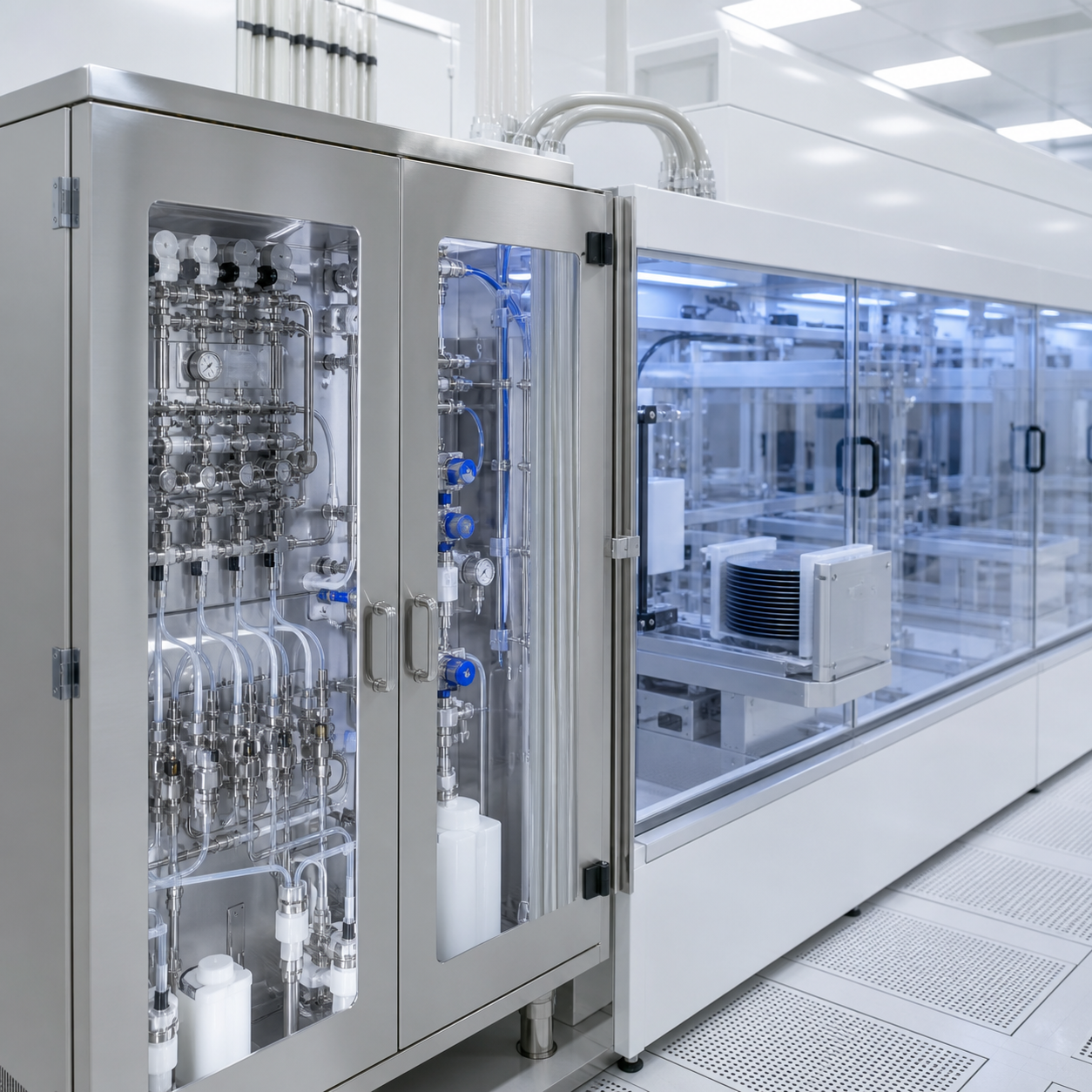
Hydrogen peroxide is used in selected semiconductor and precision-electronics cleaning chemistries as an oxidizing component. In these applications, electronic grade is not a complete purchasing specification. Required limits depend on device generation, process step, dilution water, companion chemicals, delivery system and defect budget. Trace metals, particles, anions, organic residue and stabilizers can affect surfaces or interact with downstream processes. The buyer should define a grade matrix tied to actual use rather than assuming the lowest published impurity number is automatically best. Packaging and distribution are part of the purity system: container resin, valve, seal, particle shedding, extractables, headspace, filtration and connection design can influence the chemistry received at the point of use. Qualification should connect supplier lots to incoming analysis, tool performance, particles, surface metals and electrical or yield indicators. Changes to manufacturing site, purification, analytical method, packaging or logistics need formal notification and risk assessment.
For B2B implementation of High-Purity Hydrogen Peroxide for Semiconductor Cleaning, assign ownership across purchasing, quality, production, engineering, logistics and EHS before the first delivery. Approve the receiving test, compatible handling system, deviation response, retained-sample period and supplier-change process in writing. This shared control plan helps separate raw-material variation from equipment or operating changes and provides objective evidence for investigations.
Translate process risk into a specification
Identify the cleaning chemistry, concentration at use, substrate, critical contaminants and downstream sensitivity. Select the trace-metal, anion, particle and residue panels supported by process evidence. Avoid copying a supplier table without confirming methods, units and detection capability.
Separate guaranteed and typical data
Mark each value as a contractual maximum, report-only result or typical information. Define method, detection limit, significant figures and treatment of non-detects. Review several recent COAs and use split-sample correlation between supplier and receiving laboratories.
Control trace metals and particles
Map contamination from raw material, purification, container, valve, filtration and fab distribution. Total metals may not reveal a single high-risk element, and a particle count without size threshold and method is ambiguous. Set sampling and handling procedures that do not dominate the measurement.
Evaluate anions, organics and stabilizers
Chloride, sulfate, phosphate, total organic carbon or stabilizer-related species may matter in selected processes. Limits should reflect chemistry and tool compatibility. A stabilizer-free label does not replace a complete analysis and stability review.
Treat packaging as process equipment
Qualify container and bulk delivery configurations separately. Review resin, valve, seal, vent, connector, filtration and cleanroom handling. Protect caps and interfaces during storage and connection. Returnable systems need validated cleaning and traceability between cycles.
Validate distribution and point-of-use quality
Sample at receiving and, where justified, near the tool to distinguish incoming material from distribution contamination. Trend age, temperature, recirculation, filter differential pressure and particle results. Establish flush and release criteria after maintenance.
Manage reactive cleaning mixtures
Hydrogen peroxide is combined with other chemicals only under validated process recipes and engineered controls. Mixing sequence, temperature, concentration, materials and exhaust affect reaction behavior. Never use a generic ratio or laboratory practice as a production instruction.
Use authoritative hazard context
The NIH PubChem record describes hydrogen peroxide as an unstable oxidizer that releases heat during decomposition. The NIOSH Pocket Guide lists incompatibilities and exposure information. Use the current SDS and fab-specific chemical safety review for actual operations.
Qualify suppliers and changes
Audit purification, high-purity water, clean packaging, analytical controls, traceability, retained samples and deviation response. Require prior notification of method, facility, raw material, filter, packaging and transport changes. Run controlled tool trials when risk warrants.
Prepare a high-purity RFQ
State application, concentration, grade, impurity panel with methods, particle requirement, package, connection, volume, destination, COA format and change control. Review the Hiacid hydrogen peroxide supply page and compatibility guide, then request a technical supply review.
Related hydrogen peroxide resources
- Hydrogen Peroxide Storage and Material Compatibility Guide
- Hydrogen Peroxide for Aseptic Packaging Sterilization
- Hydrogen Peroxide for Cyanide Destruction in Gold Mining
Frequently asked questions
Is electronic grade a complete specification?
No. Buyers must define concentration, analytical panel, methods, packaging, particles and change control.
Why qualify packaging separately?
Container, valve, seal and connection can add particles, metals or extractables after purification.
Should every buyer request the same impurity panel?
No. The panel should reflect the process chemistry, substrate and defect risk.
Why sample near the point of use?
It can help distinguish supplier material quality from contamination introduced by distribution equipment.