
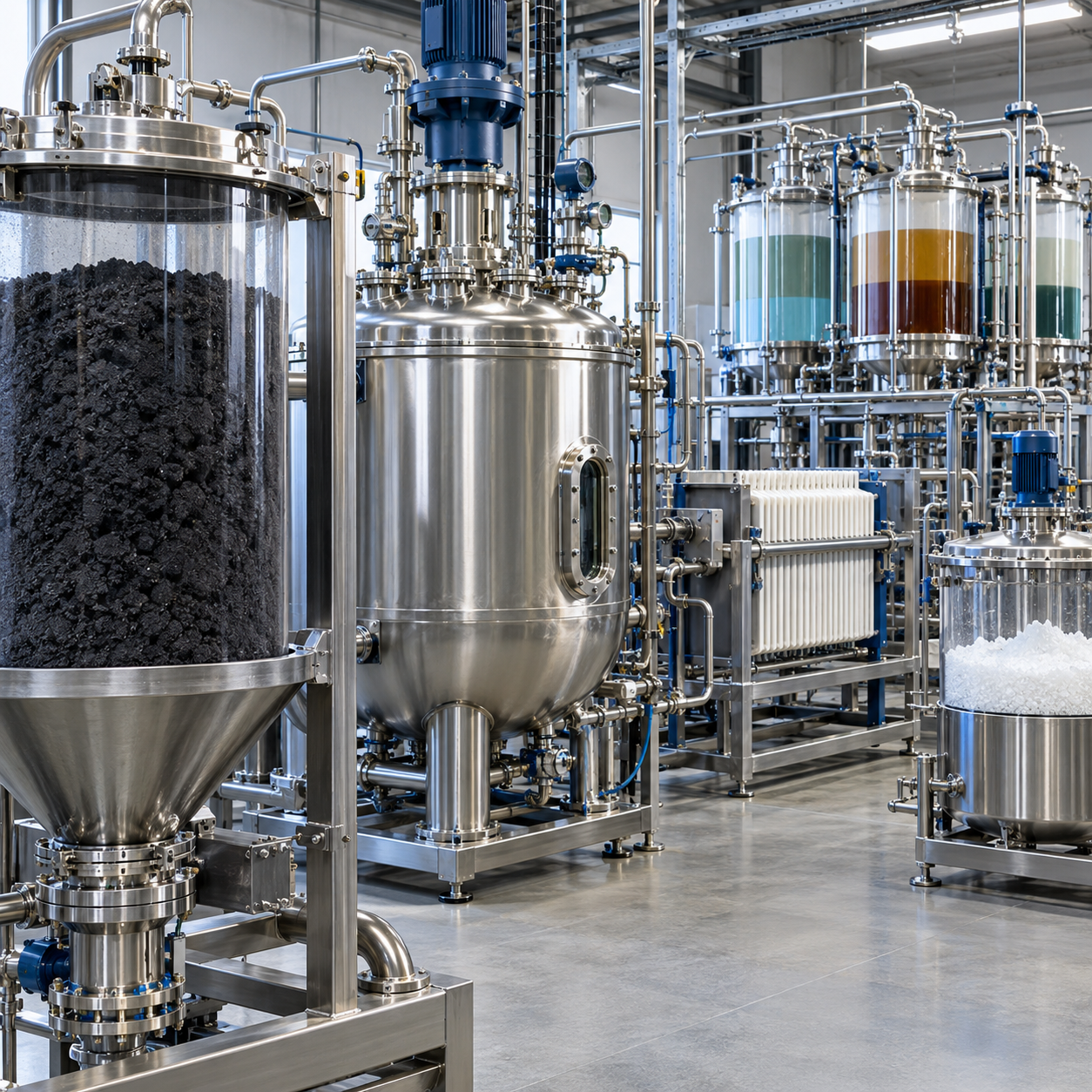
Spent lithium-ion battery black mass may contain lithium, cobalt, nickel, manganese, iron, aluminum, copper, graphite, fluorine and electrolyte residues. Acetic acid has been studied as an organic leachant, sometimes with hydrogen peroxide as a reducing agent, to transfer valuable metals into solution. Feed chemistry and pretreatment strongly influence acid demand, selectivity and downstream separation. A high extraction percentage alone does not establish economic or environmental performance. Buyers must connect acid specification to metal balances, gas and heat control, acetate recycle, wastewater and product purity. This guide covers qualification, not leaching conditions.
For industrial qualification, assign purchasing, quality, engineering, operations, logistics and EHS ownership before the first commercial delivery. Approve glacial acetic acid assay, impurity limits, analytical methods, sampling, storage, dilution or dosing equipment, deviation response and release authority in writing. Compare representative lots under controlled conditions and record process performance, mass balance, waste, equipment observations and final product quality. This separates raw-material variation from changes in water, feedstock, equipment, operator or laboratory method.
Review the chain from supplier release through carrier, package, receiving connection and day tank because contamination or dilution can occur after final analysis. Reconcile ordered, received, stored and consumed quantities and investigate unexplained differences. Supplier scorecards should cover documentation accuracy, delivery condition, corrective-action quality and change notification as well as price. Qualify a contingency source before disruption using the same methods and process criteria. When buyer and supplier results differ, review sample representativeness, temperature, standards, calibration, detection limits and uncertainty before disposition.
Glacial acetic acid is corrosive, combustible and has a pungent vapor. Its freezing point is near ordinary cool-weather conditions, so crystallization can disrupt delivery or measurement if not controlled. Use the current SDS, compatible materials, ventilation, ignition control, secondary containment and an approved emergency plan. The NIOSH Pocket Guide entry and NIH PubChem record provide general identity and hazard context; local law, site procedures and the process hazard review remain controlling. Confirm emergency contacts, unloading hours and stop-work authority for every shipment.
Use published evidence as context
An open-access experimental study evaluated acetic acid and hydrogen peroxide for recovering lithium, cobalt, nickel, manganese and aluminum from mixed spent battery materials. Its specific feed and conditions require independent validation.
Translate research into site qualification
Define feed, equipment, analytical methods, acceptance criteria and stop conditions before trials. Scale only after replicated data, a reviewed hazard assessment and documented product and waste routes support the decision. Close qualification with an authorized report, approved-supplier status and a routine monitoring plan.
Define and segregate black mass
Document battery chemistry, discharge and dismantling route, thermal treatment, particle size, moisture, electrolyte residues and metals. Keep LFP, LCO and nickel-rich materials segregated where practical.
Set product and impurity targets
Specify intended lithium, nickel, cobalt and manganese products plus acceptable aluminum, copper, iron, fluorine and graphite carryover.
Measure selectivity and acid efficiency
Track extraction of each target and impurity across representative feed lots. Calculate acid consumption per unit of recovered product, not only per kilogram of feed.
Close every metal stream
Analyze feed, liquor, residue, wash, dust, filters and recovered salts. Reconcile solution volume and sampling loss before reporting recovery.
Qualify acid and reducing agent together
Specify acetic acid assay, water, metals, aldehydes and residue. If hydrogen peroxide is used, evaluate combined heat, gas, dosing and impurity effects as one reactive system.
Establish lot traceability
Link black mass, acetic acid, reductant, water, temperature history and samples so a failed mass balance can be reconstructed.
Engineer acetate and impurity management
Map solvent extraction, precipitation, crystallization, acid recovery, wash and purge. Determine whether acetate or fluorine accumulates during recycle.
Control dust gas and residue hazards
Enclose black-mass handling, prevent live-cell entry and characterize off-gas and residue. Use compatible reactors, ventilation, containment and interlocks.
Scale procurement with process maturity
Start with traceable small lots and advance to bulk only after reproducible campaigns establish net demand and approved storage. Require COA, SDS, retained samples and change notification.
Prepare a recycling inquiry
Provide assay, impurity limits, package, trial quantity, destination and annual forecast. Review the Hiacid glacial acetic acid page, then request a documented supply quotation.
Related glacial acetic acid resources
- Glacial Acetic Acid for Marine Collagen Extraction
- Glacial Acetic Acid for Lignocellulosic Biomass Pretreatment
- Glacial Acetic Acid as a MOF Crystallization Modulator
Frequently asked questions
Can mixed battery chemistries share one acetic acid process?
Not automatically. Metal composition, fluorine, graphite and pretreatment require feed-specific validation.
Why report acid efficiency with metal recovery?
High extraction may still require excessive acid, neutralization and separation chemicals.
What happens when hydrogen peroxide is added?
It can change metal oxidation states and extraction, while also adding heat, gas and decomposition risks.
Does organic acid eliminate wastewater treatment?
No. Dissolved metals, acetate, fluorine, salts and wash water still require controlled recovery or treatment.