
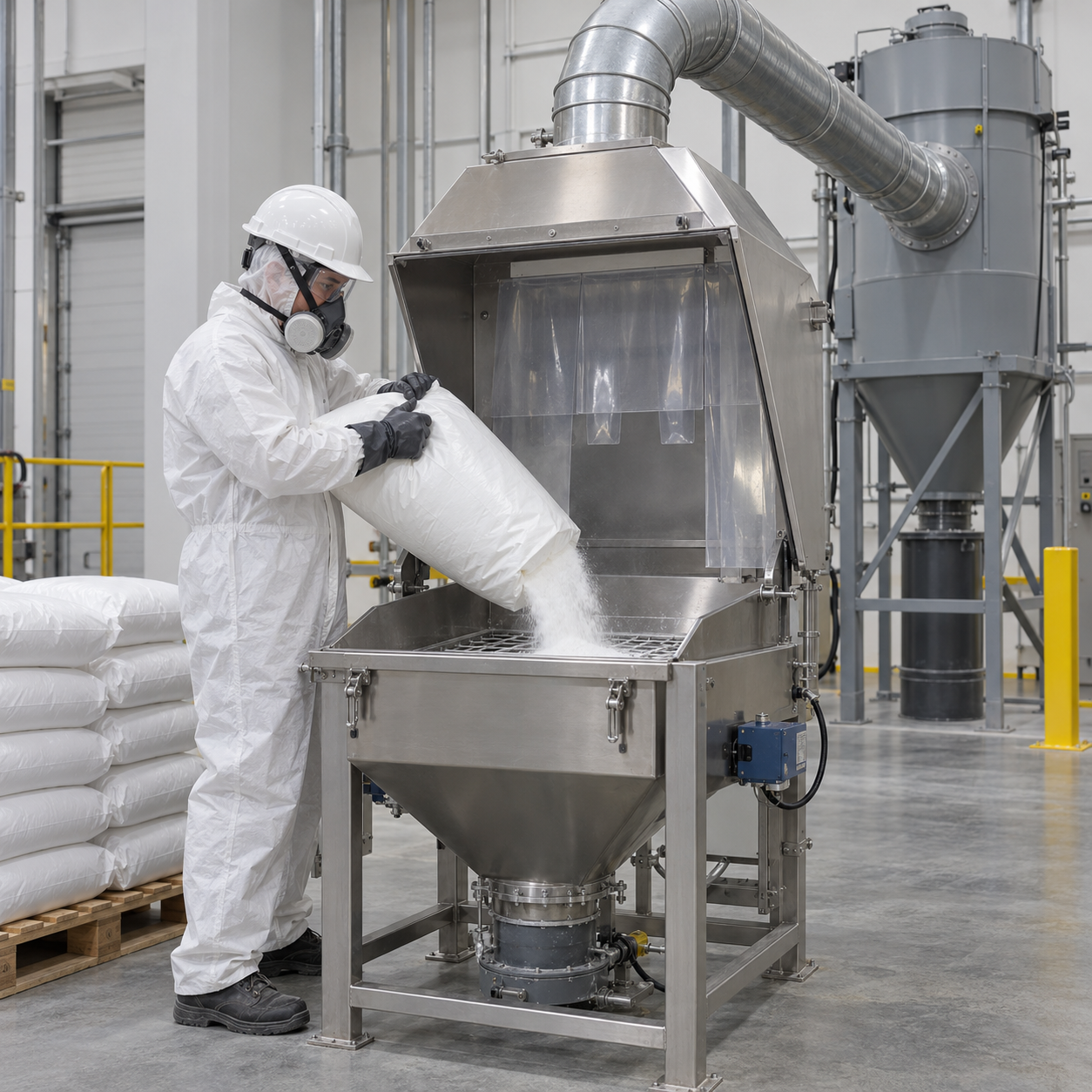
Bagged oxalic acid is convenient for many plants, but manual opening and tipping can release irritating and harmful dust, contaminate nearby equipment and create inconsistent additions. Good control begins with enclosure and capture at the source, not with housekeeping after a visible cloud forms. The design must match bag size, unloading rate, powder behavior, room ventilation, downstream transfer and the site’s exposure assessment. Procurement also matters: strong moisture-resistant packaging, clean pallets and predictable particle behavior reduce handling problems without replacing engineering controls.
For B2B implementation, assign purchasing, production, quality, engineering and EHS ownership before the first delivery. Approve receiving tests, sampling tools, storage, dosing basis, deviation response and retained-sample period in writing. Compare representative oxalic acid lots under the same operating conditions and record mass balance, product quality, waste load and equipment observations. Define who may approve a temporary deviation and what evidence is required before release. Review transportation, package integrity and unloading alongside laboratory results, because moisture or contamination can enter after the supplier’s final test. Close every trial with a written conclusion, an updated material specification and defined requalification triggers. This disciplined qualification separates raw-material variation from equipment or operating changes and provides objective evidence for buyer-supplier investigations. Procurement should also confirm lead time, minimum order, container loading, port documentation and contingency stock. Quality teams should trend incoming results rather than checking only pass or fail, while production records actual consumption per tonne of acceptable output. A periodic supplier review can then combine delivery performance, complaint response, COA trends and process results into one evidence-based decision.
Assess the complete unloading task
Observe delivery, pallet staging, bag lifting, cutting, empty-bag handling, hopper charging and cleanup. Identify routine and non-routine releases, including torn bags, blocked screens, filter changes and maintenance.
Use authoritative exposure information
The NIOSH Pocket Guide entry for oxalic acid summarizes exposure limits, symptoms and protective recommendations. Apply current local law, the supplier SDS and a qualified industrial hygiene assessment.
Capture dust where it is generated
Use a sufficiently enclosed bag-dump station with inward airflow across the opening and local exhaust sized by a competent ventilation engineer. Avoid placing the worker between the release point and extraction path.
Integrate the dust collector safely
Select compatible filter media, provide differential-pressure monitoring, isolate collection, and define safe emptying. Return air to the room only where regulations and risk assessment permit and filtration performance is verified.
Reduce manual handling and open transfer
Provide lift assists, bag supports, safe cutting tools and sealed transfer from hopper to dissolver. For higher consumption, compare bulk bags or closed conveying after reviewing bridging, segregation and dust risks.
Control solution make-up
Add powder below the liquid surface only with a validated system that prevents splash, lumping and uncontrolled reaction. Interlock extraction, mixer and feed where appropriate, and verify concentration with a documented batch method.
Monitor performance and maintain discipline
Use exposure sampling, smoke visualization or other approved capture checks, filter pressure trends and housekeeping inspections. Investigate visible dust rather than treating it as normal.
Plan cleaning and waste routes
Use HEPA-rated vacuuming or another approved method; avoid dry sweeping and compressed air. Define how damaged bags, collected dust, empty packaging and contaminated PPE are contained, recovered or disposed.
Specify packaging for the actual operation
State net weight, liner, outer bag, pallet, moisture protection, label and container-loading requirements. Inspect incoming loads for damage and quarantine wet or torn bags before warehouse release.
Prepare a supply and handling inquiry
Share consumption, package preference, destination, unloading method and required documentation. Review the Hiacid oxalic acid product page, then discuss packaging and delivery options.
Related oxalic acid resources
- Oxalic Acid for TiO2 Nanomaterial Synthesis
- Oxalic Acid for Activated Carbon Surface Modification
- Oxalic Acid in Electro-Fenton Wastewater Treatment
Frequently asked questions
Is a respirator enough for bag unloading?
No. Respiratory protection may be required, but enclosure and effective local exhaust should control dust at the source.
Can compressed air be used for cleanup?
It generally redistributes dust and should not be used unless a formal risk assessment and local rules specifically allow it.
Why monitor filter differential pressure?
It helps detect loading, blockage or damage that can reduce capture performance.
What packaging details belong in an RFQ?
Include net weight, liner, outer construction, pallet, moisture protection, labels, destination and container requirements.