
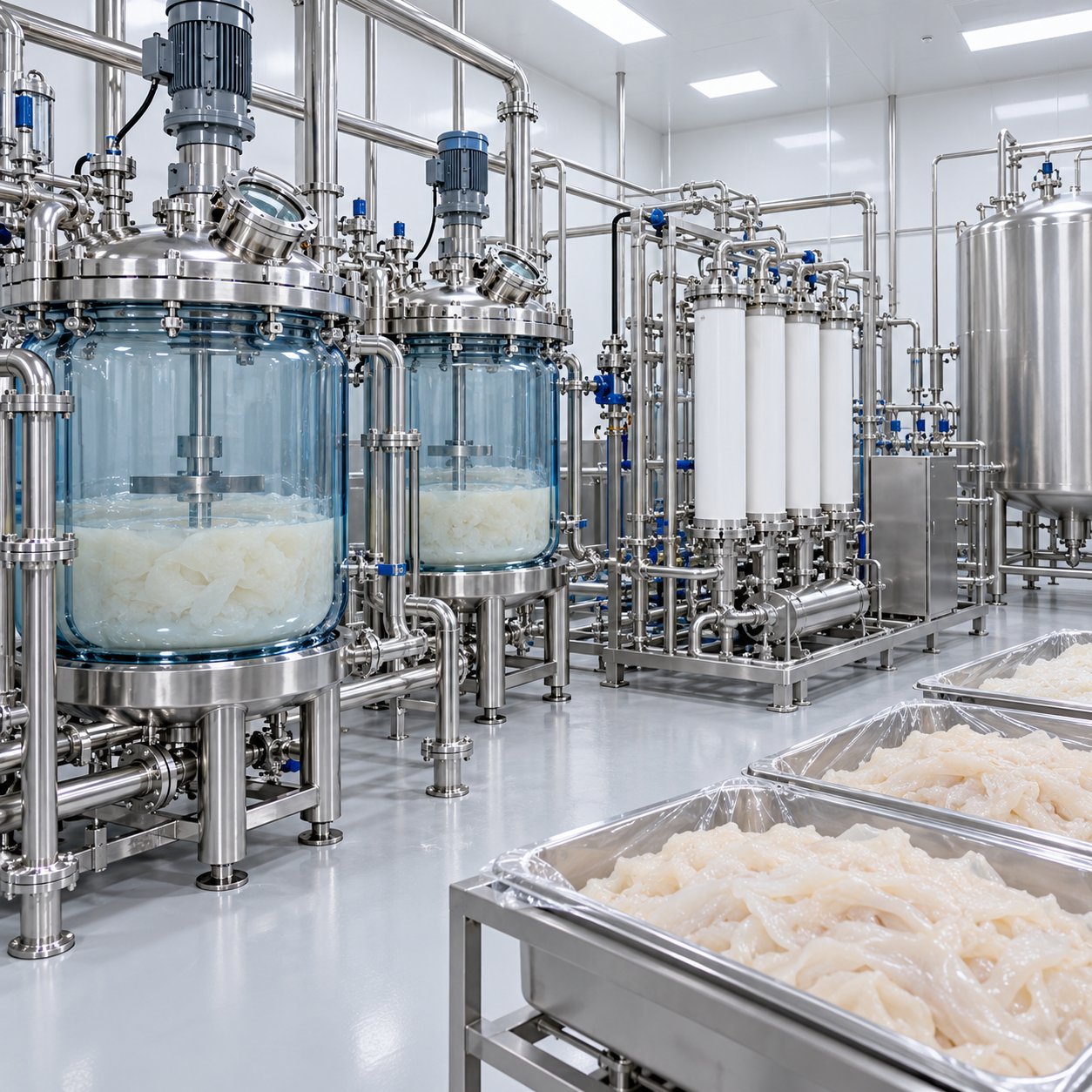
Highly cross-linked collagen from mature animal tissues can resist enzymatic hydrolysis and limit the yield of small peptides. Published research has shown that formic acid pretreatment can disrupt selected cross-links and improve subsequent papain hydrolysis for spent-hen skin. That finding is promising, but food and nutraceutical processors must not generalize it to every tissue, species or end use. Raw-material history, pretreatment severity, washing, enzyme conditions, peptide distribution, residual acid, microbiology and regulatory status all require validation. This guide outlines a controlled development program for industrial buyers considering formic acid in collagen peptide processing.
A peer-reviewed Food Chemistry study reported that formic acid pretreatment increased the proportion of peptides below 2 kDa after enzymatic hydrolysis of collagen from spent-hen skin and linked the effect to degradation of cross-linked telopeptides.
Industrial qualification should have named ownership across purchasing, quality, engineering, operations, logistics and EHS. Approve the formic acid specification, test methods, sample points, retained-sample period, package or carrier, unloading connection, storage limits, release authority and deviation response before the first commercial lot. Compare representative lots under controlled conditions and record material balance, process performance, equipment observations, waste and final-product quality. This helps separate acid variation from changes in water, feedstock, equipment, operator or test method. Review the entire chain from supplier release through transport, receiving and point of use because contamination or misidentification can occur after manufacture. Reconcile ordered, received, stored and consumed quantities and investigate unexplained differences. Supplier scorecards should include document accuracy, delivery condition, corrective-action quality and change notification as well as price. Qualify contingency supply before a disruption using the same tests and process criteria. Where buyer and supplier results differ, review sampling, temperature, calibration, detection limits, units and measurement uncertainty before disposition. Confirm emergency contacts, unloading hours and stop-work authority for every shipment. Include warehouse and maintenance personnel in the trial review because they often identify seal, vent, hose or handling issues not visible on a certificate. Close qualification with an authorized report, approved-supplier status, routine monitoring and requalification triggers. Formic acid is corrosive and concentrated grades may introduce additional transport and fire considerations. Every plant should confirm ventilation, spill containment, compatible transfer connections, emergency showers, inspection frequency and trained response before receipt. Operators should use the current site procedure and stop work when package identity, seal condition, connection or documentation does not match the approved order. The NIH PubChem record for formic acid provides identity and broad hazard context; the current SDS, local law, permit conditions and site procedures remain controlling. Buyers should not infer regulatory approval or guaranteed process performance from a product description or published study.
Map the collagen feedstock
Record species, tissue, animal age, rendering or chilling history, fat, ash, moisture, microbial load and prior chemical exposure. Separate feed families because cross-link density and impurity burden can differ substantially.
Define the target peptide profile
Set molecular-weight distribution, protein, ash, color, odor, solubility and functional or nutritional criteria. A lower average molecular weight is not sufficient if yield, sensory quality or regulatory suitability declines.
Design pretreatment screening
Compare acid concentration, liquid-to-solid ratio, time, temperature and mixing in closed laboratory equipment. Include untreated and process controls. Measure collagen solubilization, cross-link markers, mass balance and changes that affect later enzyme access.
Integrate enzymatic hydrolysis
Hold papain or other enzyme activity, pH, temperature and time constant when comparing pretreatments. Determine whether an apparent improvement comes from acid treatment, enzyme variation or altered starting material.
Control washing and residuals
Develop washing, pressing or membrane steps that remove acid and soluble impurities without losing valuable protein. Track formate, conductivity, chemical oxygen demand and protein through every wash and recovery stream.
Verify food-quality attributes
Test residual acid, microbiology, heavy metals, allergens where relevant, color, odor and contaminants associated with the animal feedstock. Confirm applicable food, feed or technical-grade regulations with specialists in each destination market.
Specify fit-for-use formic acid
Choose a grade and impurity limits appropriate to the intended product and regulatory pathway. Control assay, water, metals, residue and identity; require traceability and change notification. Do not describe technical acid as food grade without documented compliance.
Validate compatible hygienic equipment
Review vessel lining, seals, filters, membranes, transfer hoses and cleaning chemistry. Confirm that the system is cleanable, contained and resistant to the intended concentration and temperature.
Scale with yield and waste evidence
Reconcile dry protein, peptides, wash losses, solids and wastewater. Evaluate acid recovery only after product safety and quality are demonstrated. Set acceptance limits and stop criteria before pilot scale-up.
Prepare a collagen-processing inquiry
Provide acid grade, trial concentration range, package, documentation, destination and expected volume. Review the Hiacid formic acid product page, then request a qualification discussion.
Related formic acid resources
- Formic Acid Feedstock for Dimethylformamide Manufacturing
- Formic Acid Feedstock for Formamide Production
- Formic Acid for Carbon Fiber Composite Recycling
Frequently asked questions
Does formic acid pretreatment work for every collagen source?
No. Species, tissue, age, cross-linking and prior processing must be evaluated with representative material.
What proves the pretreatment is useful?
Improved peptide yield or distribution together with acceptable safety, sensory quality, residuals and economics.
Is technical-grade formic acid automatically suitable for food processing?
No. Grade, impurity controls and regulatory suitability must be documented for the intended market.
Why measure the wash-stream mass balance?
It identifies protein loss, residual acid removal, wastewater load and opportunities for controlled recovery.