
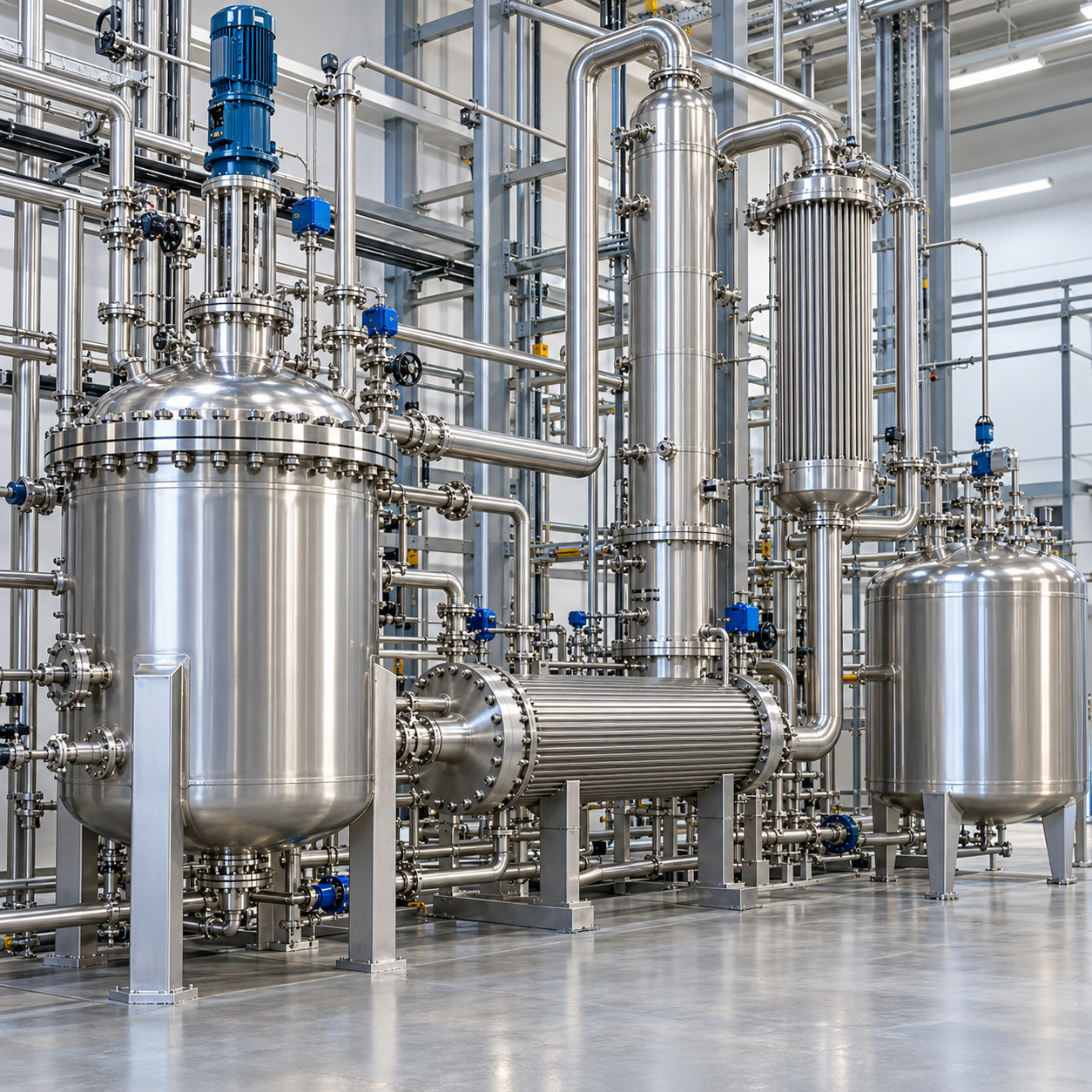
Formamide can be produced through chemistry involving formic acid, ammonia and ammonium formate, followed by dehydration and product recovery. The route appears simple on paper, but commercial performance depends on feed water, ammonia excess, catalyst condition, residence time, temperature profile, condensation and removal of by-products. Higher temperature can also create an unwanted decomposition pathway, making disciplined operating limits essential. A buyer therefore needs a formic acid specification tied to the complete formamide process rather than a stand-alone assay target. This article provides a structured qualification framework for feedstock buyers and production teams while leaving detailed reaction design to qualified engineers.
A patent on formamide production describes passing ammonium formate with ammonia over a dehydrating contact mass and notes that free formic acid may be used with excess ammonia. It also highlights the importance of limiting temperature to avoid further decomposition.
Industrial qualification should have named ownership across purchasing, quality, engineering, operations, logistics and EHS. Approve the formic acid specification, test methods, sample points, retained-sample period, package or carrier, unloading connection, storage limits, release authority and deviation response before the first commercial lot. Compare representative lots under controlled conditions and record material balance, process performance, equipment observations, waste and final-product quality. This helps separate acid variation from changes in water, feedstock, equipment, operator or test method. Review the entire chain from supplier release through transport, receiving and point of use because contamination or misidentification can occur after manufacture. Reconcile ordered, received, stored and consumed quantities and investigate unexplained differences. Supplier scorecards should include document accuracy, delivery condition, corrective-action quality and change notification as well as price. Qualify contingency supply before a disruption using the same tests and process criteria. Where buyer and supplier results differ, review sampling, temperature, calibration, detection limits, units and measurement uncertainty before disposition. Confirm emergency contacts, unloading hours and stop-work authority for every shipment. Include warehouse and maintenance personnel in the trial review because they often identify seal, vent, hose or handling issues not visible on a certificate. Close qualification with an authorized report, approved-supplier status, routine monitoring and requalification triggers. Formic acid is corrosive and concentrated grades may introduce additional transport and fire considerations. Every plant should confirm ventilation, spill containment, compatible transfer connections, emergency showers, inspection frequency and trained response before receipt. Operators should use the current site procedure and stop work when package identity, seal condition, connection or documentation does not match the approved order. The NIH PubChem record for formic acid provides identity and broad hazard context; the current SDS, local law, permit conditions and site procedures remain controlling. Buyers should not infer regulatory approval or guaranteed process performance from a product description or published study.
Define the intended reaction route
Document whether formic acid is first neutralized, fed with gaseous ammonia, or used in another approved configuration. Establish the material balance, intermediate identity and target throughput before setting an acid specification.
Separate chemistry from equipment assumptions
Bench evidence does not prove that a commercial evaporator, catalyst bed or condenser will perform identically. Record pressure, phase, mixing and heat-transfer differences and close them through staged pilot work.
Specify formic acid and ammonia together
Set acid assay, water, residue, metals, chloride, sulfate and organic impurity limits. Pair these with ammonia purity, oil, water and noncondensable-gas controls. Both feed streams must use traceable methods and defined release authority.
Manage stoichiometry and heat
Meter both feeds with verified instruments and reconcile consumption against product and purge. Evaluate neutralization and dehydration heat, loss of cooling and feed interruption. Predefine safe shutdown conditions before increasing batch or continuous rate.
Qualify catalyst and temperature windows
If the approved process uses a contact mass, define catalyst identity, pretreatment, particle size, pressure drop, activity and replacement criteria. Monitor temperature along the bed rather than relying on a single outlet value.
Control decomposition risk
Establish operating and alarm limits from reaction-hazard studies. Analyze off-gas and condensate during trials to detect unexpected decomposition. Never infer that a historical temperature range is safe for modern equipment or a different impurity profile.
Design condensation and purification
Map water, formamide, ammonia, unreacted acid and volatile by-products across staged cooling and purification. Confirm that recovered ammonia or other recycle meets a defined reuse specification before return.
Release fit-for-use formamide
Test assay, water, acidity, color, residue and application-specific impurities. Validate downstream performance with representative lots and store retained samples from both acid and formamide for investigation.
Build supply and change control
Qualify packaging, seals, transport, unloading and storage as part of feed quality. Require notice for manufacturing, raw-material, method or package changes that could alter the approved impurity profile.
Prepare a formamide feedstock inquiry
Share target grade, water and impurity limits, volume, packaging, destination and documents. Review the Hiacid formic acid page, then contact the Hiacid team for a documented supply discussion.
Related formic acid resources
- Formic Acid Feedstock for Dimethylformamide Manufacturing
- Formic Acid Pretreatment for Collagen Peptide Production
- Formic Acid for Carbon Fiber Composite Recycling
Frequently asked questions
Is ammonium formate the same as formamide?
No. Ammonium formate is an intermediate or feed that must be dehydrated and purified to produce formamide.
Why control the temperature profile?
Excess temperature can promote unwanted decomposition and changes in product and off-gas composition.
Can recovered ammonia be returned without testing?
No. Recycle needs a fit-for-use specification and monitoring for water and contaminants.
What should a trial retain?
Matched samples of acid, ammonia where practical, catalyst information, intermediates and final formamide should be traceable.