
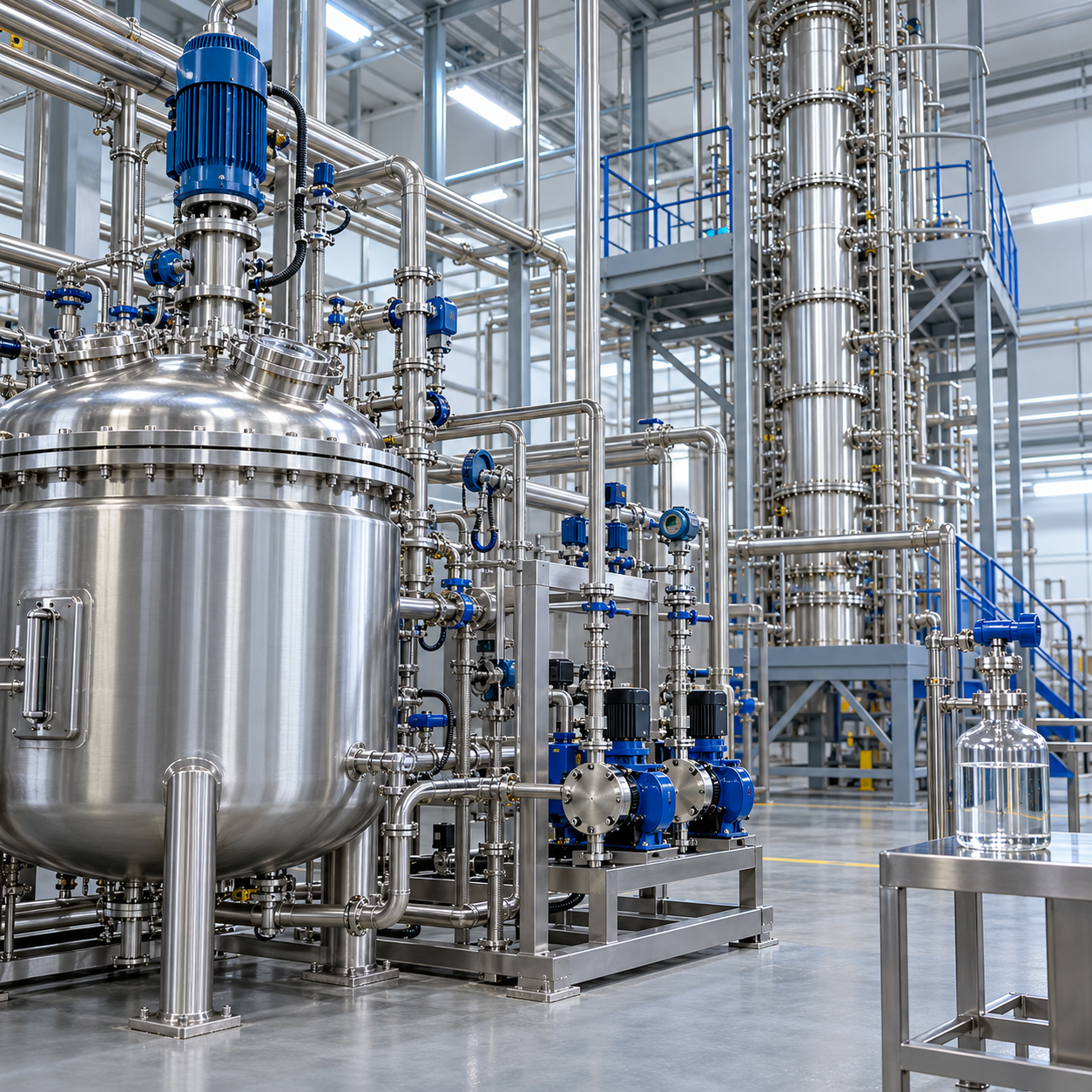
Dimethylformamide (DMF) is an important polar solvent used in chemical synthesis, coatings, fibers and other industrial operations. One established manufacturing route reacts dimethylamine with formic acid, forms a dimethylamine-formate intermediate and completes conversion and rectification under controlled conditions. For a producer, the purchasing question is not simply whether an acid lot meets a headline concentration. Water, nonvolatile residue, metals and organic impurities can influence heat balance, conversion, corrosion, column loading and final DMF quality. This guide describes how procurement, production, quality and EHS teams can qualify formic acid as a manufacturing feedstock without treating a patent example as a ready-made plant recipe.
An industrial patent for DMF manufacture describes vaporous dimethylamine reacting with liquid formic acid, followed by heating and rectification. Its operating details are historical technical evidence and require independent engineering review before use.
Industrial qualification should have named ownership across purchasing, quality, engineering, operations, logistics and EHS. Approve the formic acid specification, test methods, sample points, retained-sample period, package or carrier, unloading connection, storage limits, release authority and deviation response before the first commercial lot. Compare representative lots under controlled conditions and record material balance, process performance, equipment observations, waste and final-product quality. This helps separate acid variation from changes in water, feedstock, equipment, operator or test method. Review the entire chain from supplier release through transport, receiving and point of use because contamination or misidentification can occur after manufacture. Reconcile ordered, received, stored and consumed quantities and investigate unexplained differences. Supplier scorecards should include document accuracy, delivery condition, corrective-action quality and change notification as well as price. Qualify contingency supply before a disruption using the same tests and process criteria. Where buyer and supplier results differ, review sampling, temperature, calibration, detection limits, units and measurement uncertainty before disposition. Confirm emergency contacts, unloading hours and stop-work authority for every shipment. Include warehouse and maintenance personnel in the trial review because they often identify seal, vent, hose or handling issues not visible on a certificate. Close qualification with an authorized report, approved-supplier status, routine monitoring and requalification triggers. Formic acid is corrosive and concentrated grades may introduce additional transport and fire considerations. Every plant should confirm ventilation, spill containment, compatible transfer connections, emergency showers, inspection frequency and trained response before receipt. Operators should use the current site procedure and stop work when package identity, seal condition, connection or documentation does not match the approved order. The NIH PubChem record for formic acid provides identity and broad hazard context; the current SDS, local law, permit conditions and site procedures remain controlling. Buyers should not infer regulatory approval or guaranteed process performance from a product description or published study.
Translate product quality into process limits
Define assay, water, color, nonvolatile residue, iron, chloride, sulfate and selected organic impurities at limits connected to reaction and rectification performance. State analytical methods, reporting basis and uncertainty. A generic commercial grade may be acceptable for one process train but not another.
Build a feed-to-product correlation
During qualification, connect each acid lot to conversion, utility demand, column profile, residue, corrosion observations and DMF purity. Retain matched acid and DMF samples. This evidence shows which incoming attributes are truly critical rather than merely traditional certificate fields.
Control water and reaction stoichiometry
Water enters with both raw materials and can alter heating duty, residence time, separation load and the composition of recycle streams. Set a water balance for the complete reaction and recovery system, not just the acid certificate. Verify analyzer calibration with appropriate standards.
Confirm dimethylamine quality as a paired variable
Record dimethylamine purity, water and amine impurities alongside the acid lot. Investigate performance deviations using both feeds because an unexplained change should not automatically be assigned to formic acid.
Evaluate rectification and recycle behavior
Sample reaction liquid, overhead, DMF product and bottoms during controlled trials. Track formic acid, dimethylamine, water, methanol where relevant, color and heavy residue. Define recycle acceptance and purge criteria so small impurities do not accumulate unnoticed.
Set final DMF release criteria
Approve assay, acidity or alkalinity, water, color, conductivity and application-specific impurities. Test representative DMF in its downstream use. Conversion alone is not success if the solvent does not meet customer or internal performance requirements.
Engineer materials and containment
Map formic acid concentration and temperature across unloading, storage, metering, reactor, evaporator, column and recovery systems. Qualify metals, welds, linings, seals and gaskets for normal, cleaning and upset conditions. Include vapor and condensed phases.
Complete process-safety review
Assess amine and acid reaction heat, loss of cooling, overfeed, blocked flow, pressure, vacuum, air ingress and incompatible contamination. Confirm relief destination, ventilation, detection, isolation and emergency response through the site change-management process.
Qualify reliable industrial supply
Audit manufacturing consistency, change notification, packaging, previous-cargo controls, transport and receiving inspection. Use trial lots from the intended supply route. Agree on deviation communication before scaling to routine deliveries.
Prepare a DMF feedstock inquiry
Provide target assay, water and impurity limits, monthly volume, package or bulk mode, destination and required documentation. Review the Hiacid formic acid product page, then request a technical quotation for qualification.
Related formic acid resources
- Formic Acid Feedstock for Formamide Production
- Formic Acid Pretreatment for Collagen Peptide Production
- Formic Acid for Carbon Fiber Composite Recycling
Frequently asked questions
Can any commercial formic acid grade be used to make DMF?
No. The grade must be qualified against the specific reactor, separation train and final DMF requirements.
Why is water control important?
Water affects reaction conditions, separation duty, recycle composition and potentially final solvent quality.
Should acid and dimethylamine be investigated together?
Yes. Both feed streams can influence stoichiometry, impurities and observed conversion.
Does a patent provide an operating recipe?
No. Patent examples require current engineering, safety, materials and regulatory review before scale-up.