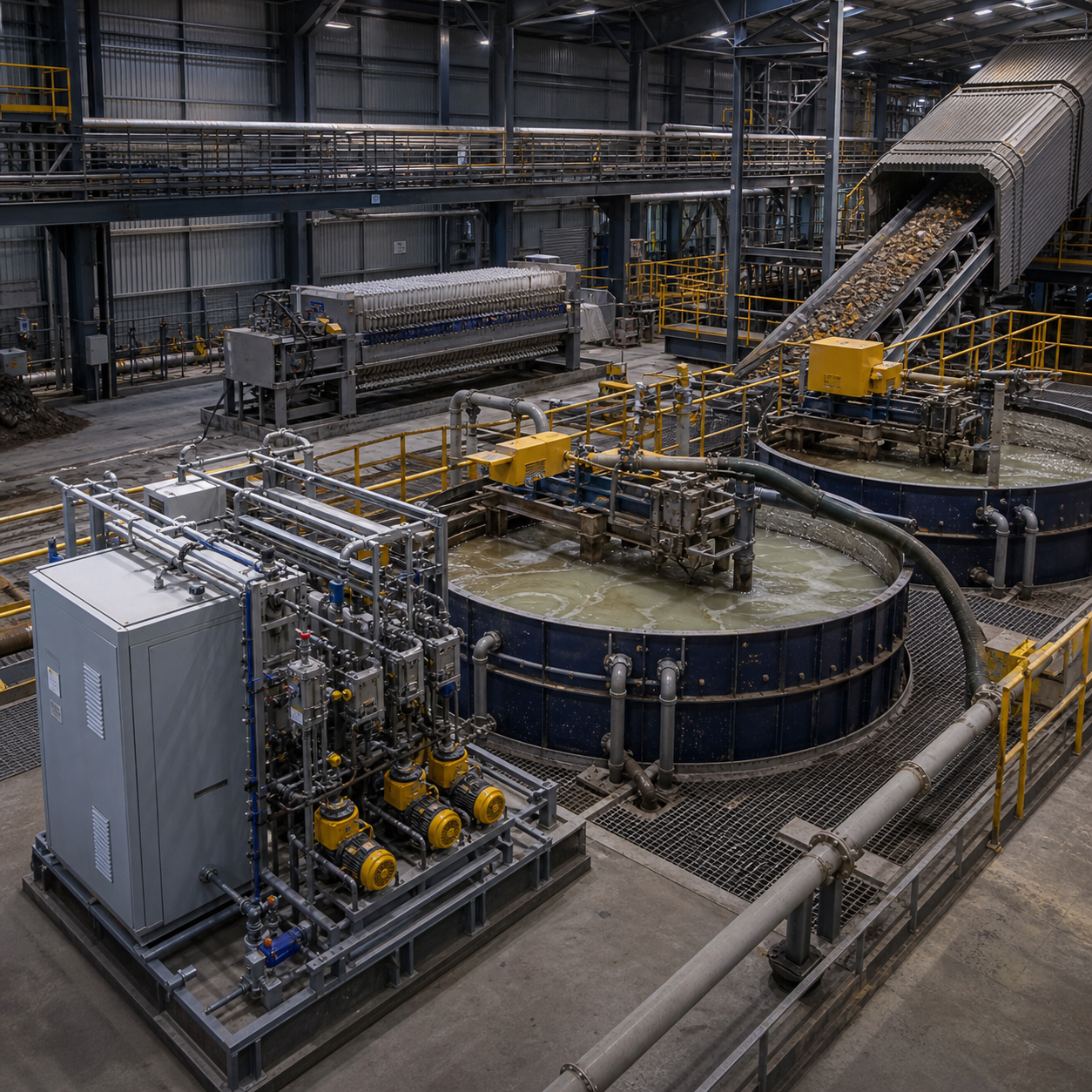
Sulfuric acid is used in selected hydrometallurgical flowsheets to leach target metals from ores, concentrates, intermediates or recycled materials. It is not a universal leachant, and acid demand can be dominated by gangue reactions rather than target-metal recovery. Mineralogy, particle size, oxidation state, temperature, solids density, residence time and downstream recovery all shape the operating window. A purchasing specification should deliver consistent active acid and limit process-sensitive contaminants, while mine planning and metallurgy teams control ore variability and total acid consumption. Commercial evaluation should also include transport, storage, neutralization and recovery-circuit costs, because the lowest delivered acid price may not produce the lowest cost per unit of recovered metal.
Start with mineralogy and test work
Representative mineralogical and metallurgical testing should identify target phases, acid-consuming gangue, passivation risks and impurity dissolution. Bottle-roll, column, agitated or pressure-leach tests must match the intended flowsheet. Average head grade alone cannot predict acid demand or recovery. Include ore-domain and blend variability when defining design consumption and inventory.
Measure more than metal extraction
Track acid consumption, kinetics, solution impurities, residue behavior, filtration or settling and downstream reagent demand. Maximum initial extraction may not provide the best economic result if it dissolves excessive iron, aluminum, magnesium or other species that burden recovery and wastewater circuits.
Control acid addition and process conditions
Define acid concentration, addition point, distribution, temperature, oxidation-reduction conditions where relevant and residence time. Poor distribution can create local over-acidification and uneven extraction. Metering and inventory instruments should be calibrated, and the control strategy should distinguish fresh acid from recycle acidity.
Use a complete mass balance
Reconcile delivered sulfuric acid, tank inventory, process addition, residual free acid, neutralization and losses. Compare the balance by ore type and operating campaign. This helps separate supplier assay variation from changes in mineralogy, dilution water, measurement or plant practice.
Manage materials and containment
Leach solutions may combine sulfuric acid with dissolved metals, chlorides, oxidants, solids and elevated temperature. Materials compatibility must be evaluated for the actual solution and abrasion, not fresh acid alone. Inspect tanks, liners, pumps, piping, valves and secondary containment on a risk-based schedule.
Control exposure and dilution hazards
Closed transfer, enclosed dosing, local ventilation where mist may form, suitable PPE and emergency washing should follow the SDS and site assessment. Dilution is strongly exothermic, so addition order, rate, cooling and interlocks must be engineered. The NIOSH guide provides occupational-hygiene reference information.
Integrate recovery and wastewater
Leach liquor quality affects solvent extraction, ion exchange, precipitation, crystallization, electrowinning or other recovery operations. Track impurities and residual acid into downstream stages. A change that improves leach extraction can reduce selectivity or increase reagent use later.
Plan neutralization and residue management
Spent solutions, bleed streams and residues may require neutralization and metal removal. Test representative material to understand reagent consumption, precipitate behavior, water reuse and discharge. Include sulfur and metal balances in closure and long-term residue planning where applicable.
Qualify acid supply for remote operations
Remote mines and metallurgical plants often depend on long transport routes and large inventories. Approve delivery equipment, unloading interfaces, emergency stocks and alternate sources. Require concentration, density, impurity and lot documentation matched to the plant specification.
Build a hydrometallurgy RFQ
State concentration, controlled impurities, consumption profile, shipment size, delivery route, destination, storage limit and documentation. Review the Hiacid sulfuric acid page, buying guide and contact the export team. Compare active acid, logistics reliability and total delivered risk.
Related sulfuric acid resources
- Sulfuric Acid for Lead-Acid Battery Manufacturing
- Sulfuric Acid for Steel Pickling and Metal Processing
- Sulfuric Acid Buying Guide
Frequently asked questions
Does more sulfuric acid always increase metal recovery?
No. Excess acid can dissolve unwanted minerals, increase downstream load and raise neutralization cost.
Why is mineralogy more useful than head grade alone?
It identifies the phases containing target metals and the gangue minerals that consume acid or release impurities.
Which equipment compatibility should be checked?
Evaluate tanks, liners, pumps, piping, valves and containment against the actual leach liquor, temperature and solids.
How should remote sites plan supply?
Use realistic consumption, safety stock, route risk, unloading limits and qualified alternate sources.