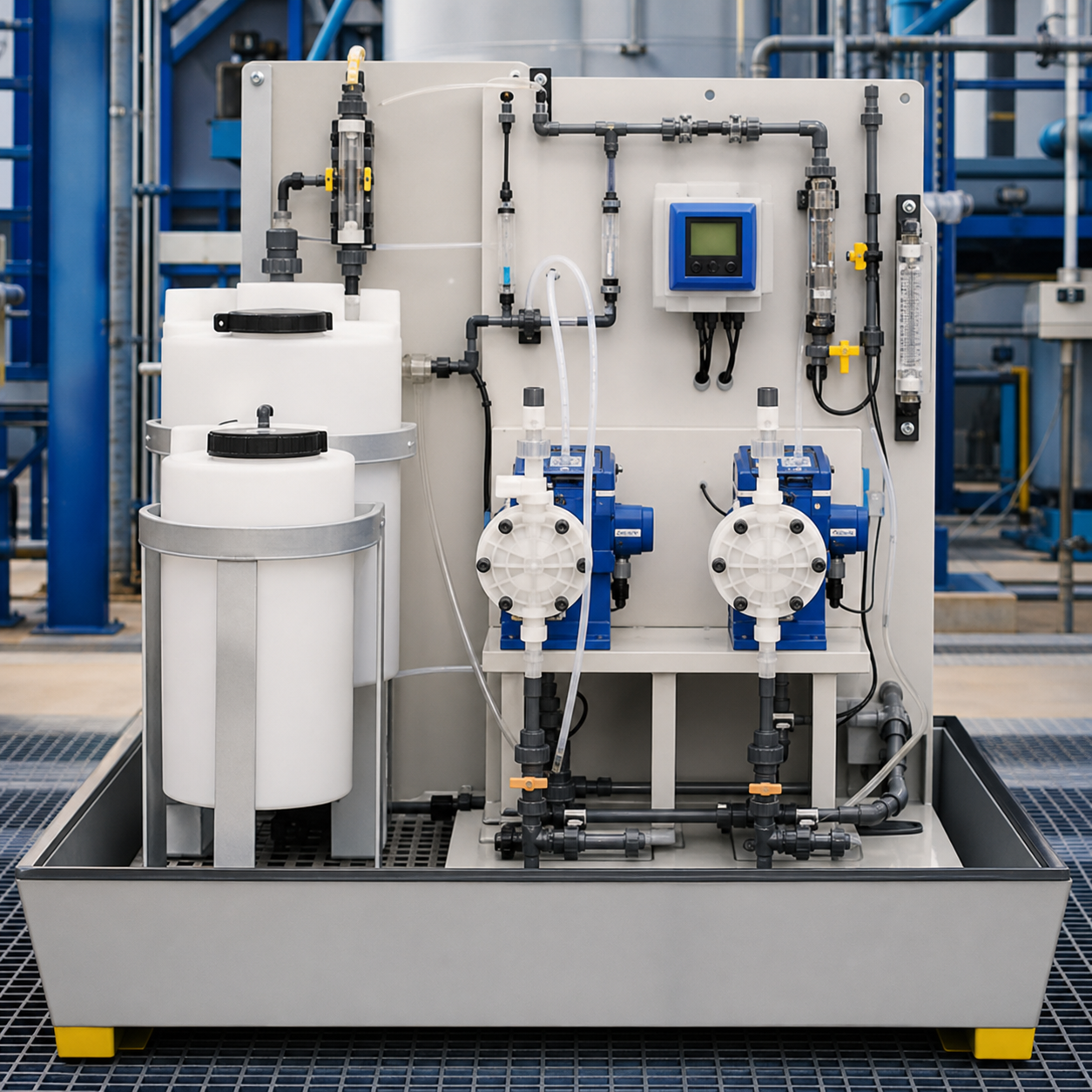
Hydrochloric acid is used for pH adjustment in industrial water, process liquor, cleaning, neutralization and chemical manufacturing. A successful dosing system is not defined by acid strength alone. Buffer capacity, flow variation, mixing time, reaction heat, gas release, suspended solids, sensor location and control logic determine how the process responds. Near a steep part of the titration curve, a small dose can create a large pH change, so poor mixing or a long measurement delay can cause oscillation and overfeed. The design should be based on representative titration data and realistic minimum, normal and maximum flows. Buyers must also choose a concentration compatible with storage, metering accuracy, winter conditions, vapor control and delivered cost. The control philosophy should cover calibration, redundant measurement where risk justifies it, low-flow interlocks, maximum-dose limits and safe shutdown. Supplier qualification then ensures that delivered concentration and impurities remain within the assumptions used for dose calculation and downstream quality.
For B2B implementation of Hydrochloric Acid for Industrial pH Control and Dosing, assign ownership across purchasing, quality, production, engineering, logistics and EHS before the first delivery. Approve the receiving test, compatible handling system, deviation response, retained-sample period and supplier-change process in writing. This shared control plan helps separate raw-material variation from equipment or operating changes and provides objective evidence for investigations.
Build a representative titration model
Test real process samples across expected composition, temperature and solids variation. Record acid demand and the slope near the target pH. A simple stoichiometric estimate may miss carbonate, alkalinity, weak acids, metal hydrolysis or changing buffers. Use the data to define normal and worst-case dosing demand.
Size for turndown as well as maximum flow
A pump selected only for peak capacity may dose poorly at minimum flow. Evaluate turndown, stroke or speed range, pulse dampening, check valves and minimum controllable delivery. Consider parallel small and large pumps when demand spans a wide range.
Design dilution and injection safely
If dilution is required, engineer the sequence, heat management, ventilation and compatible equipment through a formal review. Do not improvise manual mixing. Locate the injection point where backflow is prevented and where the acid rapidly disperses without contacting an unsuitable wall, gasket or sensor surface at full strength.
Provide enough mixing before measurement
Place the control sensor after a validated mixing volume and residence time. A probe too close to injection sees an unrepresentative acidic plume; one too far downstream can create excessive delay. Computational, tracer or step-response testing can support location and tuning.
Control instrumentation and logic
Use sensors suited to temperature, conductivity, solids and cleaning conditions. Define calibration frequency, reference checks, maintenance access and failed-signal behavior. Apply high and low pH alarms, no-flow interlocks, maximum output, storage-level permissives and independent shutdown where consequences justify them.
Tune the loop around process delay
Aggressive proportional or integral action can make a delayed process oscillate. Tune using controlled step tests and preserve the approved parameters. Trend flow, pump output, measured pH and alarms together so operators can distinguish sensor drift, blocked injection, changing alkalinity and true acid-quality issues.
Specify and receive the acid correctly
State concentration range, relevant impurities, package, lot documents and change notification. Verify concentration before using a new lot when dose calculation is mass based. Dedicated transfer equipment and clear labeling help prevent wrong-chemical delivery, while compatible containment limits the consequences of leakage.
Reference health and compatibility information
The NIOSH hydrogen chloride entry summarizes exposure limits, symptoms and incompatibilities for hydrochloric acid service. Use it with the current supplier SDS, equipment-manufacturer limits and site hazard review. Engineering controls and emergency facilities must match the actual concentration and inventory.
Verify downstream effects and operating cost
Track chloride addition, conductivity, corrosion, salt load, sludge and final-product requirements. Achieving the pH target does not guarantee that hydrochloric acid is the best chemistry for every process. Compare alternatives using complete mass balance, materials and waste-management data.
Prepare a dosing-grade RFQ
Provide the application, acid concentration, consumption profile, package, delivery frequency, receiving connection, destination, COA and SDS requirements. Review the Hiacid hydrochloric acid supply page and the purchasing specification guide, then request technical and commercial information.
Related hydrochloric acid resources
- 31–37% Hydrochloric Acid Buying Specification for Industry
- Hydrochloric Acid for Steel Pickling Process Control
- Hydrochloric Acid for Industrial Metal Chloride Manufacturing
Frequently asked questions
Why can pH control oscillate even when the pump works?
Poor mixing, sensor delay, steep titration response or aggressive tuning can cause overcorrection.
Should hydrochloric acid always be diluted before dosing?
No. The decision requires process, safety, materials and metering review for the specific system.
What data are needed to size a dosing pump?
Use representative titration demand, minimum and maximum flow, concentration, required turndown and operating margin.
Why monitor chloride after pH adjustment?
Chloride may affect corrosion, conductivity, downstream product limits or wastewater salt loading.